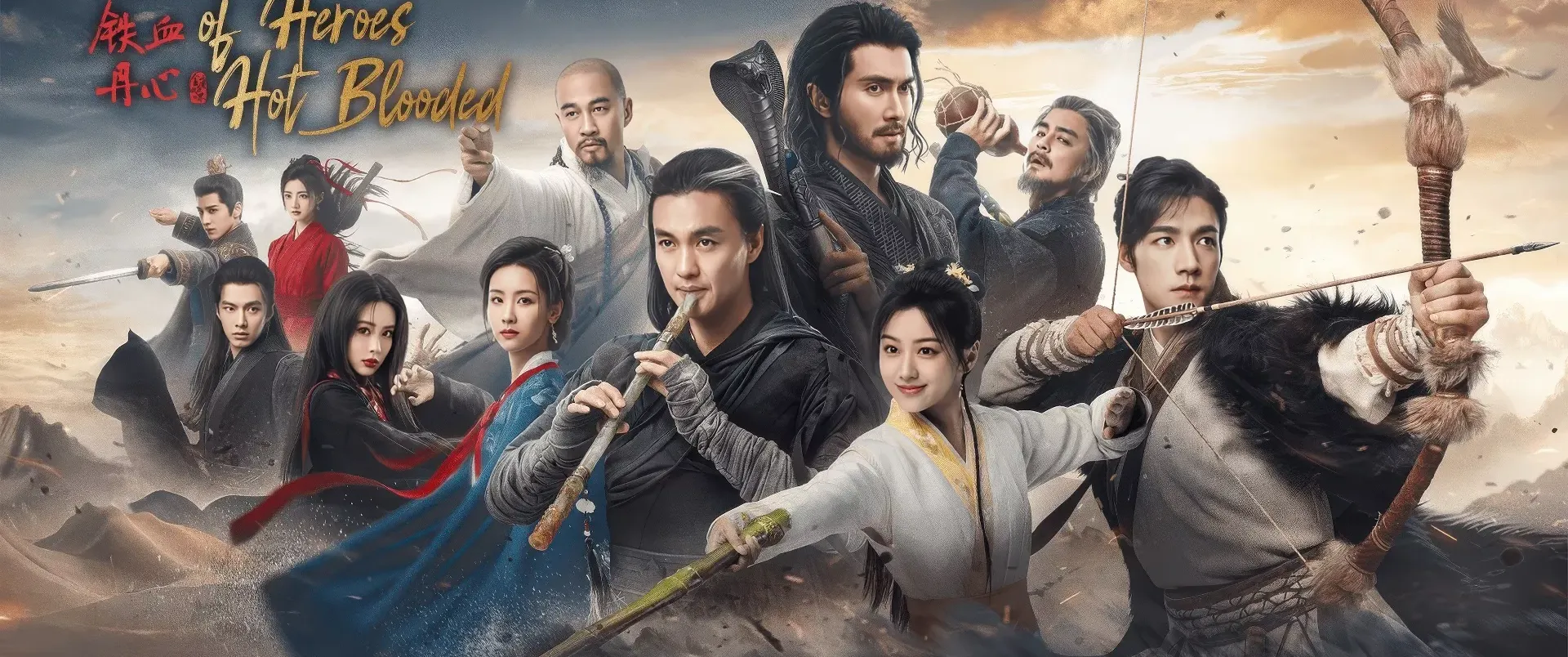
The turbulent world of The Legend of the Condor Heroes unfolds during a period of constant warfare and political upheaval. Set primarily during the Southern Song Dynasty,1 the factions navigate the complex geopolitical landscape involving the Jin Empire,[^jinempire] the rising Mongol Empire,2 and the independent Dali Kingdom.3 From the orthodox Quanzhen Order to the massive Beggars’ Guild, from the eccentric Peach Blossom Island to the legendary Five Greats, these factions shape the jianghu as external pressures threaten to reshape China itself.
Notable factions
Quanzhen Order
The Quanzhen Order (全真教 — Quánzhēn Jiào) was one of the most influential orthodox factions in the jianghu4 during the Southern Song period. Founded by Wang Chongyang, the Central Divine of the Five Greats, this Daoist martial-monastic order combined religious cultivation with martial arts training. Based primarily on Zhongnan Mountains, the Order was led by the Seven Zis of Quanzhen after Wang Chongyang’s death.
The Order emphasised qi cultivation and defensive martial arts techniques, reflecting Daoist principles of yielding to overcome force. Under leaders like Ma Yu, Qiu Chuji, and Wang Chuyi, Quanzhen established numerous sub-schools including the Namo School, Qingjing School, and Huashan School. Their Big Dipper Formation became legendary for allowing the Seven Masters to combine their martial skills.
As one of the most respected orthodox martial arts schools, the Quanzhen Order represented traditional Chinese martial arts values and played a crucial role in maintaining order in the jianghu while training numerous disciples who would go on to influence the jianghu for generations.
Beggars’ Guild
The Beggars’ Guild (丐帮 — Gàibāng) was the largest martial arts organisation in China, with millions of members spanning from the Yangtze River to beyond the Great Wall. Led by Hong Qigong, the Northern Beggar of the Five Greats, the Guild operated a vast intelligence network whilst maintaining its mission to help the poor and downtrodden.
The Guild was divided into two main factions: the Clean Clothes Faction (净衣派) of more prosperous members who supported the Guild through legitimate means, and the Dirty Clothes Faction (污衣派) who maintained the traditional beggar appearance. Hong Qigong’s mastery of the Eighteen Palms of Dragon Subduing and the guild’s exclusive Dog-Beating Staff Technique made them formidable allies or enemies.
The Beggars’ Guild’s extensive network and commitment to helping the disadvantaged made them a crucial force in the jianghu, with their intelligence-gathering capabilities and martial prowess playing key roles in the novel’s major conflicts.
Peach Blossom Island
Peach Blossom Island (桃花岛 — Táohuā Dǎo) served as the isolated stronghold of Huang Yaoshi, the Eastern Heretic of the Five Greats. Located in the East China Sea, this mysterious island became famous for its unconventional martial arts and the tragic love story between Huang Yaoshi and his deceased wife Feng Heng.
Huang Yaoshi’s eccentric nature and unorthodox methods often put him at odds with mainstream martial arts society. His disciples included the notorious Twin Evils of Dark Wind - Chen Xuanfeng and Mei Chaofeng - who stole parts of the Nine Yin Manual and terrorised the jianghu with their deadly techniques. His daughter Huang Rong would later become one of the most influential figures in the jianghu.
Five Greats
The Five Greats (五绝 — Wǔjué) represented the pinnacle of martial arts achievement during the Southern Song period. These five supreme masters - Wang Chongyang (Central Divine), Huang Yaoshi (Eastern Heretic), Ouyang Feng (Western Venom), Hong Qigong (Northern Beggar), and Duan Zhixing (Southern Emperor) - established their rankings through the famous Huashan Sword Summit competition.
Their rivalry over the Nine Yin Manual drove much of the novel’s conflict, whilst their individual philosophies and martial arts styles influenced entire generations of practitioners. The competition between these masters, and later their successors, shaped the balance of power throughout the jianghu and influenced major historical events.
Factions of the novel
Martial schools and orders
- Quanzhen Order (全真教 — Quánzhēn Jiào); also 全真派 — Daoist martial-monastic order founded by Wang Chongyang, one of the most influential orthodox factions.
- Seven Zis of Quanzhen (全真七子 — Quánzhēn Qīzǐ) — Wang Chongyang’s seven disciples who led Quanzhen Order after his death.
- Shaolin Order (少林派 — Shàolín Pài) — The Shaolin Order, the martial lineage of Shaolin Monastery on Mount Song.
- Xianxia Ridge School (仙霞派 — Xiānxiá Pài); also 仙霞门 — Named for Xianxia Ridge (仙霞岭) on the Zhejiang–Fujian border; a branch of Shaolin.
- Peach Blossom Island (桃花岛 — Táohuā Dǎo) — Huang Yaoshi’s island in the East China Sea.
- Mudra Order (手印宗 — Shǒuyìn Zōng) — A Tibetan Buddhist school named for the mudra, the ritual hand gestures.
Guilds and bands
- Beggars’ Guild (丐帮 — Gàibāng) — The largest band in the jianghu, with members throughout the realm.
- Clean Clothes Faction (净衣派 — Jìngyī Pài) — Beggars’ Guild members who wear the patched beggar’s robe but otherwise live as ordinary people; most were never beggars.
- Dirty Clothes Faction (污衣派 — Wūyī Pài) — Beggars’ Guild members who truly live by begging and keep the Guild’s strict rules.
- Iron Palm Keep (铁掌帮 — Tiězhǎng Bāng) — Qiu Qianren’s sect, renowned for its palm techniques.
- Yellow River Guild (黄河帮 — Huánghé Bāng) — A band of the Yellow River region.
- Huaiyang Guild (淮阳帮 — Huáiyáng Bāng) — A band of the Huaiyang region.
Bands of fighters
- Seven Eccentrics of Jiangnan (江南七怪 — Jiāngnán Qīguài); also Six Xias of Jiangnan (江南六侠), Six Xias (六侠), The Six (六怪) — Seven martial artists of Jiaxing, Guo Jing’s first shifus.
- Five Greats (五绝 — Wǔjué) — Five supreme martial artists who competed at Huashan Sword Summit for martial supremacy.
- Twin Evils of Dark Wind (黑风双煞 — Hēifēng Shuāngshà) — See the characters list.
- Four Ghosts of the Yellow River (黄河四鬼 — Huánghé Sìguǐ); also Three Ghosts of the Yellow River (黄河三鬼)
Strongholds and households
- Returning Clouds Manor (归云庄 — Guīyún Zhuāng) — The Lu family manor on Lake Tai.
- Prince Zhao’s Estate (赵王府 — Zhàowáng Fǔ) — Wanyan Honglie’s residence in Zhongdu.
- Junshan Island (君山岛 — Jūnshān Dǎo) — An island in Dongting Lake.
States and dynasties
- Song Dynasty (宋朝 — Sòng Cháo) — The Song dynasty (960—1279), which lost northern China to the Jin in 1127.
- Northern Song (北宋 — Běi Sòng) — The Song dynasty before the loss of the north in 1127.
- Southern Song Dynasty (南宋 — Nán Sòng) — Period of the Song Dynasty that lasted from 1127 to 1279 CE, forced to move its capital south after the loss of northern China to the Jin Empire.
- Jin Empire (金国 — Jīn Guó); also Great Jin (大金), Jin Dynasty (金朝) — The Jin Empire of the Jurchen Wanyan clan (1115—1234), which holds northern China.
- Dali Kingdom (大理国 — Dàlǐ Guó) — Kingdom in southwest China, modern-day Yunnan, ruled by the Bai people of the Duan Clan from 937 to 1253 CE.
- Nanzhao (南诏 — Nánzhào) — A kingdom (738—902) centred on modern Yunnan, predecessor of the Dali Kingdom.
- Western Xia (西夏 — Xī Xià) — The Western Xia, a Tangut empire in northwestern China destroyed by Genghis Khan in 1227.
- Western Liao (西辽 — Xī Liáo) — The Qara Khitai, or Western Liao (1124—1218), a Khitan empire in Central Asia.
- Khwarezmian Empire (花剌子模国 — Huālàzǐmó Guó) — Central Asian empire destroyed by Genghis Khan in 1220, spanning modern Iran/Uzbekistan.
Peoples of the steppe and the west
- Merkit (蔑儿乞惕人 — Miè’érqǐtì Rén); also 蔑儿乞惕, 蔑尔乞惕 — The Merkit, a tribal confederation of the Mongolian steppe.
- Naiman (乃蛮 — Nǎimán) — A powerful steppe tribe to the west of the Keraites.
- Tayichiud (泰亦赤兀部 — Tàiyìchìwù Bù) — The Tayichiud, a Mongol tribe of the steppe.
- Semu (色目人 — Sèmù Rén) — The Mongol-era term for the peoples of Central and Western Asia, among them Uyghurs, Tanguts and Persians.
- Baiyi (摆夷 — Bǎiyí) — An archaic name, identified in the text with the Bai people (白族) of Yunnan.
Armies and offices
- Loyalty Army (忠义军 — Zhōngyì Jūn) — A Han Chinese resistance force in Shandong during the Southern Song.
- Weiguo Sixth Command Post (威果第六指挥所 — Wēiguǒ Dì-Liù Zhǐhuī Suǒ) — A numbered unit of the Song army.
- Ministry of War (兵部 — Bīng Bù) — The Song ministry in charge of military affairs.
- Palace Administration (殿中省 — Diànzhōng Shěng) — The Palace Administration, the office in charge of the imperial household, kitchens included. The source writes 展中省.
Faiths
- Ming Order (明教 — Míng Jiào) — The Chinese name of Manichaeism, the faith founded by the prophet Mani in third-century Persia.
Follow the archive routes
- Read: Continue with the Legend of the Condor Heroes translation and the Condor Trilogy reading path.
- Explore: Use the Jin Yong reference guide to browse related characters, factions, locations, and martial arts.
- Understand: Set these factions in the wider context of wuxia, jianghu, and xia.
- Watch: Follow the wuxia adaptations route for source-work relationships, factual records, and separate analysis.
- Write: Study story elements in wuxia fiction for recurring institutions, conflicts, and character patterns.
See also
- Legend of the Condor Heroes characters
- Jin Yong factions
- Demi-Gods and Semi-Devils factions
- Return of the Condor Heroes factions
- Heavenly Sword and Dragon Sabre factions
- Laughing in the Wind factions
- Ode to Gallantry factions
- Sword Stained with Royal Blood factions
- The Deer and the Cauldron factions
- The Book and the Sword factions
- Side Story of the Flying Fox factions
- Flying Fox of the Snowy Mountain factions
Footnotes
-
南宋 — Nán Sòng. Period of the Song Dynasty that lasted from 1127 to 1279 CE, forced to move its capital south after the loss of northern China to the Jin Empire. See Wikipedia. ↩
-
蒙古帝国 — Ménggǔ Dìguó. Rising nomadic empire under Genghis Khan that would eventually conquer both Jin and Song. See Wikipedia. ↩
-
大理国 — Dàlǐ Guó. Kingdom in southwest China, modern-day Yunnan, ruled by the Bai people of the Duan Clan from 937 to 1253 CE. See Wikipedia. ↩
-
江湖 — jiānghú. Literally rivers and lakes. The itinerant world beyond settled society and official reach, holding not only martial artists but the trades that travel with them, including pedlars, physicians, fortune-tellers, entertainers, boatmen, beggars, outlaws and the like. See Wuxia Wiki. ↩