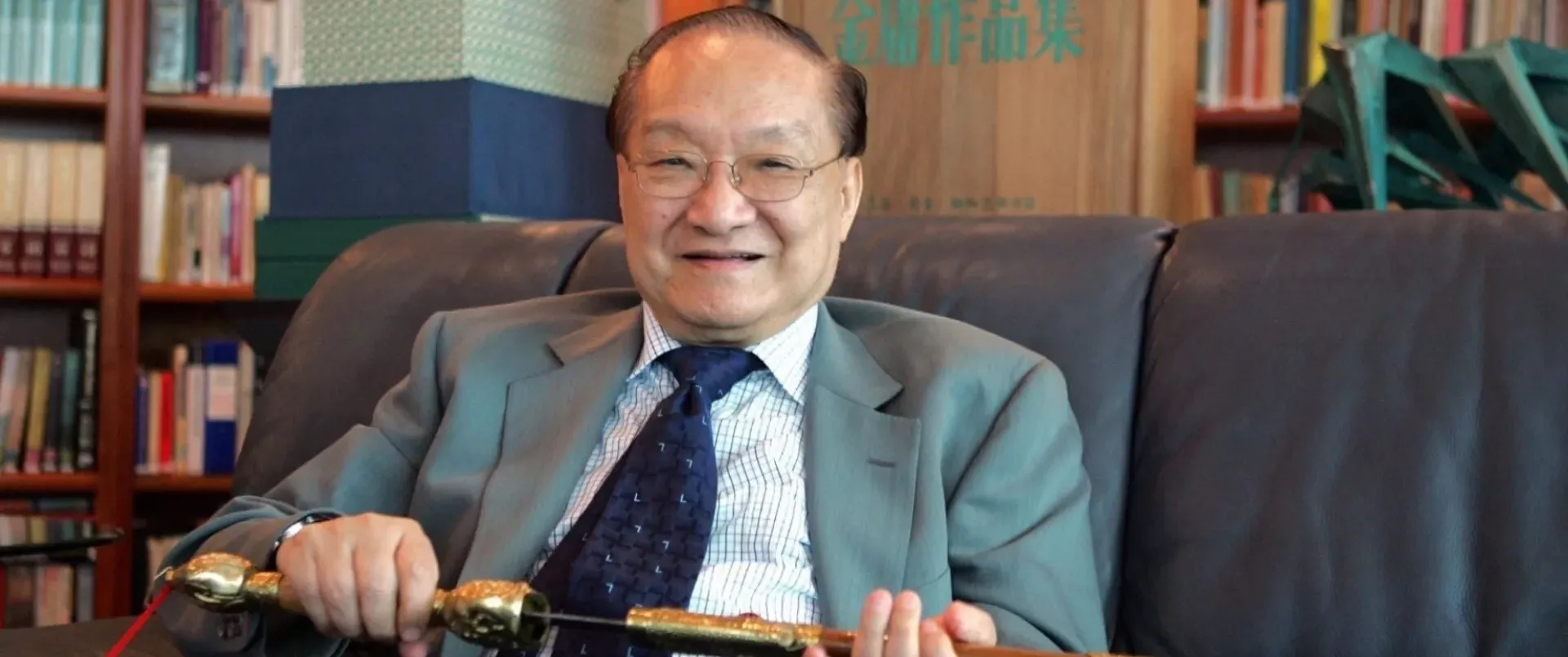
This guide is a route through WuxiaSociety’s Jin Yong reference archive. Use the author indexes for a broad view across the novels, or open a novel-specific index when you are following one story.
Follow a route
- Read: Browse the translations and Jin Yong’s novels for available reading paths.
- Explore: Use the author index, reference wiki, and the Jin Yong indexes below to move from novels to people, groups, places, and martial arts.
- Understand: Start with wuxia, jianghu, and xia, then read how WuxiaSociety translates wuxia.
- Watch: Follow the Wuxia adaptations route, then use Wuxia in film and Wuxia in television for screen context.
- Write: Use story elements in wuxia fiction as a practical route into recurring plots, relationships, and character patterns.
Start with the author and novels
- Jin Yong provides the author context and the main route into the archive.
- Jin Yong’s novels is the bibliography and the starting point for individual works.
- The Jin Yong reading guide connects novels, translations, reference pages, and wider cultural context.
- The Condor Trilogy is the route for the connected sequence of The Legend of the Condor Heroes, The Return of the Condor Heroes, and The Heavenly Sword and the Dragon Sabre.
Find people, groups, and martial arts
The author-wide indexes are useful when you want to compare recurring elements across novels:
When you are reading one novel, use its own character, faction, location, martial arts, and lists pages where available. For example:
- The Legend of the Condor Heroes characters, factions, and martial arts
- The Return of the Condor Heroes characters, factions, and martial arts
- The Heavenly Sword and the Dragon Sabre characters, factions, and martial arts
The indexes lead to individual entries such as Guo Jing, Huang Rong, Yang Guo, Xiaolongnu, and Zhang Wuji.
Read the translations
Use the translations archive to find the available English reading paths. The novel pages distinguish the source work from its translation route and link to chapter pages where a translation is available.
The translation method guide explains the archive’s approach to names, terminology, footnotes, and revision. The method guide is about translation practice; the author and novel records remain the place for work-specific facts.
Understand the wider context
The Jin Yong archive sits within the wider reference routes for wuxia, jianghu, xia, and the historical development of wuxia. These pages provide context for the social worlds, moral language, and literary traditions that the novel indexes cannot capture on their own.
For screen context, start with the Wuxia adaptations route, then open Wuxia in film or Wuxia in television. Individual adaptation records remain separate factual pages and are added only when their production and source claims have been verified.
Write from the tradition
- Story elements in wuxia fiction offers a practical starting point for studying recurring plots, relationships, and character patterns.
- Martial arts and Xia provide the genre and ethical context behind those patterns.
Where to go next
- Read the Jin Yong translations
- Browse the full novel bibliography
- Follow the Condor Trilogy
- Explore the Jin Yong indexes
- Open the wider wuxia wiki
This is a navigation guide, not a replacement for the individual author, novel, translation, or adaptation records. Follow those pages for detailed facts, source notes, and work-specific reference material.