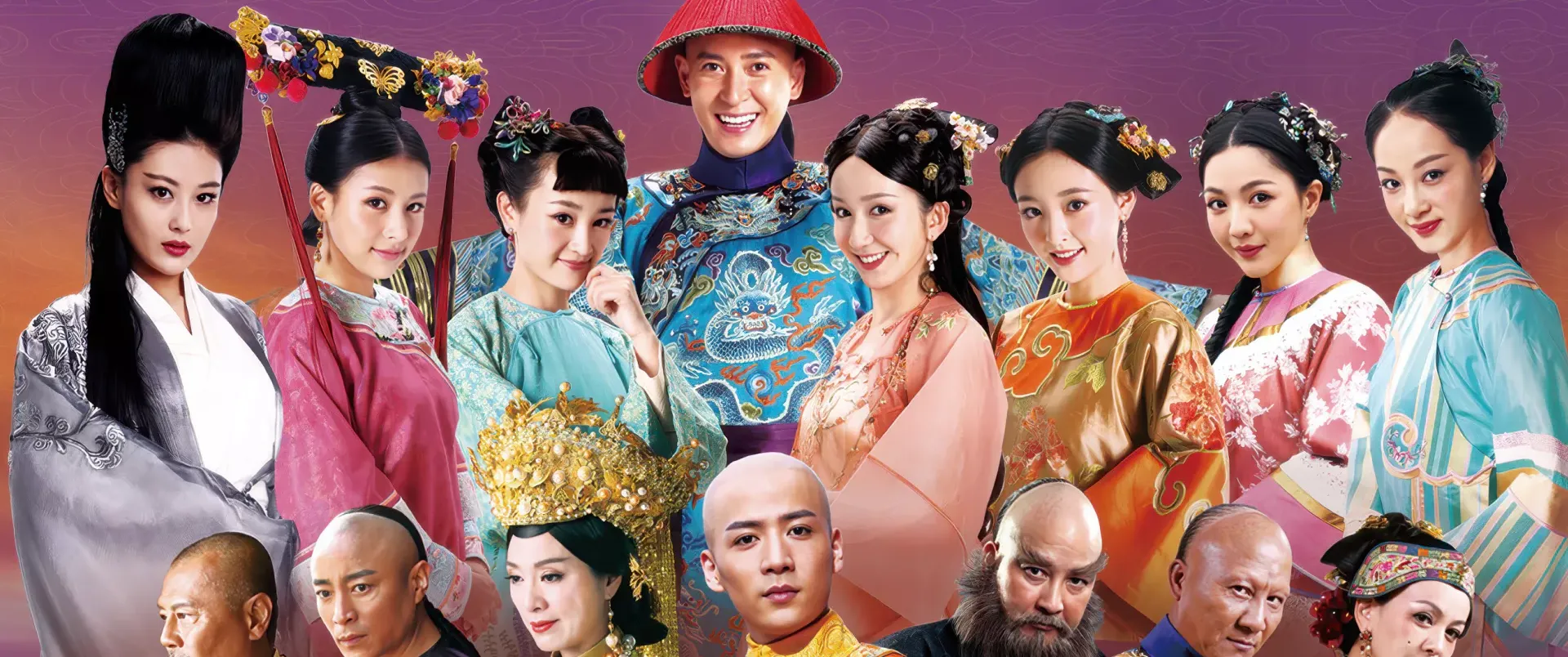
Wu Yingxiong (simplified: 吴应熊, traditional: 吳應熊, pinyin: Wú Yìngxióng, jyutping: ng4 jing3 hung4) was the son of Wu Sangui (吴三桂) and husband of Princess Jianning (建宁公主) in The Deer and the Cauldron. His marriage to the Qing princess was a political arrangement designed to keep Wu Sangui loyal to the Qing dynasty.
Biography
Political marriage
Wu Yingxiong was married to Princess Jianning, the sister of the Kangxi Emperor, as part of a political arrangement. This marriage was intended to secure Wu Sangui’s loyalty to the Qing dynasty, with Wu Yingxiong effectively serving as a political hostage in Beijing.
Despite his high status as a consort (额驸 — éfù) and his father’s power in the southwest, Wu Yingxiong lived under the constant threat that any rebellion by his father would result in his execution.
Relationship with Princess Jianning
Wu Yingxiong’s marriage to Princess Jianning is problematic from the start. Princess Jianning is known for her violent and unpredictable behavior, and the marriage is marked by tension and conflict rather than harmony.
Princess Jianning’s eventual relationship with Wei Xiaobao further complicates matters, as she becomes one of Wei Xiaobao’s wives despite being married to Wu Yingxiong.
The Three Feudatories Rebellion
When Wu Sangui launches the Three Feudatories Rebellion (三藩之乱 — Sānfān Zhī Luàn) against the Qing dynasty, Wu Yingxiong’s position becomes precarious. As a hostage in Beijing, he is immediately placed in danger by his father’s actions.
Historical basis
Wu Yingxiong (1634–1674) was a real historical figure, the son of Wu Sangui. Historically:
- He was married to Princess Jianning (Princess Kechun, 和硕恪纯长公主) in 1653 as a political arrangement
- He was granted various titles including Third Class Viscount (三等子爵), Junior Guardian (少保), and Junior Tutor (少傅)
- When his father rebelled in 1673, he was arrested and executed along with his son Wu Shilin (吴世霖) in 1674
- After Wu Sangui’s death, his grandson Wu Shifan (吴世璠) posthumously honored Wu Yingxiong as “Emperor Xiaogong” (孝恭皇帝)
In The Deer and the Cauldron, Jin Yong incorporates this historical framework while adapting it to fit the novel’s narrative, particularly focusing on the personal relationships and political dynamics surrounding Wu Yingxiong’s situation.
Significance
Wu Yingxiong represents the human cost of political marriages and the vulnerability of hostages in power struggles. His fate is determined not by his own actions but by his father’s political decisions, demonstrating how individuals can become pawns in larger political games.
His character also highlights the precarious nature of loyalty in the early Qing period, where powerful military commanders like Wu Sangui were both necessary for the empire’s security and potential threats to its stability.
Wu Yingxiong’s marriage to Princess Jianning and her eventual relationship with Wei Xiaobao add a personal dimension to the political conflict, showing how private relationships intersect with public politics in complex ways.