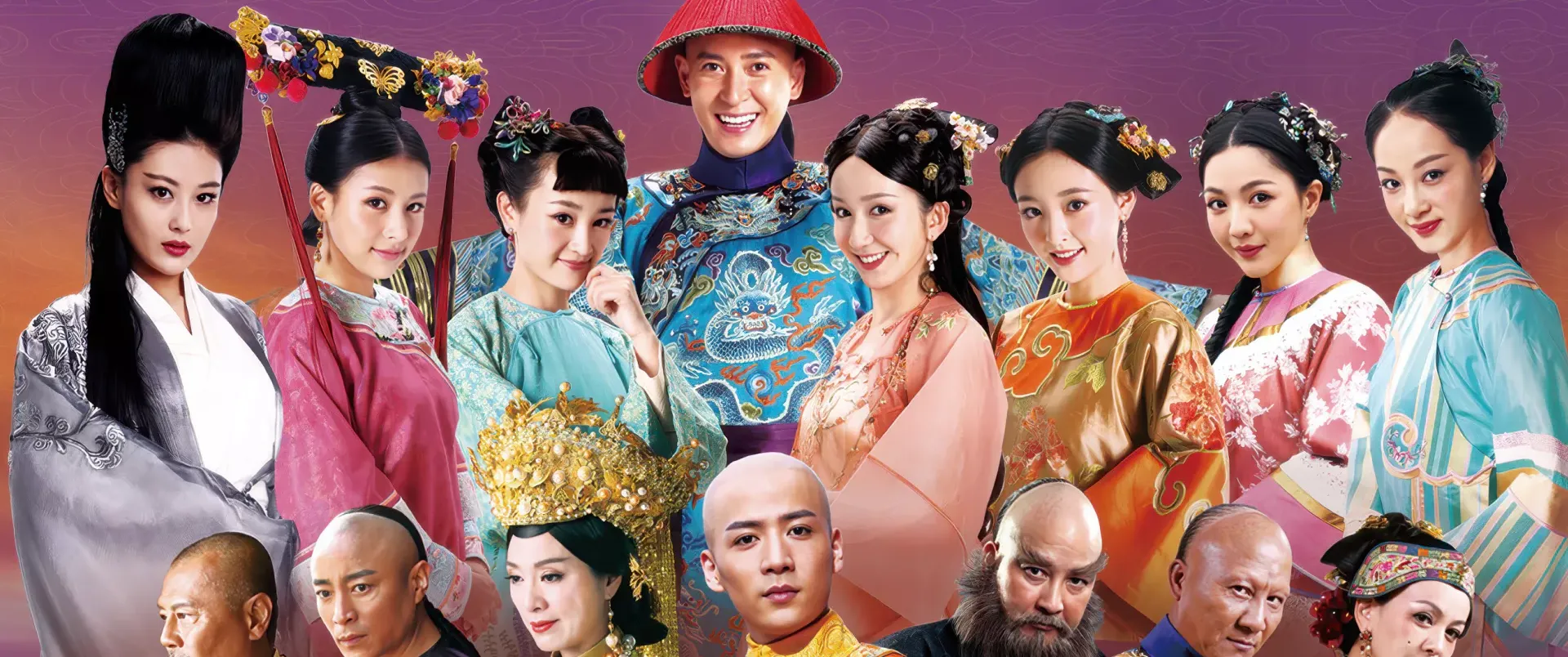
Wei Xiaobao (simplified: 韦小宝, traditional: 韋小寶, pinyin: Wéi Xiáobǎo, jyutping: wai4 siu2 bou2) was born and raised in the Lichun Brothel (丽春院 — Lìchūn Yuàn) in Yangzhou. A cunning but unscrupulous scamp, he became an influential figure in both the Qing court and the martial arts world through sheer luck and wit. Despite being illiterate, cowardly, lecherous, and having minimal martial arts skills, his resourcefulness and loyalty enabled him to navigate multiple conflicting allegiances and emerge unscathed.
Biography
Early life
Wei Xiaobao was born to Wei Chunfang (韦春芳), a prostitute at the Lichun Brothel in Yangzhou. His father’s identity remains unknown, as his mother had numerous clients. From a young age, Wei developed skills in deception, gambling, and survival through his experiences in the brothel environment.
At the age of twelve or thirteen, Wei Xiaobao followed Mao Shiba (茅十八) to Beijing, where he adopted the alias “Little White Dragon” (小白龙 — Xiǎobáilóng) to enhance his reputation. This journey marked the beginning of his extraordinary adventures.
Entering the palace
After killing and impersonating the young eunuch Xiaoguizi (小桂子 — Xiǎoguìzǐ), Wei Xiaobao found himself in the imperial palace. There, he encountered a young boy practicing martial arts who introduced himself as “Little Xuan” (小玄子 — Xiǎoxuánzǐ). Unbeknownst to Wei, this boy was actually the Kangxi Emperor in disguise.
The two quickly formed a close and playful friendship, often sparring and exchanging banter. Wei’s resourcefulness and audacity soon caught the emperor’s attention, and he became an unlikely confidant. When the domineering regent Oboi (鳌拜) threatened to usurp imperial power, Wei devised a cunning plan involving palace eunuchs to help Kangxi capture and depose Oboi, solidifying his place as a trusted ally of the emperor.
Multiple allegiances
Wei Xiaobao’s adventures soon drew him into the world of the Heaven and Earth Society (天地会 — Tiāndì Huì), an anti-Qing secret fraternity. The society’s charismatic leader, Chen Jinnan (陈近南), was impressed by Wei’s role in defeating Oboi and accepted him as a disciple, appointing him as the leader of the Green Wood Lodge (青木堂 — Qīngmù Táng).
This marked the beginning of Wei’s double life: a palace insider and confidant of the emperor on one hand, and a revolutionary plotting against the Qing on the other.
Wei’s fortunes took another twist when he was captured by the secretive Mystic Dragon Order (神龙教 — Shénlóng Jiào). Relying on his trademark blend of flattery, cunning, and opportunism, he won the trust of the Order’s leader, Hong Antong (洪安通), and was appointed as one of its Five Dragon Emissaries (白龙使 — Báilóng Shǐ).
The Sutra of Forty-two Chapters
Throughout his adventures, Wei Xiaobao became involved in the mystery of The Sutra of Forty-two Chapters (四十二章经 — Sìshí’èr Zhāng Jīng), which contained the secret of a massive treasure hidden by the Qing founders beyond the Great Wall. By collecting all eight copies of the sutra, Wei eventually uncovered the location of the treasure, though he ultimately chose not to exploit it.
Later years
After numerous adventures, Wei Xiaobao eventually married seven wives: Mu Jianping, Fang Yi, Shuanger, Su Quan, Princess Jianning, Zeng Rou, and Ake. He had three children: Wei Shuangshuang, Wei Hutou, and Wei Tongchui.
As tensions escalated between Kangxi and the Heaven and Earth Society, both sides demanded Wei’s loyalty. Faced with an impossible choice between his friend the emperor and his master Chen Jinnan (who was eventually assassinated by Zheng Keshuang), Wei chose to escape this conflict. He faked his own death during a journey back to Yangzhou and retired with his wives and mother to Yunnan, where they lived in seclusion.
Personality and traits
Wei Xiaobao is characterized by his cunning, opportunism, and pragmatism. Despite his moral shortcomings—greed, lechery, cowardice, and illiteracy—he possesses remarkable loyalty to friends and demonstrates genuine affection for those close to him. His ability to navigate complex political situations through deception and flattery, while maintaining multiple conflicting allegiances, is central to his character.
Unlike traditional wuxia protagonists, Wei Xiaobao never becomes a martial arts master. He is the only Jin Yong protagonist who remains essentially powerless in terms of martial arts ability, relying entirely on his wits, luck, and social connections to survive.
Martial arts
Despite receiving instruction from numerous masters including Chen Jinnan, Princess Changping (九难), Hai Dafu, Hong Antong, Su Quan, Chenguan, and He Tishou, Wei Xiaobao never mastered any martial arts techniques due to his laziness and lack of dedication.
The only skill he became proficient in was the “Divine Movement Hundred Transformations” (神行百变 — Shénxíng Bǎibiàn) qinggong technique, taught to him by Princess Changping. This evasion technique proved invaluable on multiple occasions, allowing Wei to escape from dangerous situations when his other methods failed.
Wei also learnt—but never mastered—various techniques including:
- Great Grappling Hands (大擒拿手 — Dà Qínná Shǒu) from Hai Dafu
- Great Compassion Thousand Leaves Palm (大慈大悲千叶手 — Dàcí Dàbēi Qiānyè Shǒu) from Hai Dafu
- Beauty Three Moves (美人三招 — Měirén Sān Zhāo) from Su Quan
- Hero Three Moves (英雄三招 — Yīngxióng Sān Zhāo) from Hong Antong
- Flower Plucking Grappling Hands (拈花擒拿手 — Niānhuā Qínná Shǒu) from Chengguan
Equipment
Wei Xiaobao possessed several valuable items:
- Ink-black Dagger (墨色匕首 — Mòsè Bǐshǒu): A razor-sharp dagger capable of cutting through iron, obtained from Oboi’s confiscated property
- Black Silk Vest (黑背心宝衣 — Hēi Bèixīn Bǎoyī): A golden thread vest that is impervious to blades and arrows, also from Oboi’s property
- Corpse Dissolving Powder (化尸粉 — Huàshī Fěn): A deadly powder that dissolves flesh on contact with blood
- Sand Shadow Device (含沙射影 — Hánshā Shèyǐng): A hidden weapon device that fires poisoned needles, given to him by He Tishou
- Five Dragon Token (五龙令 — Wǔlóng Lìng): A token from the Mystic Dragon Order that commands absolute obedience from members
Legacy
Wei Xiaobao represents a departure from traditional wuxia heroes. As an anti-heroic protagonist, he demonstrates that success in the martial arts world can come through means other than physical prowess. His character explores themes of loyalty, survival, and the intersection of personal relationships with political obligations.
The ending of The Deer and the Cauldron reflects Wei’s ultimate rejection of the traditional wuxia hero’s path. Instead of achieving martial arts mastery or resolving political conflicts, he chooses personal happiness and family life, disappearing from the jianghu entirely.