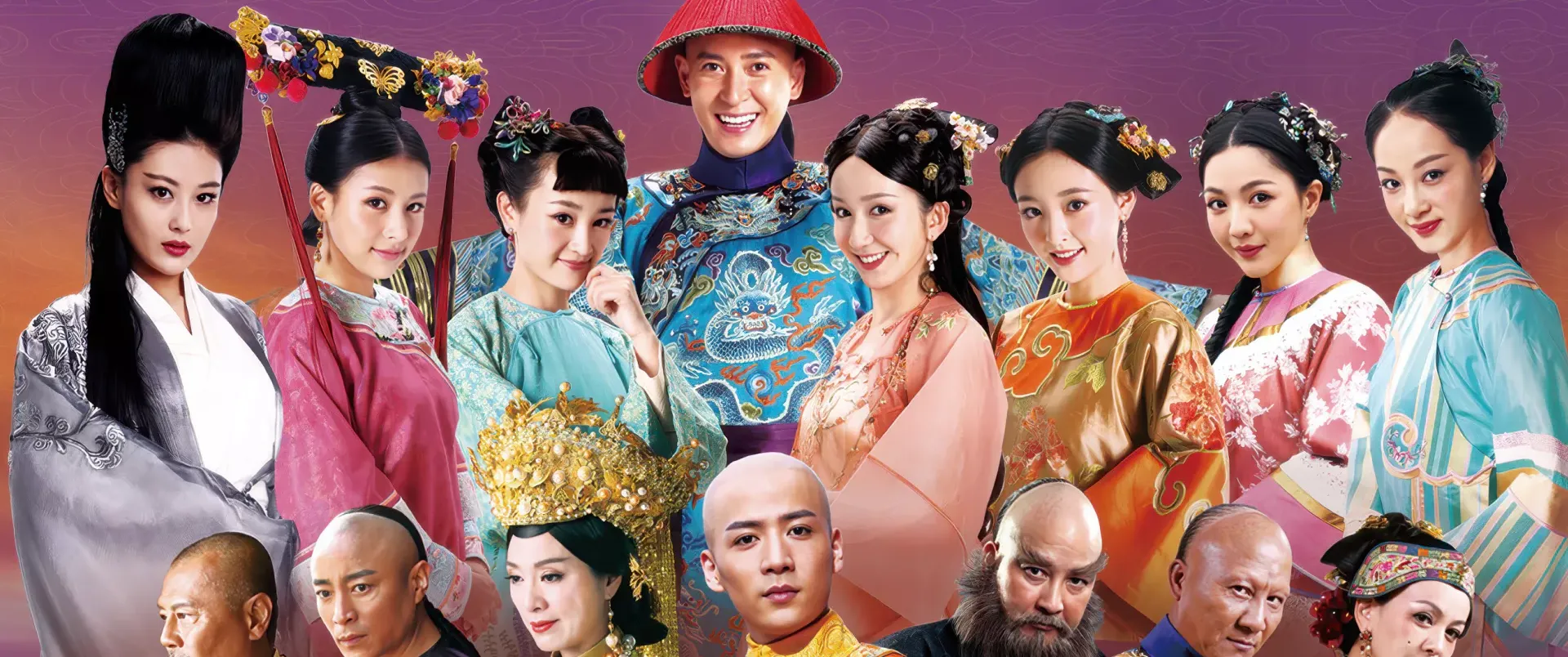
The Kangxi Emperor (simplified: 康熙皇帝, traditional: 康熙皇帝, pinyin: Kāngxī Huángdì, jyutping: hong1 hei1 wong4 dai3), personal name Xuanye (玄烨 — Xuányè), was the fourth emperor of the Qing Dynasty. He became a close friend of Wei Xiaobao through their playful martial arts practice sessions, where the emperor used the alias Little Xuan (小玄子 — Xiǎoxuánzǐ).
Biography
Early friendship with Wei Xiaobao
The Kangxi Emperor first encounters Wei Xiaobao when the latter is impersonating the young eunuch Xiaoguizi in the imperial palace. Unaware that he is interacting with the emperor, Wei Xiaobao assumes the young boy practicing martial arts is just another palace servant and introduces himself with typical bravado.
The two quickly develop a playful friendship, regularly sparring together. During these sessions, the emperor uses the pseudonym “Little Xuan” (小玄子), while Wei Xiaobao calls himself “Xiaoguizi” (小桂子 — Little Osmanthus). Their relationship is characterized by genuine camaraderie and mutual respect, transcending the vast social gap between them.
Defeating Oboi
One of the emperor’s most significant challenges was dealing with Oboi (鳌拜), one of the Four Regents who effectively controlled the empire during the emperor’s minority. The Kangxi Emperor, with Wei Xiaobao’s help, devised a plan to capture and depose the domineering regent.
Using a group of young eunuchs trained in wrestling (布库 — bùkù), the emperor successfully arrested Oboi during an audience, ending his threat to imperial authority. This event marked the beginning of the Kangxi Emperor’s true personal rule and solidified his friendship with Wei Xiaobao.
Seeking his father
The Kangxi Emperor discovered that his father, the Shunzhi Emperor, had not died but had instead become a Buddhist monk and retreated to Mount Wutai (五台山 — Wǔtái Shān). After Wei Xiaobao revealed this secret, the emperor sent him to locate his father, leading to a touching reunion between father and son.
The impostor Empress Dowager
The emperor also learnt that the Empress Dowager was actually an impostor named Mao Dongzhu (毛东珠), who had replaced the real empress dowager. With Wei Xiaobao’s assistance, the emperor rescued his true mother from captivity and exposed the deception.
Later relationship with Wei Xiaobao
Over time, the Kangxi Emperor gradually became aware of Wei Xiaobao’s dual loyalties—both to the imperial court and to the anti-Qing Heaven and Earth Society. Despite this, the emperor continued to trust and rely on Wei Xiaobao, valuing their friendship even as political tensions mounted.
However, when the conflict between the Qing court and the Heaven and Earth Society escalated, the emperor ultimately demanded that Wei Xiaobao choose sides. Unable to reconcile his loyalties, Wei Xiaobao faked his death and retired from public life, leaving the emperor to search for him in vain.
Personality
The Kangxi Emperor was intelligent, decisive, and genuinely caring toward those he trusted. His friendship with Wei Xiaobao demonstrated his ability to see beyond social status and appreciate genuine character. Despite his imperial authority, he maintained a playful side that emerged during his martial arts practice sessions with Wei Xiaobao.
He was also pragmatic and politically astute, successfully navigating the complex power dynamics of his court while maintaining genuine personal relationships.
Behind the scenes
Historical basis
The Kangxi Emperor was a real historical figure who reigned from 1661 to 1722, making him one of the longest-reigning emperors in Chinese history. His historical achievements include:
- Consolidating Qing control over China
- Suppressing the Three Feudatories rebellion
- Conquering Taiwan
- Signing the Treaty of Nerchinsk with Russia
- Promoting cultural and economic development
In The Deer and the Cauldron, Jin Yong fictionalises the early years of the Kangxi Emperor’s reign, focusing on his relationship with Wei Xiaobao and various political intrigues that mirror the historical challenges he faced.
Literary significance
The Kangxi Emperor serves as both a historical backdrop and a personal friend to Wei Xiaobao in the fiction. Their relationship highlights themes of friendship transcending social barriers, the complexity of loyalty, and the human side of imperial power. The emperor’s ultimate inability to maintain his friendship with Wei Xiaobao in the face of political necessity reflects the story’s exploration of the costs of power and the difficulties of reconciling personal relationships with political obligations.