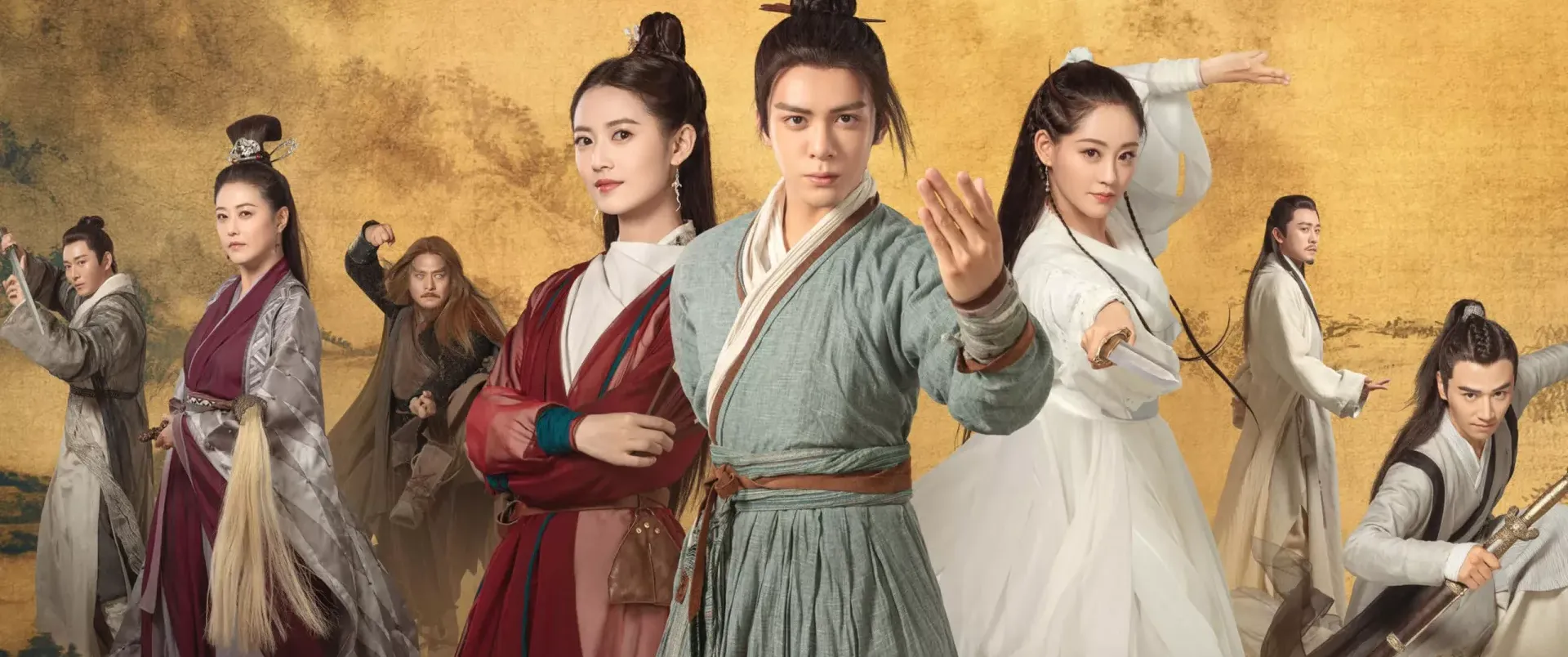
Mo Shenggu (simplified: 莫声谷, traditional: 莫聲谷, pinyin: Mò Shēnggǔ, jyutping: mok6 sing1 guk1), also known as Mo Qixia (莫七侠, Seventh Hero), was the youngest disciple of Zhang Sanfeng and the most hot-tempered among the Seven Xias of Wudang. Known for his straightforward, honest, and passionate nature, he brought energy and vigour to the Wudang Order while representing both the potential and challenges of maintaining traditional values in changing times.
Biography
Early training under Zhang Sanfeng
Mo Shenggu was the seventh and youngest disciple taken by Zhang Sanfeng, making him the junior-most among the Seven Xias of Wudang. As the youngest, his training was actually overseen primarily by Song Yuanqiao, the most senior disciple, who acted as a substitute teacher on Zhang Sanfeng’s behalf. This arrangement reflected the traditional hierarchy within the Wudang Order, where senior disciples helped train their juniors.
Despite his youth, Mo Shenggu developed considerable martial arts abilities, demonstrating that he was able to adapt Wudang techniques to his more aggressive and passionate temperament while maintaining the core principles of Wudang martial arts.
Encounter with the three Escort Chiefs
When Zhang Cuishan, his fifth senior brother, returned to the Central Plains after ten years away, Mo Shenggu was among those who welcomed him back. During an encounter with three Escort Chiefs from major escort agencies, Mo Shenggu demonstrated his straightforward and passionate nature by being the first to speak out, displaying sharp, direct words and an unpolished, genuine temperament.
This encounter showcased Mo Shenggu’s character—unlike Song Yuanqiao’s gentle and refined speech, Mo Shenggu was straightforward and direct, speaking with sharp edges and clear principles. His passionate nature was described as being like the bright, dry heat of an autumn sun—clear, bright, and full of intensity.
The Six Major Factions’ attack on Bright Peak
Mo Shenggu participated in the Six Major Factions’ expedition to Bright Peak, where they fought against the Ming Order. During this battle, after Yin Tianzheng, the White-Browed Eagle King, had already defeated three masters from the Shaolin and Huashan Orders and engaged Zhang Songxi in an neili contest, he then fought Mo Shenggu.
Despite Yin Tianzheng’s already weakened state from multiple battles, he was able to defeat Mo Shenggu, demonstrating the formidable capabilities of the Ming Order’s Four Guardian Kings. This defeat, however, did not diminish Mo Shenggu’s reputation, as Yin Tianzheng was recognised as one of the most powerful martial artists of the era.
Discovery of Song Qingshu’s wrongdoing
Later in the story, Mo Shenggu discovered that Song Qingshu, Song Yuanqiao’s son and a third-generation disciple of the Wudang Order, had been spying on the Emei Order’s female disciples. This discovery violated both the principles of righteous conduct and the honour of the Wudang Order.
Mo Shenggu, with his straightforward nature and commitment to righteousness, confronted Song Qingshu about this wrongdoing. His hot-tempered nature and firm principles would not allow him to overlook such a violation of martial arts ethics and proper conduct.
Tragic death
Mo Shenggu’s confrontation with Song Qingshu led to his tragic death. Afraid that Mo Shenggu would expose his misconduct and subject him to punishment, Song Qingshu, with the help of Chen Youliang, a member of the Beggars’ Guild who had been manipulating Song Qingshu, ambushed and killed Mo Shenggu.
This act marked Song Qingshu as a traitor to the Wudang Order—he had killed his own martial uncle, a violation of the most fundamental principles of martial arts hierarchy and respect. Mo Shenggu’s death represented a tragic loss for the Wudang Order, as he had been a passionate and committed disciple who embodied the Order’s values of righteousness and integrity.
Legacy and vengeance
Mo Shenggu’s death deeply affected the Wudang Order. At the Slaying Lion Heroes Assembly (屠狮英雄会), Yu Lianzhou, the second of the Seven Xias, challenged Song Qingshu and defeated him, using Taiji Fist to break both of his arms and shatter his skull, leaving him crippled. This act of vengeance demonstrated the Wudang Order’s determination to punish traitors and honour Mo Shenggu’s memory.
Mo Shenggu’s death served as a reminder of the real dangers faced by righteous martial artists in a corrupt world. His sacrifice motivated the Order’s continued commitment to justice and moral principles despite personal costs, demonstrating that the path of righteousness was not without risks.
Personality & traits
Passionate and hot-tempered
Mo Shenggu was known as the most hot-tempered among the Seven Xias of Wudang. His passionate nature contrasted with typical Taoist ideals of equanimity and calm, but this passion also provided necessary vigour for active engagement with external threats and injustices. His character was described as being like the bright, dry heat of an autumn sun—clear, bright, and full of intensity.
Straightforward and honest
Mo Shenggu possessed a straightforward and honest nature, speaking directly and without the refined, diplomatic language of his senior brothers. He was described as having sharp, direct words and an unpolished, genuine temperament that was both refreshing and sometimes challenging for others.
Unlike Song Yuanqiao, whose speech was gentle and refined, Mo Shenggu spoke with sharp edges and clear principles. His straightforwardness meant that he did not mince words when addressing wrongdoings or injustices.
Committed to righteousness
Mo Shenggu’s commitment to righteousness was absolute. He could not tolerate violations of martial arts ethics or improper conduct, even when it involved members of his own faction. This commitment led him to confront Song Qingshu about his misconduct, demonstrating that he prioritised principles over personal relationships.
Energetic and vigorous
As the youngest of the Seven Xias, Mo Shenggu brought energy and passion to the Wudang Order. His youth and vigour complemented the more mature and steady nature of his senior brothers, creating a balanced dynamic within the Seven Xias that reflected the diverse personalities within the Order.
Martial arts abilities
Taiji Fist
As one of the Seven Xias, Mo Shenggu had mastered Taiji Fist (太极拳), the signature martial art created by Zhang Sanfeng. Despite his hot-tempered nature, he was able to adapt the soft, circular principles of Taiji Fist to his more aggressive temperament, demonstrating how Wudang techniques could accommodate diverse personalities while maintaining core philosophical consistency.
Taiji Swordplay
Mo Shenggu had mastered Taiji Swordplay (太极剑), the sword technique created by Zhang Sanfeng. His martial arts development emphasised the aggressive application of Wudang techniques, showing how internal principles could be adapted to different fighting styles while maintaining effectiveness.
Wudang Swordplay
Mo Shenggu was skilled in Wudang Swordplay (武当剑法), the foundational sword techniques of the Wudang Order. His mastery of these techniques, combined with his passionate and direct fighting style, made him a formidable martial artist.
Internal energy cultivation
Mo Shenggu possessed solid neili cultivation through his training in Wudang Nine Yang Power (武当九阳功). While he may not have reached the same level as some of his more senior brothers like Yu Lianzhou, his neili was sufficient to make him a respected martial artist in the jianghu.
Overall martial arts level
Mo Shenggu’s martial arts abilities were considerable, placing him among the top tier of martial artists in the jianghu. His combination of technical skill, neili cultivation, and passionate fighting style made him an effective practitioner, though his defeat by Yin Tianzheng demonstrated that there were still masters superior to him.
Relationships
Zhang Sanfeng
Mo Shenggu was deeply loyal to Zhang Sanfeng, his master and the founder of the Wudang Order. Though his actual training was primarily overseen by Song Yuanqiao, he maintained strong respect and loyalty for Zhang Sanfeng, embodying the values and principles that Zhang Sanfeng had established for the Wudang Order.
Song Yuanqiao
Song Yuanqiao served as Mo Shenggu’s primary instructor, acting as a substitute teacher on Zhang Sanfeng’s behalf. This relationship reflected the traditional hierarchy within martial arts organisations, where senior disciples help train their juniors. Despite this teaching relationship, Mo Shenggu maintained his own independent character and fighting style.
Fellow Seven Xias
Mo Shenggu had strong fraternal bonds with his fellow Seven Xias, particularly Zhang Cuishan, with whom he interacted during the latter’s return to the Central Plains. His straightforward nature and passionate character complemented the more reserved or analytical natures of his senior brothers, creating a diverse and balanced group.
Song Qingshu
Mo Shenggu’s relationship with Song Qingshu, Song Yuanqiao’s son, was ultimately tragic. When Mo Shenggu discovered Song Qingshu’s misconduct in spying on the Emei Order’s female disciples, his commitment to righteousness led him to confront Song Qingshu. This confrontation, however, led to Mo Shenggu’s death at the hands of Song Qingshu and Chen Youliang, marking one of the most tragic events in the Wudang Order’s history.
Behind the scenes
Mo Shenggu represents the passionate and energetic dimension of the Wudang Seven Xias. While characters like Song Yuanqiao represented steady leadership and Yu Lianzhou represented martial excellence, Mo Shenggu embodied the vigour and passion necessary for active engagement with the world’s injustices.
His character demonstrates that martial arts organisations can accommodate diverse personalities and temperaments while maintaining core principles. His hot-tempered nature, though contrasting with typical Taoist ideals of equanimity, provided necessary energy for confronting wrongdoings and maintaining the Order’s commitment to righteousness.
Mo Shenggu’s tragic death serves as a reminder of the real dangers faced by righteous martial artists. His sacrifice motivates the Order’s continued commitment to justice and moral principles despite personal costs, demonstrating that the path of righteousness requires courage and sometimes involves great personal risk.
The character’s name “Shenggu” (声谷) combines “sheng” (声), meaning “sound” or “voice,” and “gu” (谷), meaning “valley.” This name could symbolise the echo of righteous principles, reflecting his straightforward and vocal commitment to justice.
Portrayals
Mo Shenggu has been portrayed in various adaptations of The Heavenly Sword and the Dragon Sabre:
The Heavenly Sword and the Dragon Sabre
- 1978 series — Tan Quanqing
- 1984 series — Deng Dexiang
- 1986 series — Luo Dahua
- 2001 series — Li Shujia
- 2003 series — Ma Dongyan
- 2009 series — Wang Zhigang
- 2019 series — Chen Jian
See also
- Zhang Sanfeng – His master
- Song Yuanqiao – His senior brother and primary instructor
- Yu Lianzhou – His senior brother who avenged his death
- Song Qingshu – His nephew who killed him
- Seven Xias of Wudang – His fellow disciples
- Wudang Order – The organisation he belonged to
- The Heavenly Sword and the Dragon Sabre characters