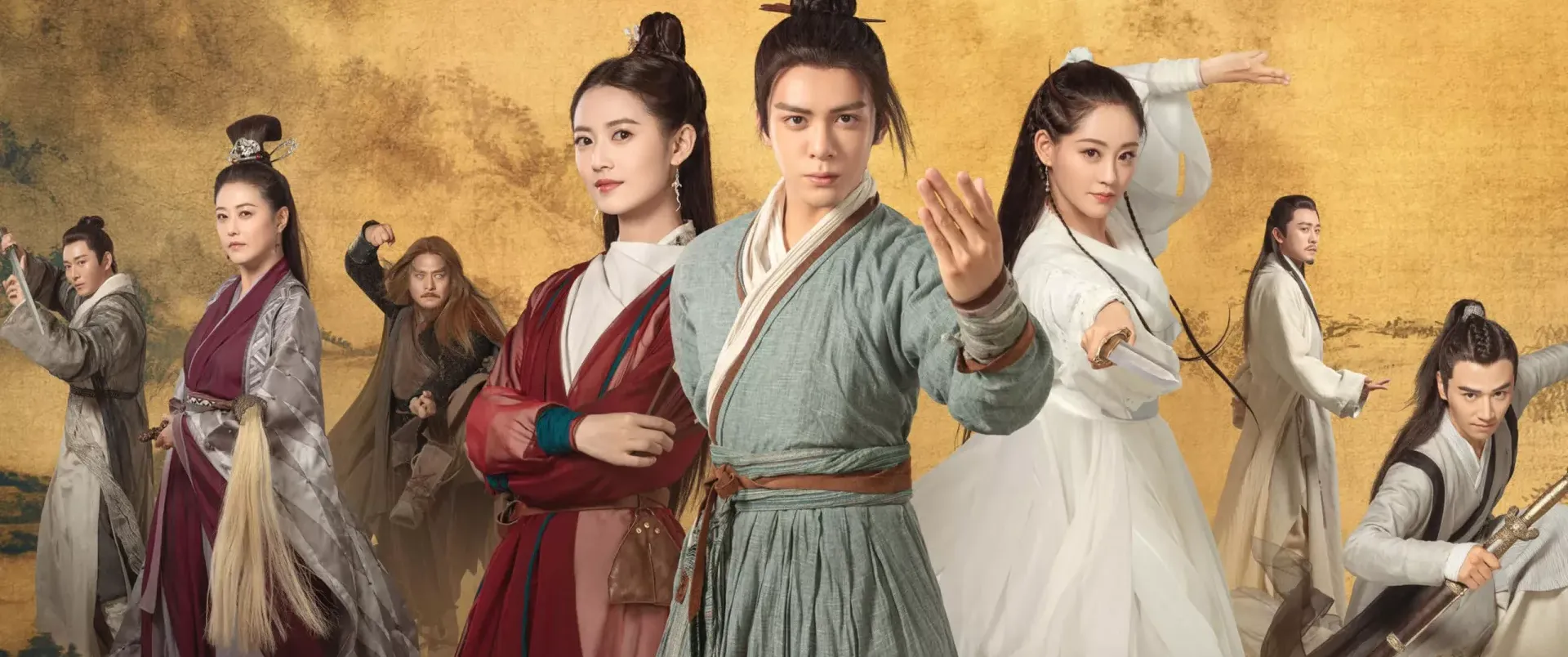
Zhang Sanfeng (simplified: 张三丰, traditional: 張三豐, pinyin: Zhāng Sānfēng, jyutping: zoeng1 saam1 fung1) was the legendary founder of the Wudang Order and a revered martial artists in the jianghu. Originally known as Zhang Junbao, he created the revolutionary Taiji Fist and Taiji Swordplay based on the Nine Yang Power he learnt from his master Jueyuan. He served as grandteacher to Zhang Wuji and was widely regarded as the most powerful martial artist of his era.
Biography
Early life and transformation
Zhang Sanfeng was originally known as Zhang Junbao, a lay disciple at Shaolin Order who served under Master Jueyuan in the Sutra Repository. After learning the Nine Yang Power from Jueyuan and witnessing his master’s death, Zhang Junbao left Shaolin and eventually adopted the name Zhang Sanfeng, meaning “Three Abundances” or “Three Peaks.”
Based on his understanding of the Nine Yang Power and Daoist philosophy, Zhang Sanfeng created an entirely new martial arts system that emphasised softness overcoming hardness, circular movements, and the integration of yin and yang. This revolutionary approach became the foundation of the Wudang Order, which he established on Mount Wudang.
Founding the Wudang Order
Zhang Sanfeng founded the Wudang Order and took seven disciples, who became known as the Seven Xias of Wudang: Song Yuanqiao, Yu Lianzhou, Yu Daiyan, Zhang Songxi, Zhang Cuishan, Yin Liting, and Mo Shenggu. Each disciple developed their own specialisations while maintaining the core principles of Wudang martial arts.
Under Zhang Sanfeng’s guidance, the Wudang Order grew to become one of the most respected martial arts organisations in the jianghu, rivalling even the Shaolin Order in prestige and influence.
Relationship with Zhang Wuji
When Zhang Wuji was ten years old, his parents Zhang Cuishan and Yin Susu committed suicide in front of the Wudang Order after being pressured to reveal the whereabouts of Xie Xun and the Dragon-slaying Sabre. Shortly after, Zhang Wuji was struck by Xuanming Second Elder’s Xuanming Divine Palm, which left him with a fatal cold poison.
Despite Zhang Sanfeng’s extraordinary neili and medical knowledge, even he could not fully cure the Xuanming Divine Palm’s cold poison. He and the Seven Xias took turns infusing their neili into Zhang Wuji to keep him alive, but the cold poison would flare up periodically, causing excruciating pain.
Attempt to seek treatment
Accompanied by Zhang Sanfeng, the young Zhang Wuji travelled to Shaolin Order to seek the Shaolin Nine Yang Power, hoping it might cure his condition. However, the Shaolin monks refused to share their techniques, citing their unwillingness to exchange techniques with other schools.
On their return journey, Zhang Sanfeng and Zhang Wuji encountered Chang Yuchun of the Ming Order and a young Zhou Zhiruo at a ferry crossing on the Han River. Zhou Zhiruo’s gentle care of the ailing Zhang Wuji left a deep impression on both the boy and his grandteacher.
Teaching Taiji to Zhang Wuji
Years later, after Zhang Wuji had mastered the Nine Yang Power and become the Ming Order leader, Zhang Sanfeng taught him Taiji Fist and Taiji Swordplay. These techniques, which Zhang Sanfeng had created based on the principles of softness overcoming hardness and circular movements, complemented Zhang Wuji’s already formidable martial arts abilities.
Zhang Sanfeng’s teaching emphasised understanding the principles behind the techniques rather than merely memorising forms. He demonstrated the techniques slowly, allowing Zhang Wuji to grasp the essence of Taiji martial arts through observation and practice.
Personality & traits
Wisdom and compassion
Zhang Sanfeng was renowned for his profound wisdom, which extended beyond martial arts to encompass philosophy, medicine, and human nature. He demonstrated deep compassion, particularly in his care for the young Zhang Wuji, whom he treated as his own grandson despite the boy’s connection to the Ming Order, which many in the jianghu considered heretical.
Open-mindedness
Unlike many martial artists of his era who were bound by sectarian prejudices, Zhang Sanfeng maintained an open mind about different martial arts schools and philosophies. He did not harbour the same animosity towards the Ming Order that many orthodox schools displayed, and he was willing to teach his techniques to Zhang Wuji despite the boy’s association with the Ming Order.
Teaching philosophy
Zhang Sanfeng believed in teaching according to each student’s individual nature and capabilities. His seven disciples each developed distinctive specialisations, reflecting his ability to adapt his teaching to their unique talents and temperaments.
Martial arts abilities
Taiji Fist
Zhang Sanfeng’s most revolutionary creation was Taiji Fist, a martial art that emphasised softness overcoming hardness, circular movements, and the integration of yin and yang. Unlike traditional hard martial arts that relied on brute force, Taiji Fist used yielding and redirection, allowing a practitioner to overcome opponents of greater physical strength.
Taiji Swordplay
Taiji Swordplay embodied the same principles as Taiji Fist, emphasising constant change and adaptation. The swordplay techniques flowed like water, with each movement naturally transitioning into the next, making it extremely difficult for opponents to predict or counter.
Internal energy cultivation
Zhang Sanfeng’s mastery of the Nine Yang Power, combined with his understanding of Daoist neili cultivation, made him one of the most powerful neili practitioners in the jianghu. His neili was so profound that he could infuse it into others to sustain their lives, as he did with the young Zhang Wuji.
Reputation
Zhang Sanfeng was widely regarded as the most powerful martial artist of his era, with his reputation extending far beyond the Wudang Order. Even the most arrogant martial artists in the jianghu showed him the utmost respect, and his name was synonymous with martial arts excellence.
Relationships
Disciples
Zhang Sanfeng’s seven disciples, the Seven Xias of Wudang, were his greatest legacy. Each developed their own specialisations while maintaining the core principles of Wudang martial arts. His relationship with Zhang Cuishan, the fifth disciple and father of Zhang Wuji, was particularly close, and he was deeply affected by Zhang Cuishan’s death.
Zhang Wuji
Zhang Sanfeng treated Zhang Wuji as his own grandson, showing him the same care and affection he would have shown to any of his direct disciples’ children. Despite Zhang Wuji’s eventual role as Ming Order leader, Zhang Sanfeng continued to support and teach him, demonstrating his open-mindedness and genuine care for the young man.
Master Jueyuan
Zhang Sanfeng’s relationship with his master Jueyuan was foundational to his entire martial arts journey. The Nine Yang Power he learnt from Jueyuan became the basis for all his later innovations, and he always honoured his master’s memory and teachings.
Behind the scenes
Zhang Sanfeng is based on the historical figure of the same name, a legendary Daoist who is traditionally credited with creating Taiji Quan (Tai Chi). In Jin Yong’s novels, Zhang Sanfeng appears in both The Return of the Condor Heroes (as the young Zhang Junbao) and The Heavenly Sword and the Dragon Sabre (as the elderly founder of Wudang Order).
His character represents the pinnacle of martial arts achievement and serves as a bridge between the world of The Return of the Condor Heroes and The Heavenly Sword and the Dragon Sabre, connecting the stories through his relationship with Guo Xiang and his role as Zhang Wuji’s grandteacher.
See also
- Zhang Junbao – His earlier identity
- Zhang Wuji – His granddisciple
- Wudang Order – The organisation he founded
- Seven Xias of Wudang – His seven disciples
- Taiji Fist – The martial art he created
- Taiji Swordplay – The swordplay he created
- Nine Yang Power – The foundation of his martial arts
- Jueyuan – His master
- The Heavenly Sword and the Dragon Sabre characters