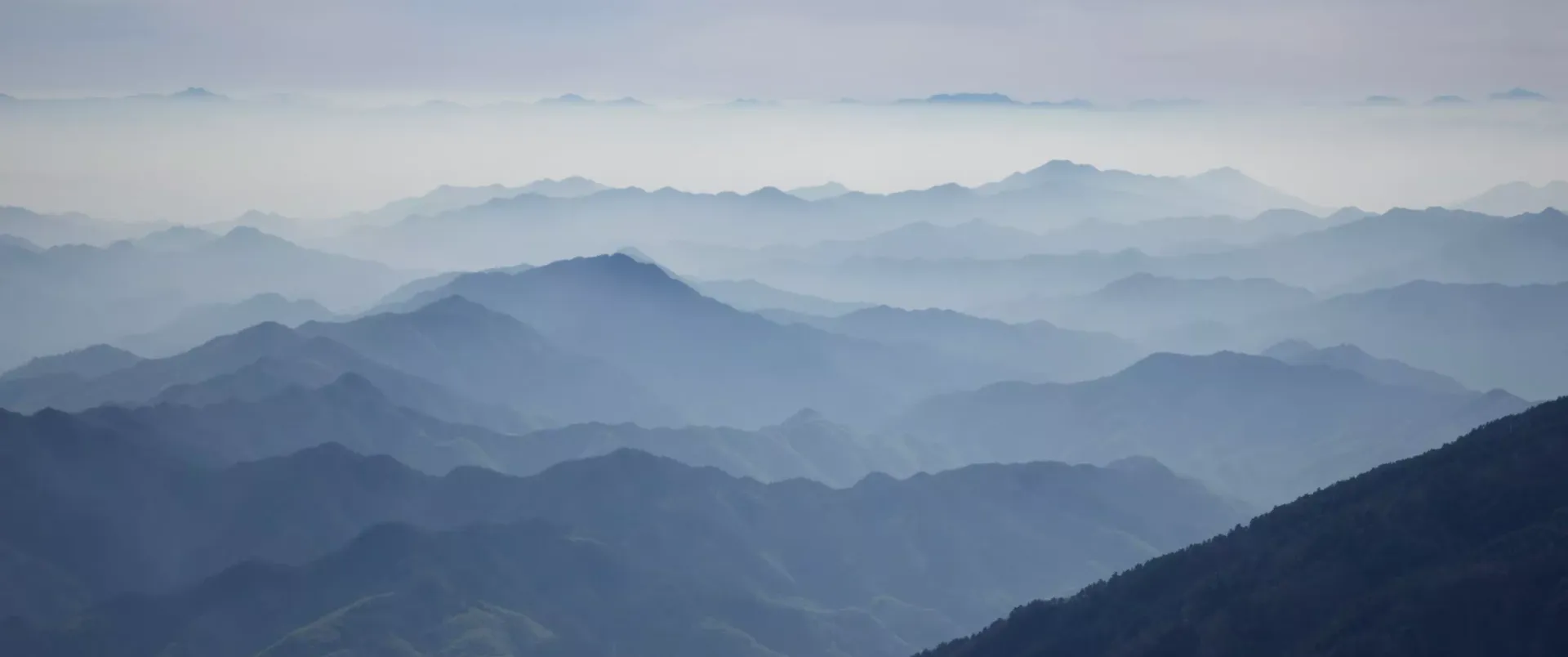
The Heavenly Sword & the Dragon Sabre Chapter 2 Part 5
Translation by Jenxi Seow
The moon wheel tilted westward, and shadows lengthened upon the ground. Jueyuan’s1 voice grew ever lower as he recited the scripture, his words slurring with fatigue. Guo Xiang2 urged him gently, “Great Master, you have wearied yourself all the day. Rest a while longer.”
Yet Jueyuan seemed not to hear her words. He continued his recitation: “… strength is borrowed from another; qi3 issues from the spine. How can qi issue from the spine? The qi sinks downward, gathering from both shoulders into the spine and concentrating at the waist—this is qi descending from above, and is called closing. From the waist it spreads through the spine, distributes through both arms, and extends to the fingers—this is qi rising from below, and is called opening. Closing is gathering; opening is releasing. Once one understands opening and closing, one understands yin and yang…”4
His voice faded ever softer with each phrase, until at last all fell silent. He appeared to have drifted into deep slumber.
Neither Guo Xiang nor Zhang Junbao5 dared disturb him. They could only commit to memory each passage he had recited.
The Dipper turned and the stars wheeled across the heavens. The moon sank beyond the western mountains. Then, without warning, dark clouds gathered on all sides, plunging the world into pitch darkness. After the time it takes to finish a meal, the east began to brighten. They saw that Jueyuan sat with his eyes closed and brows lowered, still and unmoving, a faint smile upon his face.
Zhang Junbao turned his head and glimpsed a shadow flicker behind a great tree—a flash of saffron kasaya.6 He started in alarm and called out, “Who goes there?”
From behind the tree emerged a tall, gaunt elder monk. It was none other than Chan Master Wuse,7 First Seat of the Arhat Hall.8
Guo Xiang felt both alarm and delight. “Great Master!” she exclaimed. “Why have you pursued us so relentlessly? Must you drag this master and disciple back to the temple at any cost?”
Wuse replied, “Amitabha!9 This old monk can still distinguish right from wrong—I am no slave to antiquated rules. I have been here half the night. Had I wished to act, I would not have waited until now. Brother Jueyuan, Junbao—my brother Wuxiang10 leads the disciples of the Dharma Hall11 eastward in pursuit. You must make haste and flee to the west. I myself must return to the Dharma Hall to accept my punishment!”
Yet Jueyuan sat with head bowed and eyes closed, showing no sign of waking.
Zhang Junbao stepped forward and said, “Shifu,12 wake up. The First Seat of the Arhat Hall wishes to speak with you.”
Still Jueyuan did not stir. Zhang Junbao grew alarmed. He reached out to touch the monk’s forehead and found it cold as ice. His master had passed into nirvana13 long ago.
Zhang Junbao’s grief knew no bounds. He fell prostrate upon the ground, crying out, “Shifu! Shifu!”
But no call could wake the departed.
Chan Master Wuse pressed his palms together in reverence and spoke a verse:
“No clouds veil the quarters of heaven,
All directions shine pure and bright.
A gentle breeze bears fragrant air,
The mountains rest in silent peace.
Today brings great rejoicing—
He has shed his brittle, perilous form.
Without anger, without sorrow,
Should we not celebrate?14
Having spoken, he turned and departed like a drifting cloud.
Zhang Junbao wept bitterly, and Guo Xiang shed many tears as well. When monks of Shaolin passed into nirvana, their bodies were cremated by tradition. The two gathered dry branches and committed Jueyuan’s mortal form to the flames.
Guo Xiang said, “Brother Zhang,15 the monks of Shaolin will not let you go so easily. Take great care. Let us part here—we shall meet again in days to come.”
Zhang Junbao asked through his tears, “Miss Guo,16 where will you go? And where shall I?”
When Guo Xiang heard him ask where she would go, a pang of sorrow pierced her heart.
“I shall wander to the ends of the earth,” she said, “drifting where the wind takes me. I know not where I shall go. Brother Zhang, you are young, and you have no experience of the jianghu.17 The monks of Shaolin are hunting you even now. Let me think…”
She slipped a golden bracelet from her wrist and pressed it into his hands. “Take this bracelet to Xiangyang18 and present yourself to my father and mother. They will surely treat you well. Under their protection, even the monks of Shaolin, however fierce, will not dare trouble you.”
Zhang Junbao accepted the bracelet through his tears. Guo Xiang continued, “Tell my father and mother that I am well, and bid them not worry for me. My father delights in young heroes—seeing a promising lad like you, he may well take you as a disciple. My brother is honest and good-natured; you two shall certainly get along famously. Only my elder sister has a temper. Cross her, and she will not spare your dignity. But if you humour her a little, all will be well.”
She described her parents’ situation and explained how to find them in Xiangyang, then turned to leave.
Zhang Junbao felt as though heaven and earth had grown vast and boundless, yet there was nowhere he might find refuge. He stood rooted before his master’s funeral pyre for half the day before at last he stirred. When he had walked a dozen feet, he stopped and turned back. He hefted the pair of great iron buckets his master had left behind, and with them swaying upon his shoulders, he set off at an unsteady pace.
Through desolate mountains and wild ridges, a gaunt young man made his way southward in solitude, forlorn and bereft, his loneliness beyond all words.
After a fortnight’s travel, he crossed into Hubei Province, and Xiangyang lay not far ahead. Yet the monks of Shaolin never caught up with him. Chan Master Wuse had been watching over him in secret, deliberately leading the pursuing monks eastward—the very opposite direction—so that with each passing day, they drew further apart.
One afternoon, he came before a great mountain. Dense and verdant, thick with pine and cypress, its peaks rose in grand majesty. When he asked a passing villager, he learned it was called Mount Wudang.19
He sat down to rest upon a stone at the mountain’s foot. A man and woman came walking along the path beside him, shoulder to shoulder, clearly a young husband and wife from their intimate manner. The woman chattered without cease, scolding her husband all the while. The man bowed his head and said nothing.
Zhang Junbao heard the woman say, “You call yourself a man, yet you cannot stand on your own two feet! Must you live under your sister and brother-in-law’s roof, inviting humiliation for no good reason? We have hands and feet of our own—we can work for our own rice, eat our own vegetables and radishes, drink our own plain tea. What freedom! What ease! Yet you haven’t a single hard bone in your body. Truly, you were born in vain!”
The man could only murmur, “Mm, mm.”
The woman continued, “As the saying goes, ‘Barring death, there are no great troubles.’ Must you depend upon others at any cost?”
After this torrent of reproach, the husband dared not answer back. His face flushed the colour of pig’s liver, turning a deep purple.
Every word struck home in Zhang Junbao’s heart: “You call yourself a man, yet you cannot stand on your own two feet… inviting humiliation for no good reason… As the saying goes, ‘Barring death, there are no great troubles.’ Must you depend upon others at any cost?”
He watched the country couple’s receding figures, his mind churning with the peasant woman’s words, turning them over and over like thunderclaps against his skull. He saw the husband straighten his back and say something. Then husband and wife burst into hearty laughter together, as though the man had resolved to make his own way, and both rejoiced at the decision.
Zhang Junbao thought further, Miss Guo said her elder sister has a foul temper and speaks without mercy. She told me to humour her. But why should a man like me bow and scrape, swallowing my pride for another’s favour? This peasant couple can summon the will to forge their own path. Why should I, Zhang Junbao, live under another’s roof, beholden to their moods and glances?
With these thoughts, his mind was made up. He lifted the iron buckets onto his shoulders and began ascending Mount Wudang. He found a rocky cave, and there he dwelt—drinking spring water when thirsty, eating wild fruits when hungry—cultivating without rest the Nine Yang Manual20 that Jueyuan had transmitted to him.
Jueyuan had taught him for many years, and Zhang Junbao had committed five or six tenths of the manual to memory. In just over a decade, his neili21 grew immensely powerful. He read deeply in the Daoist Canon, and his understanding of Daoist qi22 cultivation deepened further still.
One day, as he wandered idly through the mountains, he gazed up at drifting clouds and down at flowing streams. Suddenly, the words of Laozi23 came to mind: “The soft and weak overcomes the hard and strong”; “Things reach their extreme and then reverse”; “The upright seems crooked, the good seems perverse”; “That which is bent shall be made whole; that which is crooked shall be made straight; that which is hollow shall be filled; that which is worn shall be renewed; having little, one gains; having much, one is confused.”
He recalled further Laozi’s words: “Using the softest thing under heaven, one may gallop through the hardest”; “Nothing under heaven is softer or weaker than water, yet nothing surpasses it in attacking the hard and strong”; “Things may be diminished and thereby increased, or increased and thereby diminished”; “True words seem contradictory”; “Profound virtue runs deep and far, returning with all things to the Great Accord.”
From these insights, he comprehended a system of martial principles founded upon overcoming hardness through softness—the very essence of what Laozi meant when he said, “When the world hears the Dao, they laugh aloud; if they did not laugh, it would not be the Dao.”
This was also the teaching of the Dao De Jing:24 “That which would contract must first expand; that which would weaken must first strengthen; that which would cast down must first raise up; that which would take must first give—this is called subtle illumination. The soft conquers the hard; the weak conquers the strong.”
He pondered in the cave for seven days and seven nights. Then, in a sudden flash, all became clear—the martial principle of yin and yang in mutual harmony revealed itself complete. He could not help but throw back his head and laugh toward the heavens.
That great laugh brought forth a grandmaster who would carry forward the legacy of the ancients and open paths for those yet to come. From his self-realised martial principles, the Daoist way of emptiness and harmony, and the complementary forces of mutual creation and destruction recorded in the Nine Yang Manual, he forged the martial arts of the Wudang Order—a legacy that would illuminate the ages and shine through a thousand years. His devotion to Daoist learning led him to take vows at the Zhenwu Temple25 on Mount Wudang and become a priest.
In later years, he journeyed north to Baoji26 and beheld three peaks rising in splendour, standing proud above the sea of clouds. Fresh insights into martial arts came to him, and he took for himself the name Sanfeng—Three Peaks.
He was none other than Zhang Sanfeng,27 that peerless prodigy in all the annals of Chinese martial arts.
Footnotes
-
觉远 – Juéyuǎn. His name meaning “Awakened Distance” or “Far-reaching Enlightenment”. A Shaolin Monastery monk who memorised the Nine Yang Manual hidden within the Lankavatara Sutra. See Wuxia Wiki. ↩
-
郭襄 – Guō Xiāng. Her name meaning “Xiang of Guo”, with “Xiang” referring to Xiangyang, the city where she was born. See Wuxia Wiki. ↩
-
气 – qì. Literally breath or vital energy. The fundamental life force or vital energy flowing through all living things, central to Chinese medicine and martial arts philosophy. See Wuxia Wiki. ↩
-
A passage from the Nine Yang Manual (九阳真经 – Jiǔyáng Zhēnjīng), one of the most powerful internal cultivation texts in the jianghu. See Wuxia Wiki. ↩
-
张君宝 – Zhāng Jūnbǎo. His name meaning “Zhang Sovereign Treasure”. The birth name of Zhang Sanfeng, founder of the Wudang Order. See Wuxia Wiki. ↩
-
袈裟 – jiāshā. Formal outer robe worn by Buddhist monks. See Wikipedia. ↩
-
无色禅师 – Wúsè Chánshī. His name meaning “Formless” or “Colourless.” Chan Master Wuse was a senior monk of Shaolin Monastery. See Wuxia Wiki. ↩
-
罗汉堂 – Luóhàn Táng. Literally arhat hall. One of Shaolin Monastery’s major halls overseeing martial affairs. See Wuxia Wiki. ↩
-
阿弥陀佛 – Āmítuófó. A Buddhist invocation meaning “Homage to Amitabha Buddha,” commonly used as a greeting or expression of piety. See Wikipedia. ↩
-
无相 – Wúxiàng. His name meaning “Without Appearance” or “Without Form”. The First Seat of the Bodhidharma Hall. See Wuxia Wiki. ↩
-
达摩堂 – Dámó Táng. The Bodhidharma Hall, a major martial hall in Shaolin Monastery responsible for advanced combat training. See Wuxia Wiki. ↩
-
师父 – shīfù. Master or teacher; specifically, one’s personal martial arts instructor with whom one shares a lifelong bond of loyalty and obligation. See Wuxia Wiki. ↩
-
圆寂 – yuánjì. Literally perfect stillness. The Buddhist term for a monk’s death, indicating passage into nirvana. See Wikipedia. ↩
-
A Buddhist funerary verse celebrating Jueyuan’s liberation from the cycle of suffering through his passing into nirvana. ↩
-
“Brother Zhang” (张兄弟 – Zhāng Xiōngdì). A respectful yet familiar form of address for a younger male acquaintance. ↩
-
“Miss Guo” (郭姑娘 – Guō Gūniang). A respectful form of address for an unmarried young woman. ↩
-
江湖 – jiānghú. Literally rivers and lakes. The world of martial arts. See Wuxia Wiki. ↩
-
襄阳 – Xiāngyáng. Strategic fortress city that served as the Southern Song Dynasty’s military stronghold against the Mongol invasion. Located in modern-day Hubei Province. See Wikipedia. ↩
-
武当山 – Wǔdāng Shān. Sacred Daoist mountain in Hubei Province, later home to the Wudang Order founded by Zhang Sanfeng. See Wikipedia. ↩
-
九阳真经 – Jiǔyáng Zhēnjīng. Literally Nine Yang True Scripture. One of the most powerful internal cultivation manuals in the jianghu. See Wuxia Wiki. ↩
-
内力 – nèilì. Inner strength. The kinetic manifestation of cultivated qi. See Wuxia Wiki. ↩
-
气 – qì. Vital energy or breath. The fundamental life force central to Daoist cultivation and martial arts. See Wuxia Wiki. ↩
-
老子 – Lǎozǐ. Ancient Chinese philosopher and founder of Daoism, author of the Dao De Jing. See Wikipedia. ↩
-
道德经 – Dàodé Jīng. Literally Classic of the Way and Virtue. The foundational text of Daoism attributed to Laozi. See Wikipedia. ↩
-
真武观 – Zhēnwǔ Guān. Literally True Warrior Temple. A Daoist temple on Mount Wudang dedicated to Zhenwu, the Daoist god of the north. See Wikipedia. ↩
-
宝鸡 – Bǎojī. A city in Shaanxi Province known for the three peaks of Mount Qinling that Zhang Sanfeng observed. See Wikipedia. ↩
-
张三丰 – Zhāng Sānfēng. His name meaning “Three Peaks”. Legendary founder of the Wudang Order and creator of taijiquan. See Wuxia Wiki. ↩