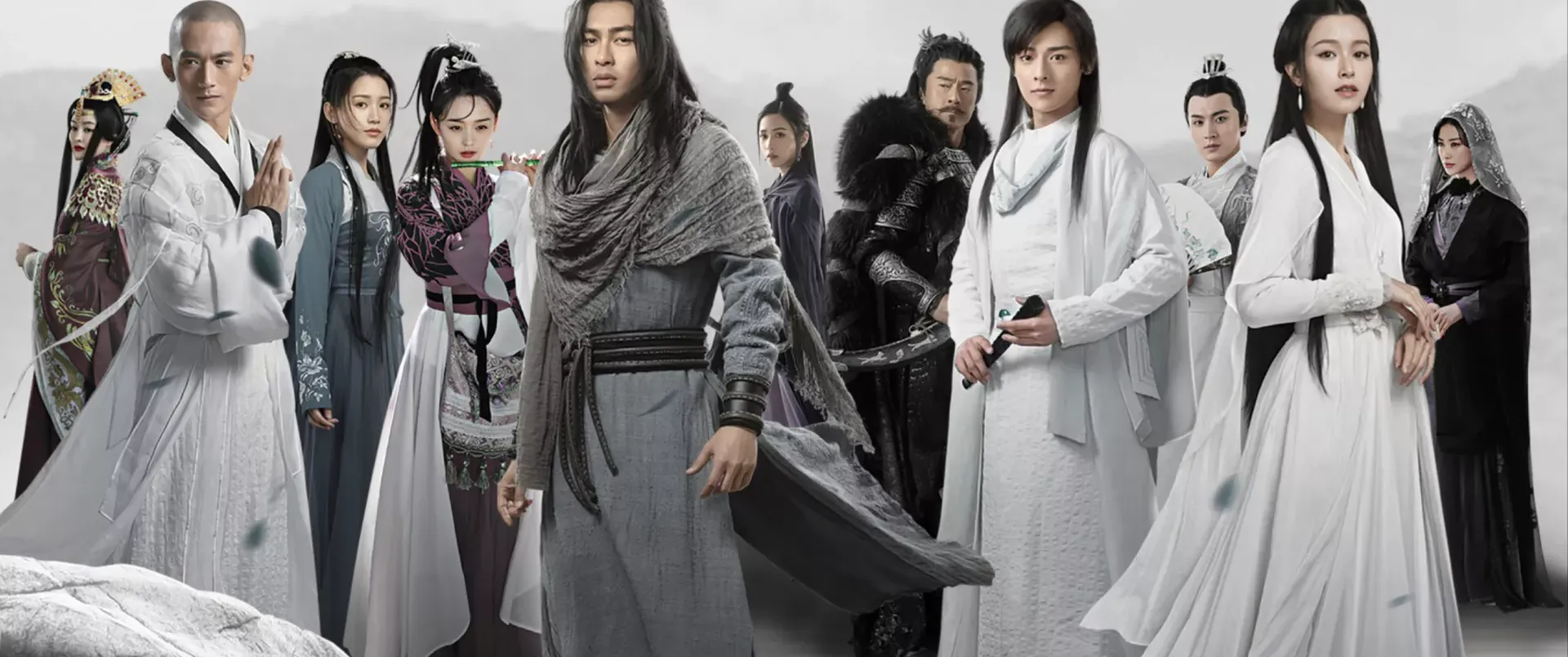
Liao Dynasty (simplified: 辽朝, traditional: 遼朝, pinyin: Liáo Cháo) was a powerful Khitan-led dynasty that ruled over northeast China, the Mongolian Plateau, and parts of the Korean Peninsula from 916 to 1125 CE. During the events of Demi-Gods and Semi-Devils, the dynasty was under the reign of Emperor Daozong and served as the primary rival to the Song Dynasty, representing the nomadic power that challenged Han Chinese dominance.
The Liao Dynasty represented the most significant nomadic power to challenge Han Chinese dominance during the medieval period. Founded by the Khitan people, the Liao combined nomadic military traditions with sophisticated governance, creating a unique hybrid culture that influenced the entire region. The dynasty’s control of strategic territories and its powerful military made it the primary threat to the Song Dynasty.
The Liao’s governance was characterized by a dual system that accommodated both Khitan nomadic traditions and Chinese bureaucratic practices. This system allowed the dynasty to maintain control over diverse populations while preserving its distinctive cultural identity. The dynasty’s military prowess, particularly its cavalry forces, made it a formidable opponent for the Song.
History
Foundation and early development
The Liao Dynasty was founded by Emperor Taizu in 916 CE, who unified the Khitan tribes and established a powerful nomadic dynasty. The dynasty’s early rulers focused on expanding their territory and establishing a sophisticated administrative system that could govern both nomadic and sedentary populations.
The Liao’s unique dual governance system allowed it to maintain control over vast territories while preserving Khitan cultural traditions. This system included separate administrative structures for Khitan and Chinese populations, reflecting the dynasty’s multicultural nature.
Expansion and consolidation
During its peak period, the Liao Dynasty controlled territories stretching from the Mongolian Plateau to the Korean Peninsula:
- Northeast China: Core territories including modern-day Liaoning and Jilin provinces
- Mongolian Plateau: Traditional nomadic territories and grazing lands
- Korean Peninsula: Northern regions under Liao influence
- Russian Far East: Eastern territories extending into modern Russia
Political landscape during the novel
During the events of Demi-Gods and Semi-Devils, the Liao Dynasty was under the reign of Emperor Daozong, who faced complex challenges:
- Song rivalry: Constant military and diplomatic tension with the Song Dynasty
- Internal diversity: Managing relationships between Khitan and Chinese populations
- Border conflicts: Ongoing disputes over territory and resources
- Cultural integration: Balancing Khitan traditions with Chinese cultural influence
Organisation
Imperial government
The Liao Dynasty operated under a sophisticated dual governance system:
Emperor and Court:
- Emperor Daozong - The reigning monarch during the novel’s events
- Khitan nobility - Traditional ruling class with military responsibilities
- Chinese bureaucracy - Civil administration for sedentary populations
Administrative Structure:
- Northern Administration: Khitan-style governance for nomadic regions
- Southern Administration: Chinese-style bureaucracy for agricultural areas
- Military Command: Separate military hierarchy with emphasis on cavalry
Cultural integration
The Liao maintained a unique approach to cultural integration:
Khitan Traditions:
- Preservation of nomadic customs and military traditions
- Khitan language and cultural practices in court
- Emphasis on martial prowess and hunting skills
Chinese Influence:
- Adoption of Chinese bureaucratic practices
- Integration of Chinese cultural elements
- Use of Chinese language for official documents
Martial arts abilities
Nomadic martial traditions
The Liao Dynasty maintained distinctive martial arts traditions:
Cavalry techniques:
- Specialized mounted combat skills
- Archery and horseback fighting
- Coordination between horse and rider
Khitan martial arts:
- Traditional nomadic fighting styles
- Emphasis on mobility and speed
- Integration of hunting skills with combat
Military organisation
The Liao military was organized around nomadic traditions:
Cavalry forces:
- Elite mounted units as the core of the army
- Specialized archery and mounted combat training
- Rapid deployment and mobility capabilities
Border defense:
- Fortified positions along the Song frontier
- Mobile units for rapid response to threats
- Integration of local militias and allied forces
Philosophy
Nomadic values
The Liao Dynasty was deeply influenced by nomadic cultural values:
Martial prowess:
- Emphasis on military skill and bravery
- Hunting and martial arts as central cultural activities
- Respect for strength and martial ability
Mobility and freedom:
- Value placed on independence and mobility
- Resistance to rigid bureaucratic structures
- Emphasis on personal honourand loyalty
Cultural synthesis
The Liao maintained a sophisticated approach to cultural integration:
Dual identity:
- Preservation of Khitan cultural distinctiveness
- Selective adoption of Chinese cultural elements
- Creation of unique hybrid cultural forms
Practical governance:
- Focus on effective administration over ideological purity
- Adaptation to local conditions and populations
- Balance between tradition and innovation
Notable members
Imperial family
- Emperor Daozong (辽道宗 – Liáo Dàozōng) – Reigning emperor during the novel’s events
- Emperor Taizu (辽太祖 – Liáo Tàizǔ) – Founding emperor of the Liao Dynasty
Khitan nobility
- Khitan princes – Various members of the ruling class
- Military commanders – Leaders of the empire’s military forces
Chinese officials
- Chinese bureaucrats – Civil servants in the southern administration
- Diplomatic officials – Officials responsible for relations with other states
Relationships
Alliances
The Liao Dynasty maintained complex diplomatic relationships:
- Generally cooperative relationship against Song
- Trade and cultural exchanges
- Coordination on border security
- Distant relationship with limited direct contact
- Cultural exchanges through Buddhist institutions
- Occasional diplomatic missions
Rivalries
The Liao faced significant challenges from neighboring powers:
Song Dynasty:
- Primary military and political rival
- Constant border conflicts and territorial disputes
- Complex diplomatic relationship with periods of peace and war
- Limited direct conflict due to geographical distance
- Competition for influence in border regions
- Trade relationships and cultural exchanges
Political connections
The Liao maintained sophisticated political networks:
Tribal alliances:
- Relationships with various nomadic tribes
- Integration of conquered peoples into imperial structure
- Use of tribal leaders as local administrators
Trade networks:
- Control of important trade routes between east and west
- Economic relationships with neighboring states
- Use of trade to maintain political influence
Locations
Capital and administrative centers
- Shangjing – Imperial capital and administrative center
- Imperial Palace – Residence of the emperor and center of government
- Military headquarters – Centers for military command and training
Military bases
- Border fortifications – Defensive positions along Song frontier
- Cavalry training grounds – Facilities for mounted combat training
- Tribal encampments – Traditional nomadic settlements
Cultural centers
- Buddhist temples – Religious institutions with imperial patronage
- Trade centers – Major cities serving as economic hubs
- Tribal gathering places – Traditional meeting sites for nomadic groups
Behind the scenes
Historical background
The historical Liao Dynasty (916–1125) was the Khitan empire that dominated northern China and Manchuria while the Northern Song held the Central Plains.1 Its dual administration — Khitan northern offices beside Chinese southern offices — made it Jin Yong’s model for a sophisticated “barbarian” state that cannot be dismissed as mere raiders.
In Demi-Gods and Semi-Devils
Jin Yong uses the Liao under Emperor Daozong as the northern pole of a multi-state world that also includes Song, Jin precursors, Western Xia, Tibet, and Dali. Key literary functions:
- Xiao Feng’s identity crisis — Raised as Han, revealed as Khitan, Xiao Feng embodies the novel’s question of whether blood or upbringing defines loyalty. The Liao court and the Song jianghu both reject and claim him.
- War as moral test — Liao–Song conflict forces orthodox heroes to choose between ethnic solidarity and personal bonds (notably Xiao Feng’s friendships across the frontier).
- Parity of civilisations — Unlike later Mongol or Manchu conquerors in Jin Yong, the Liao appears as a peer empire with its own laws, cities, and martial elites, not only as an invading horde.
See also
External links
- Liao dynasty on Wikipedia
- Khitan people on Wikipedia
- Emperor Daozong of Liao on Wikipedia
Footnotes
-
Liao dynasty on Wikipedia. ↩