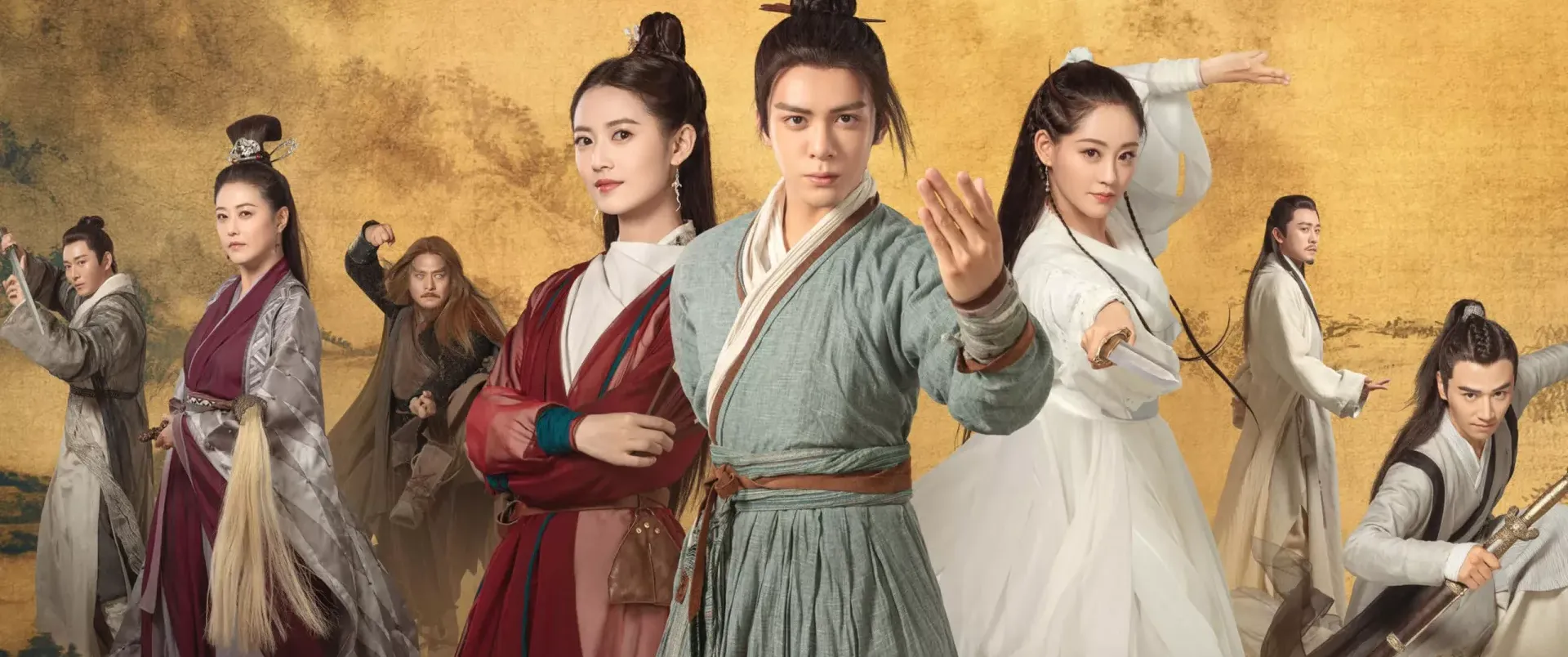
Kongzhi (simplified: 空智, traditional: 空智, pinyin: Kōngzhì, jyutping: hung1 zi3) was the third of the Four Holy Monks of the Shaolin Order, known in the jianghu by the saying “Shaolin Divine Monks: See, Hear, Wisdom, Nature” (少林神僧,见闻智性), with “Wisdom” referring to Kongzhi. He was known for his hot temper, narrow-mindedness, and grudging nature, as well as his mastery of eleven of Shaolin’s Seventy-Two Supreme Skills. Despite his initial hostility towards the Ming Order and Fan Yao, he eventually reconciled with them after recognising their heroic qualities.
Biography
Status among the Four Holy Monks
Kongzhi was the third of Shaolin’s Four Holy Monks, ranking behind Kongjian and Kongwen in seniority. He was recognised as one of the top masters within the Shaolin Order, having mastered eleven of the Seventy-Two Supreme Skills—an exceptional achievement that demonstrated both his talent and dedication.
Early conflicts with Wudang Order
Kongzhi had long-held grievances against the Wudang Order, believing that Zhang Sanfeng had stolen martial arts techniques from Shaolin when he left the temple as a young man. This belief led Kongzhi to publicly challenge Zhang Sanfeng, which prompted the Wudang Seven Xias to prepare the Seven Extremes of the True Warrior Array (真武七截阵) to respond to the challenge.
Kongzhi’s narrow-mindedness was further demonstrated when the young Zhang Wuji was suffering from the cold poison of the Xuanming Divine Palm (玄冥神掌). Despite the child’s desperate condition, Kongzhi refused to help, showing a cold indifference to the suffering of someone associated with the Wudang Order.
The Six Schools expedition to Bright Peak
Kongzhi participated in the Six Schools expedition to Bright Peak (光明顶), where the orthodox schools attacked the Ming Order headquarters. During this expedition, he engaged in battles with the Ming Order’s Five Elements Banners and fought against Yin Tianzheng, the White Brows Eagle King, though he was ultimately defeated.
Imprisonment at Wan’an Temple and conflict with Fan Yao
After the expedition, Kongzhi was captured along with the other Six Schools members and imprisoned at Wan’an Temple (万安寺), where he was forced to consume the Ten Fragrant Soft Tendon Powder (十香软筋散). During this imprisonment, he had a conflict with Fan Yao (then disguised as Kutoutuo), the Bright Right Messenger of the Ming Order, which created a long-standing animosity between them.
When Zhang Wuji and the Ming Order rescued the Six Schools from Wan’an Temple, Kongzhi initially refused to acknowledge this assistance, maintaining his hostility towards the Ming Order despite having been saved by them. This demonstrated his grudging nature and unwillingness to set aside personal animosities even when faced with clear evidence of the Ming Order’s righteousness.
The Slaying Lion Heroes Assembly
At the Slaying Lion Heroes Assembly (屠狮英雄会), Kongzhi was involved in Kongwen’s plot with Cheng Kun (disguised as Yuanzhen) to kill Xie Xun and seize the Dragon-slaying Sabre, hoping to use it to establish Shaolin’s dominance over the jianghu.
During the assembly, Kongzhi’s desire to make Shaolin the leader of the jianghu, combined with his lingering resentment from the humiliation at Wan’an Temple, led him to mock and insult Fan Yao, who was present at the assembly. His words were so provocative that Fan Yao, who had been prepared to fight to save Xie Xun, chose not to participate in the battle. This decision indirectly contributed to the death of Yin Tianzheng, who fought alone and exhausted himself, demonstrating how Kongzhi’s grudging nature could have tragic consequences.
Reconciliation with Fan Yao
After Fan Yao rescued Kongwen from Cheng Kun at the Slaying Lion Heroes Assembly, Kongzhi’s attitude towards Fan Yao changed significantly. Recognising Fan Yao’s heroism and his rescue of Kongwen, Kongzhi came to appreciate Fan Yao’s character despite their previous animosity. The two men eventually developed mutual respect and became close friends, demonstrating that even deeply held grudges could be overcome when faced with genuine heroism.
This reconciliation marked a significant development in Kongzhi’s character, showing his capacity to recognise and appreciate the virtues of others, even those he had previously considered enemies.
Defence of Shaolin Temple
When Prince Ruyang (察罕特穆儿) led twenty thousand Mongol troops to attack Shaolin Temple, Kongzhi participated in the defence alongside the Ming Order. This cooperation, born of necessity, further helped to bridge the gap between Kongzhi and the Ming Order, leading to eventual reconciliation.
Personality and traits
Hot-tempered and narrow-minded
Kongzhi was known for his hot temper and narrow-mindedness. He was quick to hold grudges and slow to forgive, often allowing personal animosities to cloud his judgment. His belief that Zhang Sanfeng had stolen from Shaolin, despite being a highly respected figure in the jianghu, demonstrated his unwillingness to see beyond established prejudices.
Grudging nature
Kongzhi’s grudging nature was a defining characteristic. He held onto past conflicts and humiliations, refusing to acknowledge assistance or recognise the virtues of those he considered enemies. His treatment of Zhang Wuji as a child and his initial refusal to acknowledge the Ming Order’s rescue demonstrated this quality.
Desire for Shaolin’s dominance
Kongzhi’s lifelong ambition was to establish Shaolin as the leader of the jianghu. This desire motivated many of his actions, including his participation in the plot to seize the Dragon-slaying Sabre. However, his methods sometimes demonstrated that he prioritised Shaolin’s reputation over moral principles.
Capacity for growth
Despite his flaws, Kongzhi demonstrated the capacity to change when presented with clear evidence of heroism and virtue. His eventual reconciliation with Fan Yao and recognition of the Ming Order’s contributions showed that he could overcome his prejudices when circumstances demanded it.
Martial arts abilities
Mastery of the Seventy-Two Supreme Skills
Kongzhi had mastered eleven of Shaolin’s Seventy-Two Supreme Skills, making him one of the most accomplished masters within the Shaolin Order. This achievement placed him among the elite practitioners of Shaolin martial arts, demonstrating both exceptional talent and decades of dedicated cultivation.
His internal and external martial arts were both described as being at the highest level, ranking him as one of the top two or three masters within the Shaolin Order. His skills were sufficient to challenge Yin Tianzheng, one of the Four Guardian Kings of the Ming Order, though he was ultimately defeated.
Overall skill level
As the third of the Four Holy Monks and a master of eleven of the Seventy-Two Supreme Skills, Kongzhi was recognised as a formidable martial artist. His abilities were sufficient to engage with the highest-level practitioners in the jianghu, though his narrow-mindedness and grudging nature sometimes limited his effectiveness in situations requiring cooperation and understanding.
Relationships
Brotherhood with fellow monks
As one of the Four Holy Monks, Kongzhi maintained relationships with Kongjian, Kongwen, and Kongxing. He worked closely with Kongwen, particularly in matters related to Shaolin’s standing in the jianghu, including the plot to seize the Dragon-slaying Sabre.
Relationship with Fan Yao
Kongzhi’s relationship with Fan Yao evolved from animosity to friendship. Their initial conflict at Wan’an Temple created a long-standing grudge, which was exacerbated by Kongzhi’s mocking words at the Slaying Lion Heroes Assembly. However, after Fan Yao rescued Kongwen, Kongzhi came to recognise Fan Yao’s heroism, and the two eventually became close friends despite their previous hostility.
Relationship with the Wudang Order
Kongzhi maintained a hostile relationship with the Wudang Order throughout most of his life, believing that Zhang Sanfeng had stolen techniques from Shaolin. This belief led him to challenge Zhang Sanfeng publicly and to refuse assistance to the young Zhang Wuji. However, as circumstances changed and the need for cooperation arose, he gradually came to accept the Wudang Order as allies rather than enemies.
Behind the scenes
Significance in the narrative
Kongzhi’s character serves as an example of how personal grudges and narrow-mindedness can have negative consequences, even for those with exceptional martial arts abilities. His grudging nature and unwillingness to set aside animosities contributed to conflicts and tragedies, including indirectly contributing to Yin Tianzheng’s death through his mocking of Fan Yao.
However, his eventual reconciliation with Fan Yao and recognition of the Ming Order’s virtues also demonstrates the possibility of growth and change, even for those with deeply held prejudices. His character arc shows that grudges can be overcome when faced with clear evidence of heroism and virtue.
See also
- Four Holy Monks
- Kongjian
- Kongwen
- Kongxing
- Fan Yao
- Shaolin Order
- Seventy-Two Supreme Skills