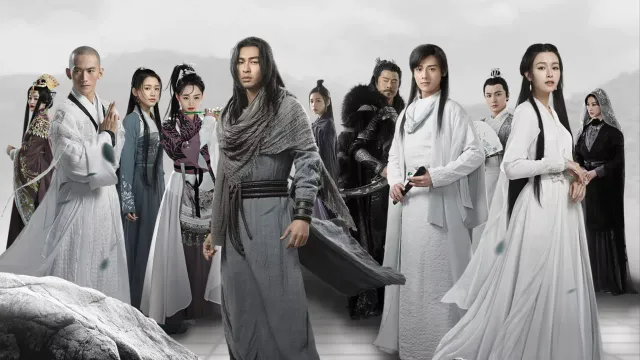
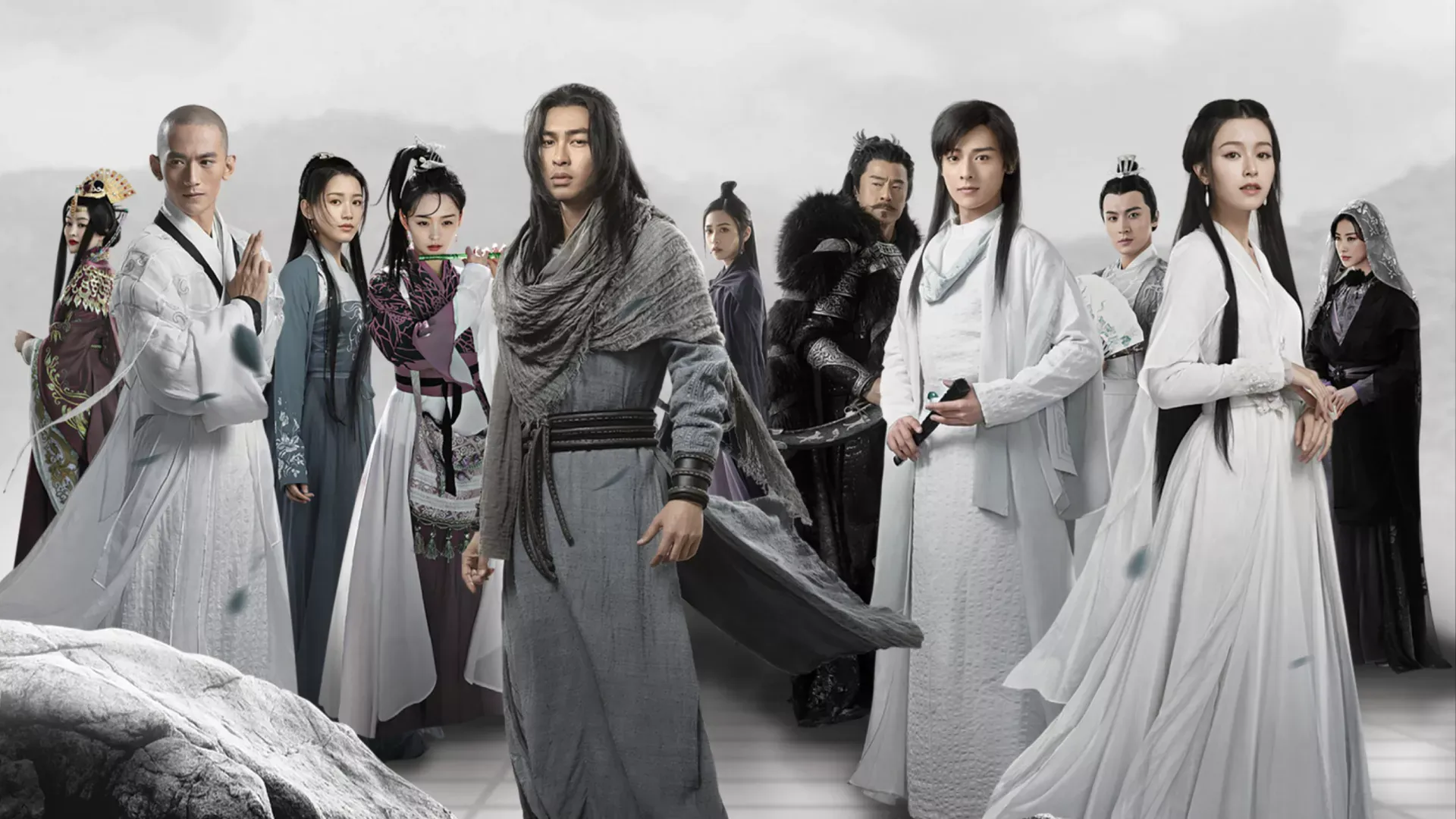
Shan Zhongshan (simplified: 单仲山, traditional: 單仲山, pinyin: Shàn Zhòngshān, jyutping: saan1 zung3 saan1) was the second son of Shan Zheng, the Iron-faced Judge (铁面判官), and one of the Shan Clan Five Tigers (单氏五虎) from Mount Tai in Shandong Province. He participated in the confrontation with Qiao Feng during the Beggars’ Guild crisis and was killed during the battle at Juxian Manor.
Biography
Early life and family
Shan Zhongshan was born into the Shan Clan of Mount Tai, a prominent martial arts family from Shandong Province. As the second son of Shan Zheng, he was raised in a family known for its strict adherence to justice and moral principles. His father earned the epithet “Iron-faced Judge” for his reputation of being upright and impartial in judging right from wrong.
Shan Zhongshan was one of five brothers collectively known as the Shan Clan Five Tigers, which included his elder brother Shan Boshan, his younger brothers Shan Shushan, Shan Jishan, and Shan Xiaoshan. The family’s martial arts school, known as the “Eastern Shan Clan” (东单氏), was a significant force in the jianghu, with over two hundred disciples and grand-disciples.
Apricot Grove incident
When the Beggars’ Guild crisis erupted, Shan Zhongshan accompanied his father and brothers to the Apricot Grove (杏子林) gathering. The Shan family had been invited by Elder Xu and Ma Furen to provide testimony and support for the accusations against Qiao Feng.
During the gathering, when Zhiguang Dashi was about to reveal information about Qiao Feng’s background, Shan Zhongshan joined Shan Shushan and Shan Jishan in a surprise attack on Qiao Feng from behind. The three brothers attempted to prevent the revelation, but Qiao Feng demonstrated his superior martial arts skills by easily defeating all three. Qiao Feng used his exceptional capture techniques to grab and throw each of them, with Shan Zhongshan being thrown out but only receiving minor injuries.
This confrontation demonstrated both the Shan brothers’ loyalty to their cause and Qiao Feng’s overwhelming martial prowess, as he was able to handle three skilled fighters simultaneously with ease.
Juxian Manor battle
Shan Zhongshan participated in the hero’s banquet at Juxian Manor (聚贤庄), where numerous martial artists gathered to confront Qiao Feng. The banquet became a chaotic battlefield as Qiao Feng fought against the assembled heroes who sought to kill him.
During the fierce battle, Shan Zhongshan was killed by Qiao Feng. His death, along with that of his elder brother Shan Boshan, was witnessed by their father Shan Zheng, who was devastated by the loss of his sons and driven to seek revenge against Qiao Feng.
Personality and traits
Family loyalty
Shan Zhongshan demonstrated unwavering loyalty to his family and their cause. He was willing to fight alongside his brothers and father, even against opponents as formidable as Qiao Feng, showing his commitment to the Shan Clan’s values and reputation.
Martial arts prowess
As one of the Shan Clan Five Tigers, Shan Zhongshan possessed considerable martial arts skills that were respected throughout the jianghu. However, his abilities were no match for Qiao Feng’s exceptional prowess, which was demonstrated during both the Apricot Grove incident and the Juxian Manor battle.
Relationships
Shan Zheng
Shan Zhongshan’s relationship with his father Shan Zheng was central to his identity and actions. He followed his father’s strict moral code and fought to uphold the family’s reputation as upholders of justice in the jianghu.
Shan Clan Five Tigers
Shan Zhongshan worked closely with his four brothers, particularly Shan Shushan and Shan Jishan, with whom he coordinated attacks during the confrontation with Qiao Feng. The five brothers operated as a unified force, demonstrating strong family bonds and collective action.
Behind the scenes
Role in the narrative
Shan Zhongshan serves as a supporting character whose death contributes to the tragic consequences of the conflict between Qiao Feng and the jianghu establishment. His role illustrates the human cost of the political machinations surrounding Qiao Feng’s identity crisis and demonstrates how even skilled martial artists from respected families could fall victim to the chaos that ensued.
His character, along with his brothers, represents the collective nature of martial arts families in the jianghu and how family loyalty could lead to tragic outcomes when pitted against overwhelming forces.
See also
- Shan Zheng — Shan Zhongshan’s father
- Shan Boshan — Shan Zhongshan’s elder brother
- Shan Shushan — Shan Zhongshan’s younger brother
- Shan Jishan — Shan Zhongshan’s younger brother
- Shan Xiaoshan — Shan Zhongshan’s younger brother
- Shan Clan of Mount Tai — The family faction
- Qiao Feng — The opponent who killed Shan Zhongshan
- Demi-Gods and Semi-Devils characters