Liu Zhengfeng (simplified: 刘正风, traditional: 劉正風, pinyin: Liú Zhèngfēng, jyutping: lau4 zing3 fung1), also known as “Liu the Third” (刘三), was a master of the Hengshan School and the junior brother of Mo Da. He was described as a middle-aged man wearing a brown silk robe, short and plump, looking like a wealthy merchant. Liu Zhengfeng was renowned for his love of music and his exceptional skill with the xiao (vertical flute). His tragic story serves as one of the novel’s early climaxes, demonstrating the conflict between personal friendship and sectarian loyalty.
Biography
Golden basin hand-washing ceremony
Liu Zhengfeng decided to retire from the jianghu and announced a golden basin hand-washing ceremony. He had purchased a military position as a canjiang (参将), intending to leave martial arts behind and serve the government. However, Zuo Lengchan, the Alliance Leader of the Five Mountains Sword Schools, intervened, accusing Liu Zhengfeng of associating with Qu Yang, a Sun Moon Order elder.
Friendship with Qu Yang
Liu Zhengfeng had formed a deep friendship with Qu Yang through their shared love of music. The two had met and become close friends, always playing qin and xiao together when they met, never discussing martial arts. Liu Zhengfeng regarded Qu Yang as his only true confidant and best friend, saying: “In this world, I believe no one can match Qu Elder Brother in playing the qin, and no one can match me in playing the xiao. Although Qu Elder Brother is a member of the demonic sect, from his qin music I deeply understand that his character is noble and pure, with a broad and open-minded heart.”
Together, they had spent several years creating the qin-xiao duet “Laughing in the Wind” (笑傲江湖), confident that this piece was unique and unprecedented.
The massacre
Despite Liu Zhengfeng’s explanation that his friendship with Qu Yang was purely musical, the Songshan School, led by Fei Bin, Ding Mian, and Lu Bai, massacred Liu Zhengfeng’s entire family. They killed his wife, children, and disciples, including his daughter Liu Jing and his eldest son. Only his youngest son Liu Qin, who was forced to denounce his father, was spared.
Liu Zhengfeng watched as his family was slaughtered one by one, filled with grief and anger, yet he still refused to harm Qu Yang, demonstrating the depth of their friendship.
Final duet and death
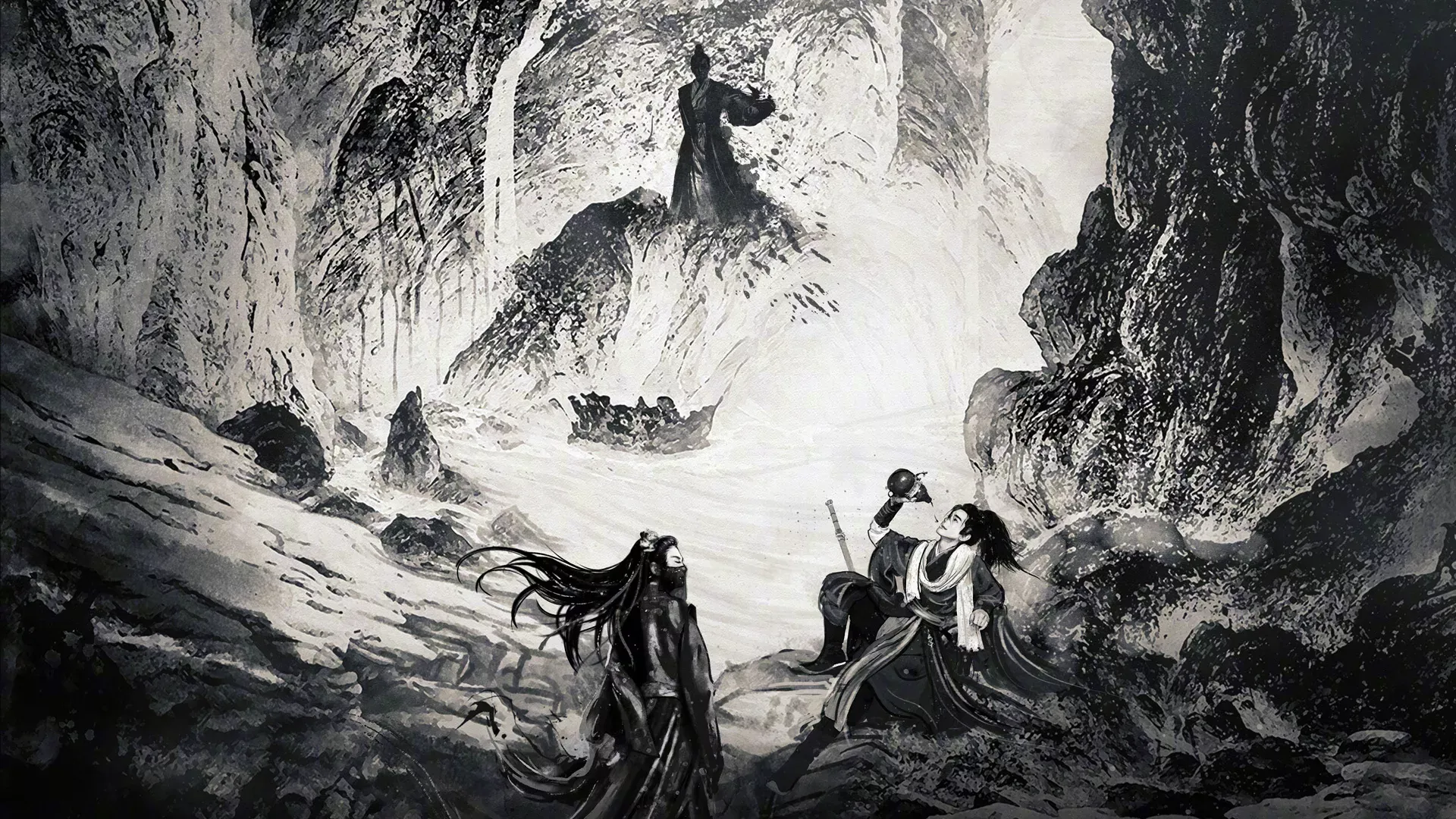
After escaping with Qu Yang’s help, the two found themselves in the mountains outside Hengshan City, where they performed their final duet of “Laughing in the Wind.” The music was described as transcendent, reaching perfection in life, music, and emotion. As they played, they spoke of their friendship and their creation:
Liu Zhengfeng said: “We have thus been able to play one more duet. From now on, there will never again be such qin-xiao music in this world. How can these vulgar people understand the noble sentiments of our friendship through music?”
Qu Yang sighed: “In the past, Ji Kang, before his execution, played the qin one last time and sighed that ‘Guangling San’ would henceforth be lost. ‘Guangling San’ was exquisite, but how can it compare to our ‘Laughing in the Wind’?”
Liu Zhengfeng laughed: “Tonight we have played this ‘Laughing in the Wind’ to perfection. This piece has existed in the world, and we have played it. What more could one ask of life?”
After completing their duet, both men, having been injured by Ding Mian and Lu Bai’s palm strikes, severed their own meridians and died together.
Personality & traits
Liu Zhengfeng was portrayed as a man of principle who valued friendship and art above sectarian divisions. He was willing to sacrifice everything, including his family and his own life, rather than betray his friendship with Qu Yang. His character demonstrates that true friendship can transcend the boundaries of so-called “orthodox” and “demonic” sects.
He was skilled in music and had a refined temperament, contrasting with his senior brother Mo Da’s more sorrowful musical style. Despite their different approaches to music, both were masters of their craft.
Martial arts abilities
Hundred Transformations Thousand Illusions Hengshan Cloud Mist Thirteen Forms
Liu Zhengfeng had mastered the Hengshan School’s secret technique, the Hundred Transformations Thousand Illusions Hengshan Cloud Mist Thirteen Forms, which incorporated magic tricks into martial arts, creating unpredictable and powerful attacks.
Musical skill
Liu Zhengfeng was exceptionally skilled with the xiao, believing that no one in the world could match his ability. His musical talent was the foundation of his friendship with Qu Yang and their joint creation of the “Laughing in the Wind” piece.
Relationships
Liu Zhengfeng’s relationship with Qu Yang was the central focus of his story. They were true friends who had found each other through their shared love of music, transcending the boundaries between orthodox and demonic sects. Their friendship demonstrated that art and human connection could be more important than sectarian loyalty.
His relationship with Mo Da was that of junior and senior brothers. Although they had different temperaments regarding music and were not particularly close, Mo Da still came to Liu Zhengfeng’s aid when he was pursued by the Songshan School.
Liu Zhengfeng had several disciples, including Xiang Danian and Mi Weiyi, who were killed during the massacre.
Behind the scenes
Liu Zhengfeng’s story serves as an allegory about the conflict between personal friendship and sectarian loyalty. Jin Yong uses this episode to question whether the jianghu should allow friendships that cross the boundaries between so-called “orthodox” and “demonic” sects.
Literary significance
The golden basin hand-washing ceremony and Liu Zhengfeng’s tragedy represent one of the novel’s early climaxes. Jin Yong’s position is clear: he believes that secular views are narrow, using sectarian prejudice to deny artistic value. These prejudices are based on the inability of ordinary people to appreciate the highest realms of art. Only those who have experienced such realms know that before great artistic achievement, any sect becomes insignificant.
The “Laughing in the Wind” piece that Liu Zhengfeng and Qu Yang created becomes a central motif of the novel, ultimately being passed down to Linghu Chong and Ren Yingying, who become its inheritors and performers.
Portrayals
Liu Zhengfeng has been portrayed in various adaptations of Laughing in the Wind:
Laughing in the Wind
- 1978 film – Ling Yun
- 1984 series – Simon Yam
- 1985 series – Long Guanwu
- 1990 film – Wu Ma
- 1996 series – Wayne Lai
- 2000 series – Zhang Fujian
- 2000 series – Chen Taiming
- 2001 series – Xiu Zongdi
- 2013 series – Huo Zhengyan
- 2018 series – Jiang Haoyan
See also
- Laughing in the Wind characters
- View complete list
- Qu Yang – Liu Zhengfeng’s friend
- Mo Da – Liu Zhengfeng’s senior brother
- Hengshan School – Liu Zhengfeng’s faction
- Laughing in the Wind (piece) – The musical piece Liu Zhengfeng created with Qu Yang
External links
- Liu Zhengfeng (Chinese) on Chinese Wikipedia