The Heavenly Sword & the Dragon Sabre Chapter 3 Published
Contents
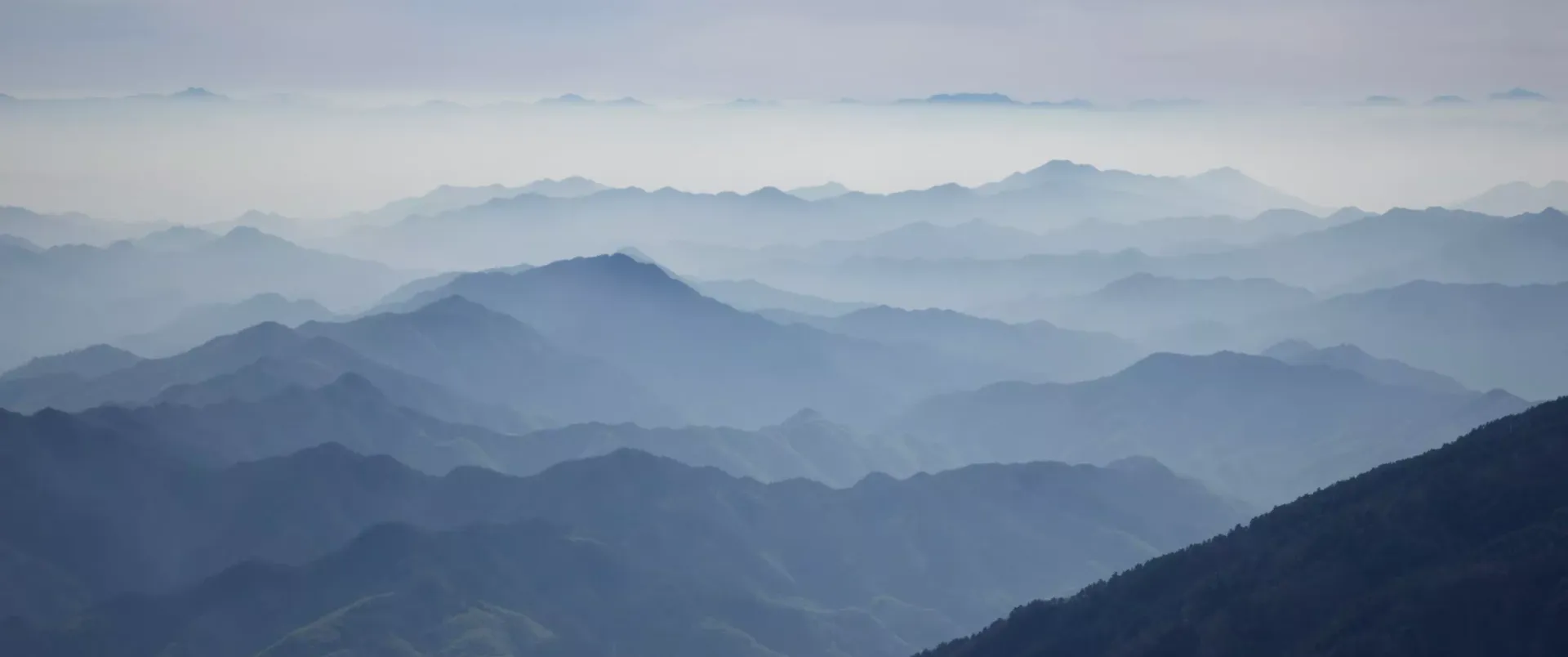
The mountains of Wudang rise from the mist like the spine of a sleeping dragon. Here, far from the politics of Shaolin, a young man begins a journey that will lead to one of the most important martial arts traditions in Chinese history.
Chapter 3 of The Heavenly Sword and the Dragon Sabre is now live.
This chapter carries us away from Shaolin and into the wider jianghu. Yu Daiyan, carrying the weight of his master’s legacy, travels through the river towns and mountain passes of southern China. The prose opens up — the claustrophobic corridors of the monastery give way to the vast landscapes of the Jiangnan region, and with them, a sense of possibility.
Translation Spotlight
The chapter’s opening poem — “Blossoms bloom and blossoms fall” — captures the cyclical nature of time in Jin Yong’s world. The young wanderers of the jianghu grow old, white hairs appear at the temples, and yet the story continues. This is one of Jin Yong’s most characteristic themes: the passage of time and the persistence of human endeavour against it.
Translating the geographical descriptions required careful attention to the real places Jin Yong references. The Qiantang River, Yanguan, Lin’an — these are all real locations with rich histories, and the novel weaves them into its fictional landscape with remarkable precision.
Cultural Note
The Six Harmonies Pagoda (六和塔, Liùhé Tǎ) mentioned in this chapter stands on the banks of the Qiantang River near Hangzhou. Built during the Song dynasty, it takes its name from the six harmonies of Buddhist cosmology — the harmonisation of sight, sound, smell, taste, touch, and mind. The pagoda’s association with the tidal bore of the Qiantang River — one of China’s most spectacular natural phenomena — adds another layer of meaning to Jin Yong’s setting.
Quality Notes
This chapter benefited significantly from the Third Edition revisions. Jin Yong tightened the geographical narrative and clarified the relationship between Yu Daiyan and his fellow disciples.
Stats
- Word count: ~26,900 words
- Parts: 9 parts for easier reading
- Progress: Chapter 3 of ongoing translation (Chapters 1–5 now available)
Chapter Parts
- Chapter 3 — Part 1
- Chapter 3 — Part 2
- Chapter 3 — Part 3
- Chapter 3 — Part 4
- Chapter 3 — Part 5
- Chapter 3 — Part 6
- Chapter 3 — Part 7
- Chapter 3 — Part 8
- Chapter 3 — Part 9
Read It
⚠️ SPOILERS BELOW — for readers who’ve finished this chapter
Characters in This Chapter
Yu Daiyan — One of Zhang Sanfeng’s earliest disciples. His journey through the Jiangnan region introduces us to the wider world of the jianghu.
Zhang Sanfeng — The young monk Zhang Junbao, now beginning his transformation into the legendary founder of the Wudang tradition.
What to Watch For
- Geography as destiny. The places Yu Daiyan visits — each with their own martial traditions and local politics — paint a picture of a jianghu that is as diverse as it is interconnected.
- The Wudang seed. Zhang Sanfeng’s development of his own martial philosophy — one that will eventually become Taijiquan — begins here, in the quiet moments between action.
- The Dragon Sabre legend. Whispers of the Dragon-Slaying Sabre continue to circulate through the jianghu, drawing characters toward a fate they cannot yet see.
What’s Next
Chapter 4 brings us to the heart of Wudang, where Zhang Cuishan — the hero known as “Silver Hook, Iron Brush” — faces a crisis that will change his life forever.
As always, if you find our translations valuable, please consider supporting us.
Happy reading!