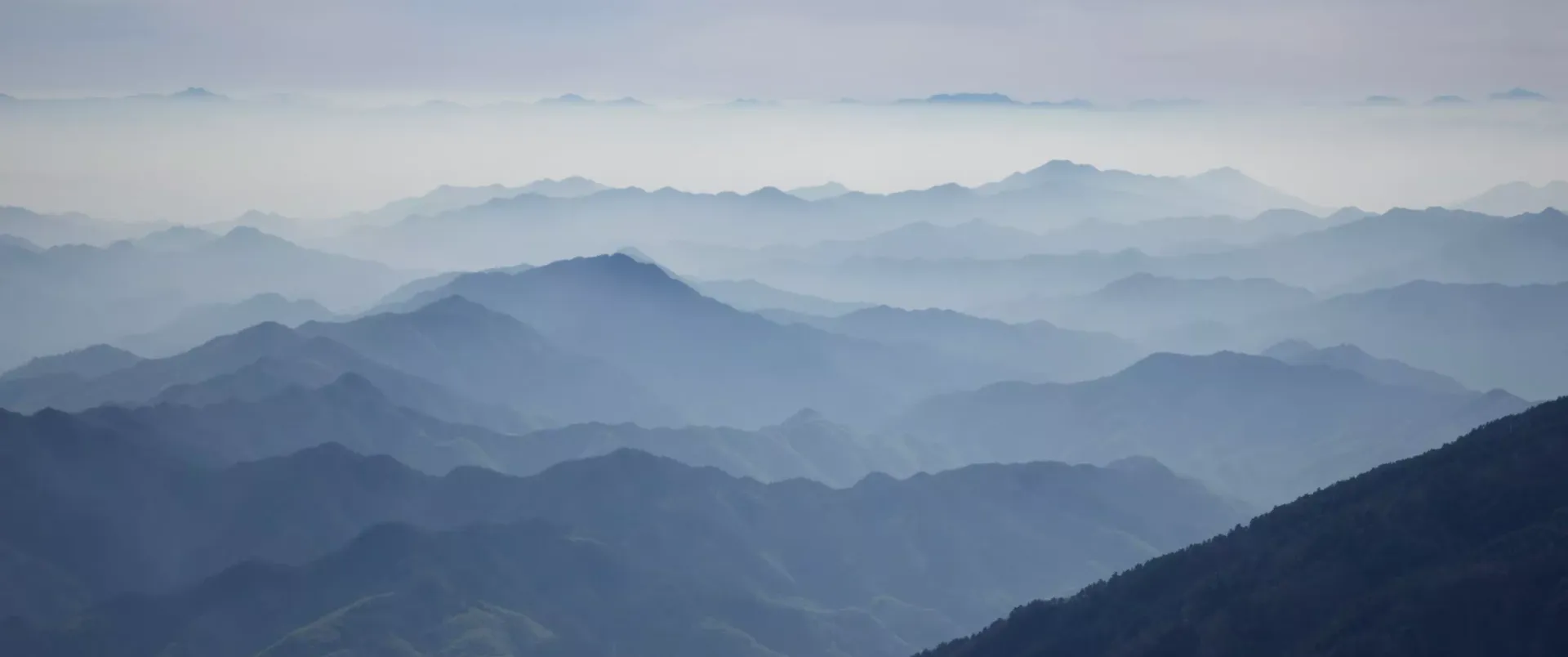
The Heavenly Sword & the Dragon Sabre Chapter 1 Published
Contents
A young woman wanders the jianghu searching for a face she’ll never see again. A young monk tends his buckets at Shaolin, unaware that his world is about to shatter. Between them lies a secret that will echo through generations.
Chapter 1 of The Heavenly Sword and the Dragon Sabre — the third and final novel in Jin Yong’s Condor Trilogy — is now live.
This is where the story truly begins. The legends of Guo Jing and Huang Rong belong to the past now. Their names are whispered with reverence, their deeds remembered in the jianghu. But new heroes are needed, and new weapons will soon shape the fate of the martial world.
Translation Spotlight
The opening poem — “Boundless spring wandering” (伤春, shāngchūn) — sets a tone of melancholy that runs through the entire novel. The phrase references a classical Chinese literary tradition of mourning the passing of spring, which in wuxia often mirrors the passing of an era. Here, it signals the end of the Condor Heroes’ age and the uncertain dawn of what follows.
The chapter introduces us to Guo Xiang, younger daughter of Guo Jing and Huang Rong, now wandering alone after the fall of Xiangyang. Her search for Yang Guo — the brooding hero of Return of the Condor Heroes — is hopeless from the start, and she knows it. But the journey matters more than the destination.
Cultural Note
The Cold Food Festival (寒食节, Hánshí Jié) mentioned in the opening poem falls the day before Qingming (清明), the traditional tomb-sweeping festival. During this period, no fires are lit and only cold food is eaten — a practice that dates back to the Spring and Autumn period. Jin Yong uses this temporal marker deliberately: a season of remembrance and loss, perfectly suited to a story that begins with the echoes of a fallen city.
Author & Novel Context
The Heavenly Sword and the Dragon Sabre (倚天屠龙记, Yǐ Tiān Tú Lóng Jì) is set roughly eighty years after the events of The Return of the Condor Heroes. It follows the descendants and successors of the Condor Trilogy’s heroes as they navigate a fractured martial world and the rising threat of the Mongol Yuan dynasty.
The novel’s title refers to two legendary weapons — the Heavenly Sword and the Dragon Sabre — whose secrets drive much of the plot. The phrase “倚天屠龙” literally means “Leaning on Heaven, Slaying the Dragon,” capturing the grand ambition and martial grandeur of Jin Yong’s vision.
Jin Yong (金庸, 1924–2018) is widely regarded as the greatest wuxia novelist of the twentieth century. His fifteen novels, written between 1955 and 1972, have sold hundreds of millions of copies and been adapted into countless films, television series, and games.
Why a New Translation
If you’ve read The Heavenly Sword and the Dragon Sabre on WuxiaSociety before, you may have encountered an older translation by a third-party contributor. That version was based on the Second Edition source text and, over time, accumulated a number of errors and inconsistencies that we were never able to fully resolve.
Rather than continue patching a flawed foundation, I decided to start fresh: a complete re-translation from the Third Edition source, with comprehensive footnotes, cultural annotations, and wiki cross-references. This is a fundamentally different approach — not just a revision, but a ground-up rebuild.
I’m sharing these drafts as they are completed, rather than waiting for the full editing and polishing rounds. That means you’ll see rough edges here and there, but I’d rather readers have access to a better translation now than a perfect one years from now. Subsequent edit passes will continue to refine the prose.
Quality Notes
This translation is based on the Third Edition (新修版) of the novel, which Jin Yong revised between 1999 and 2006. The Third Edition addressed inconsistencies, clarified plot points, and refined the prose. Each chapter includes comprehensive footnotes with Chinese characters, pinyin, and cultural explanations, plus quick reference sections listing characters, locations, items, and concepts.
Stats
- Word count: ~29,500 words
- Parts: 10 parts for easier reading
- Progress: Chapter 1 of ongoing translation (Chapters 1–5 now available)
Chapter Parts
- Chapter 1 — Part 1
- Chapter 1 — Part 2
- Chapter 1 — Part 3
- Chapter 1 — Part 4
- Chapter 1 — Part 5
- Chapter 1 — Part 6
- Chapter 1 — Part 7
- Chapter 1 — Part 8
- Chapter 1 — Part 9
- Chapter 1 — Part 10
Read It
⚠️ SPOILERS BELOW — for readers who’ve finished this chapter
Characters in This Chapter
Guo Xiang — Younger daughter of Guo Jing and Huang Rong. After the fall of Xiangyang, she wanders the jianghu alone, searching for Yang Guo. Her encounter with Jueyuan at Shaolin sets the novel’s central events in motion.
Jueyuan — A young monk at Shaolin Monastery, tasked with menial labour. His meeting with Guo Xiang changes the course of his life — and the history of martial arts.
Yang Guo — The protagonist of Return of the Condor Heroes. Though he does not appear directly in this chapter, his absence is felt throughout.
Xiaolongnü — Yang Guo’s wife and master. Her legendary status in the jianghu precedes her.
Zhang Junbao — A young disciple at Shaolin. His path will eventually lead him to become one of the most legendary figures in Chinese martial arts history.
What to Watch For
- The weight of legacy. This chapter opens in the shadow of the Condor Heroes. Guo Xiang carries her parents’ reputation like a burden she can neither embrace nor escape. The novel asks: what does it mean to follow greatness?
- Shaolin’s internal politics. The monastery is not the unified institution it appears to be. Factional tensions — between the Chan and martial wings, between old masters and young disciples — will prove crucial to the plot.
- The secret manual. Guo Xiang carries the Nine Yang Manual (九阳真经, Jiǔyáng Zhēnjīng), one of the most powerful martial arts texts in Jin Yong’s universe. Its presence here is the seed from which the entire novel grows.
Cross-References
- This novel is the third in the Condor Trilogy, following The Legend of the Condor Heroes and Return of the Condor Heroes. Familiarity with those novels enriches the reading but is not required.
- The Five Greats — the five supreme martial artists of the previous generation — are referenced here. Their legacy shapes the martial world of this novel.
- Shaolin Monastery plays a central role in the opening chapters. Its internal politics and the fate of its monks will reverberate through the story.
What’s Next
Translation work continues on the remaining chapters. Chapters 2 through 5 are now also available, taking us from Shaolin into the Wudang Mountains and the birth of a new martial tradition.
As always, if you find our translations valuable, please consider supporting us. Your support helps keep WuxiaSociety running and allows us to continue bringing these wonderful stories to English readers.
Happy reading!