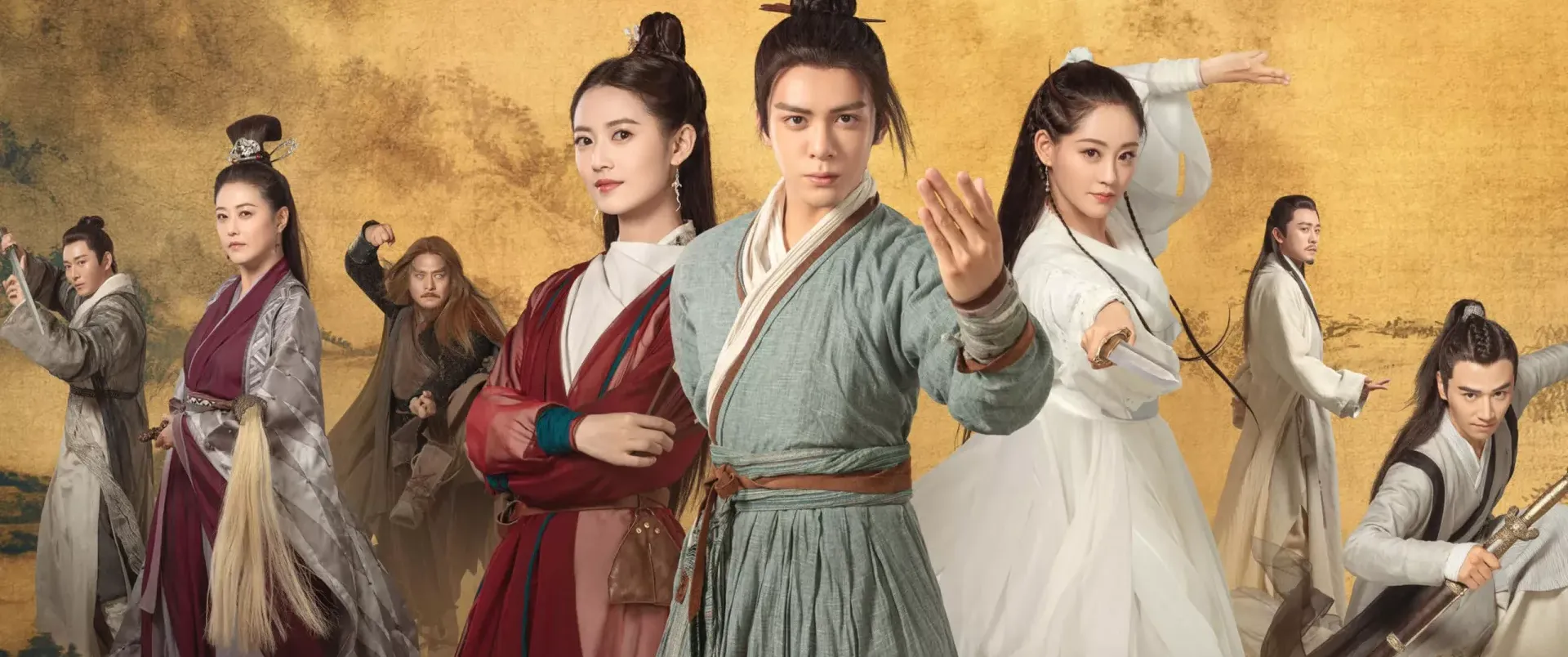
Han Liner (simplified: 韩林儿, traditional: 韓林兒, pinyin: Hán Lín’ér, jyutping: hon4 lam4 ji4), also known as the Little Ming King (小明王 — Xiǎo Míng Wáng), was the self-proclaimed emperor of Song during the late Yuan period. His death by drowning contributed to Zhang Wuji’s disillusionment with leadership and decision to step down as leader of the Ming Order.1
Biography
Rise to power
Han Liner was a key figure in the late Yuan period rebellions against Mongol rule. He claimed descent from the Song imperial family and declared himself emperor, establishing the Song state with the era name “Longfeng” (龙凤).2 His claim to imperial legitimacy attracted many followers among Han Chinese rebels seeking to restore Chinese rule.3
Role in the rebellions
As the self-proclaimed emperor of Song, Han Liner served as a symbolic leader for various rebel groups, including those connected to the Ming Order. His position provided legitimacy and a rallying point for anti-Yuan forces during the chaotic final years of the dynasty.4
Death and consequences
In the Third Edition of the novel, Han Liner died by drowning. This event had significant consequences for Zhang Wuji, who was already struggling with the responsibilities of leadership. Han Liner’s death, combined with Zhang Wuji’s failure to save a general’s life, contributed to his growing disillusionment with political leadership.5
After these events, Zhang Wuji relinquished leadership of the Ming Order to his deputies, Yang Xiao and Fan Yao, and left the Central Plains with Zhao Min.6 This paved the way for Zhu Yuanzhang to seize control of the Ming Order and eventually establish the Ming Dynasty.7
Behind the scenes
Han Liner is based on the historical figure of the same name, who was indeed proclaimed emperor of Song during the late Yuan period. Historically, Han Liner was the son of Han Shantong, a leader of the Red Turban Army who claimed descent from the Song imperial family. He was proclaimed emperor in 1355 and ruled until 1366, when he died under suspicious circumstances, likely murdered on Zhu Yuanzhang’s orders.8
In the novel, Jin Yong incorporates this historical figure into the fictional narrative to show how Zhang Wuji’s idealistic leadership eventually gave way to pragmatic political power. Han Liner’s death serves as a catalyst for Zhang Wuji’s decision to step down, demonstrating how personal losses and failures can lead to disillusionment with political power.
The character’s inclusion connects the fictional martial arts world to real historical events, showing how the chaos of the late Yuan period created opportunities for ambitious leaders like Zhu Yuanzhang to seize power, even as idealistic figures like Zhang Wuji chose to withdraw from politics.