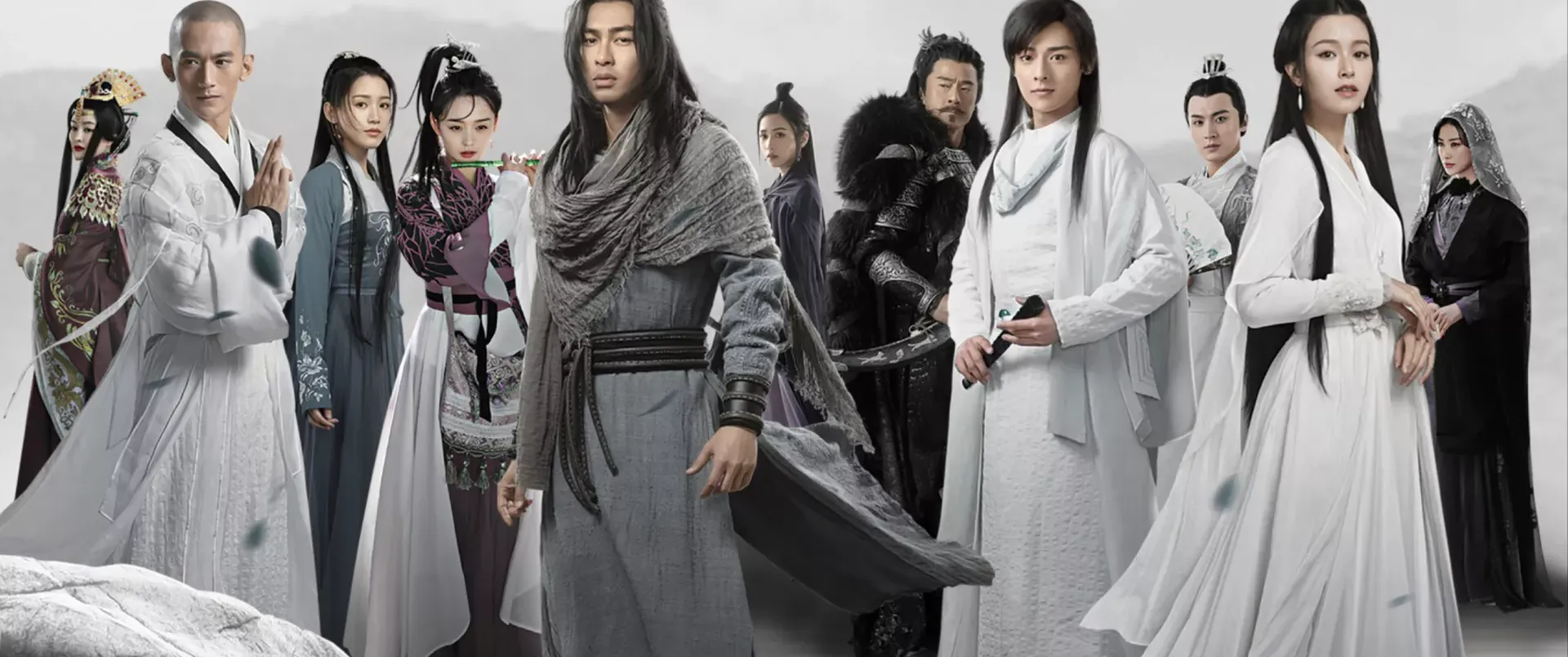
Elder Xi (simplified: 奚长老, traditional: 奚長老, pinyin: Xī Zhǎnglǎo, jyutping: hai4 zoeng2 lou5) was one of the Four Great Elders of the Beggars’ Guild, serving alongside Elder Song, Elder Wu, and Elder Chen. He was the eldest among the four elders and often served as their de facto leader, representing the guild’s traditional values and martial arts heritage.
Biography
Early life and martial arts training
Elder Xi’s early life is largely unknown, but he eventually became involved in the jianghu and received training in various combat techniques. His training emphasized both combat effectiveness and practical skills, creating a character who was both martially skilled and capable in various situations.
The rescue of Wang Jianhong
One of Elder Xi’s most significant early contributions to the Beggars’ Guild occurred during a critical mission to rescue the guild’s leader, Wang Jianhong, from captivity in the Qilian Mountains’ Black Wind Cave. When the Khitan Kingdom’s five great masters captured Wang Jianhong and threatened to force the Beggars’ Guild to surrender to the Khitan, Elder Xi volunteered to impersonate Wang Jianhong and sacrifice himself to allow the real leader to escape.
Elder Xi endured severe torture and interrogation while maintaining his deception, ultimately escaping and returning to the guild. This heroic act demonstrated his loyalty and courage, earning him the respect of the entire organisation and establishing his reputation as one of the guild’s most trusted members.
Military intelligence and border defense
Elder Xi played a crucial role in defending the Song Dynasty’s northern borders against Khitan incursions. During one critical incident, he received intelligence about an impending Khitan invasion of Yanmen Pass and immediately embarked on a desperate three-day journey without rest or food to deliver the warning to Song military commanders. He rode nine horses to exhaustion and suffered internal injuries from the grueling journey, but his timely warning allowed Song forces to prepare and successfully repel the Khitan invasion.
This military contribution demonstrated Elder Xi’s dedication to both the guild and the broader national interest, showing how the Beggars’ Guild served as an important intelligence network for the Song Dynasty’s border defense.
Role as elder of Beggars’ Guild
Elder Xi held the prestigious position of elder within the Beggars’ Guild, one of the largest and most influential martial arts organisations in the jianghu. As an elder, he played a crucial role in maintaining the guild’s traditions and organisational structure.
The Beggars’ Guild maintains a sophisticated organisational structure with multiple levels of leadership:
- Guild Chief - The supreme leader
- Great Elders - Specialized positions including:
- Lü Zhang (吕章) - Instructor Elder (传功长老)
- Bai Shijing (白世镜) - Enforcement Elder (执法长老)
- Elders - Senior members including Elder Xi, responsible for various guild functions
- Guild Deputies - Administrative leaders
- Regular Members - The rank and file of the organisation
As an elder, Elder Xi was responsible for various aspects of guild operations, including training, discipline, and strategic decision-making. His position required both martial prowess and organisational skills to effectively contribute to guild management. He played a key role in preserving the Beggars’ Guild’s martial arts traditions and ethical standards. His experience and knowledge helped maintain the guild’s reputation and influence in the jianghu.
Leadership during the guild crisis
When the guild faced internal rebellion orchestrated by Quan Guanqing, Elder Xi initially participated in the conspiracy against Qiao Feng, influenced by false accusations and manipulated evidence. However, after witnessing Qiao Feng’s willingness to sacrifice himself to save the lives of the rebellious elders, Elder Xi experienced a profound change of heart and became one of Qiao Feng’s most vocal defenders.
Elder Xi’s leadership was crucial in rallying guild members to Qiao Feng’s side, as he publicly declared that no one in the guild could match Qiao Feng’s heroic qualities. His influence helped sway approximately half of the guild’s membership to remain loyal to Qiao Feng, demonstrating his continued importance as a respected leader within the organisation.
Death at Juxian Manor
Elder Xi’s life came to a tragic end during the chaos at Juxian Manor when he was killed by Qiao Feng during the latter’s desperate battle against the gathered heroes. Despite their close relationship and Elder Xi’s loyalty to Qiao Feng, the chaotic nature of the battle and Qiao Feng’s state of mind led to his death at the hands of his former student and friend.
This tragic outcome demonstrated the devastating consequences of the conspiracy against Qiao Feng and the complex nature of loyalty and betrayal within the Beggars’ Guild. Elder Xi’s death symbolized the complete breakdown of the traditional guild leadership and marked the end of an era of stability and honourwithin the organisation.
Personality and traits
Elder Xi was characterized by his loyalty, courage, and leadership qualities. He demonstrated unwavering dedication to the Beggars’ Guild and its values, as shown by his willingness to sacrifice himself for the guild’s leader and his tireless efforts in defending the Song Dynasty’s borders. His ability to recognize true character and to change his position based on moral principles, as demonstrated during the guild crisis, showed his integrity and wisdom.
Despite his initial participation in the conspiracy against Qiao Feng, Elder Xi’s change of heart and subsequent defense of his former student demonstrated his capacity for moral judgment and his commitment to justice over organizational politics. His leadership qualities were evident in his ability to rally guild members and to maintain his position of respect within the organisation.
Martial arts abilities
Guild martial arts
Elder Xi possessed advanced martial arts skills that reflected his position as an elder. His training and experience made him a formidable opponent and an effective leader within the guild.
Steel staff mastery
Elder Xi was renowned for his expertise with the steel staff, a weapon that perfectly suited his short and stout physique. His staff techniques were characterized by powerful, sweeping movements that could generate tremendous force, making him a formidable opponent even against taller adversaries. During his confrontation with Yun Zhonghe, Elder Xi demonstrated his staff mastery by creating a white blur of motion that, while impressive, revealed certain weaknesses in his lower body defense.
His signature techniques included “秦王鞭石” (Emperor Qin’s Whip Stone) and “大鹏展翅” (Roc Spreads Wings), which showcased his ability to deliver devastating overhead strikes. However, these powerful techniques sometimes left him vulnerable to counterattacks targeting his lower body, as demonstrated when Yun Zhonghe exploited this weakness to inflict a serious wound on his thigh.
Neigong cultivation
Elder Xi possessed exceptional neili, which he demonstrated during the guild’s crisis when he was able to break free from the tough ox tendon bindings that restrained him. This feat of strength, accomplished through pure internal power rather than external force, showcased his deep cultivation and earned him the respect of his fellow guild members.
Relationships
Qiao Feng
Elder Xi had a particularly close relationship with Qiao Feng, whom he had personally instructed in martial arts during Qiao Feng’s early years in the guild. This mentorship created a bond that went beyond simple organisational hierarchy, as Elder Xi often referred to Qiao Feng as having “half teacher, half friend” status. When the guild crisis erupted and Elder Xi was initially swayed by Quan Guanqing’s conspiracy, he later expressed deep regret for betraying someone who had been both his student and friend.
During the crisis, Elder Xi was one of the first to recognize Qiao Feng’s true character and leadership qualities, publicly defending him against accusations of being a Khitan spy. He argued that Qiao Feng’s benevolent and righteous nature was completely unlike the cruel and violent characteristics typically associated with Khitan people, demonstrating his loyalty and insight into Qiao Feng’s true character.
Behind the scenes
Literary significance
Elder Xi’s character serves several important narrative functions:
- Demonstrates guild structure: His position as elder shows the sophisticated organisational system of the Beggars’ Guild
- Highlights leadership hierarchy: His role illustrates the multiple levels of leadership within major martial arts organisations
- Represents organisational stability: His service shows how the guild maintained its structure during leadership transitions
Character representation
As an elder, Elder Xi represents the dedicated leadership class that supported the Beggars’ Guild’s operations. His position exemplifies the traditional Chinese concept of senior members contributing their experience and wisdom to maintain organisational stability and discipline.
Historical significance
Elder Xi served during a crucial period in the Beggars’ Guild’s history, when the organisation faced various external threats and internal challenges. His leadership as elder helped maintain the guild’s stability and influence during these turbulent times. As an elder, Elder Xi contributed to preserving the guild’s martial arts traditions and maintaining their organisational structure. His service helped establish the guild’s reputation as both politically powerful and martially accomplished.
See also
- Beggars’ Guild – His faction and organisation
- Lü Zhang – Instructor Elder and colleague
- Bai Shijing – Enforcement Elder and colleague
- Guild elders – The broader leadership group
- Demi-Gods and Semi-Devils characters