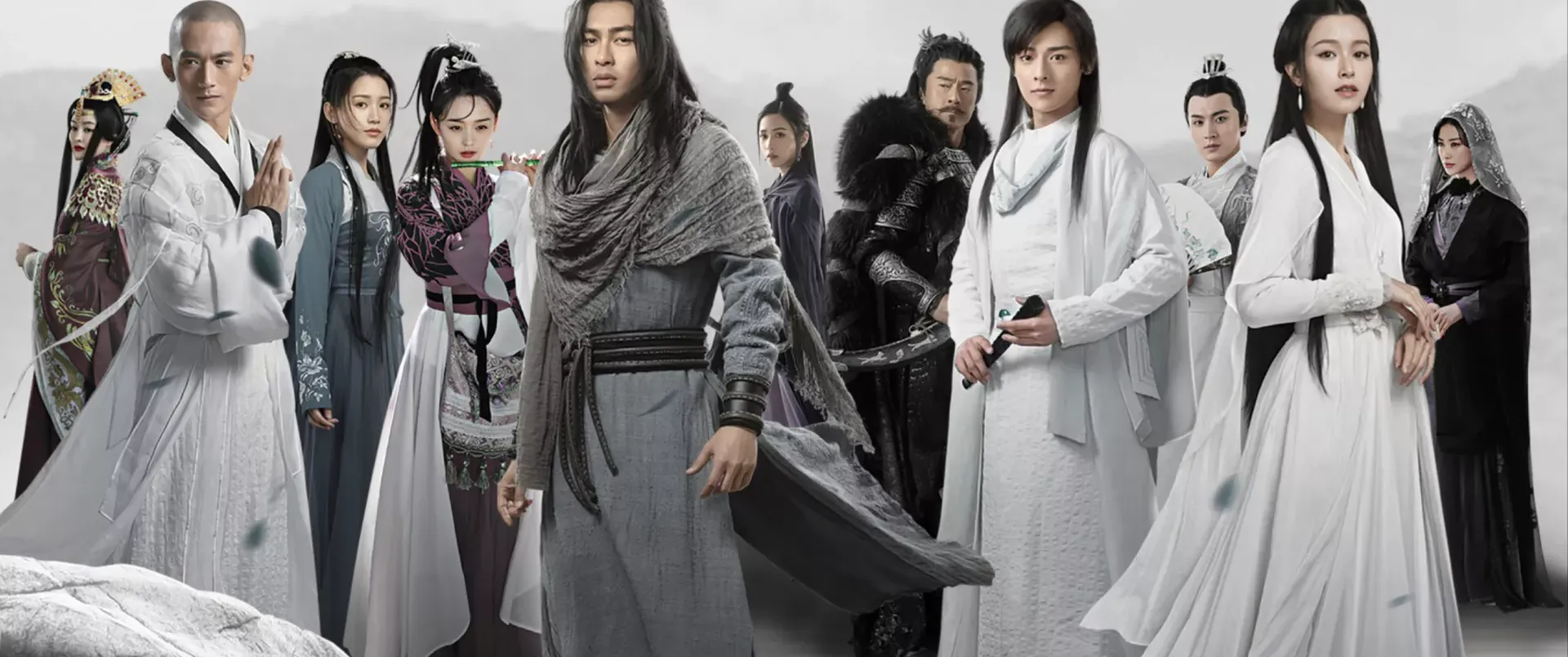
Elder Song (simplified: 宋长老, traditional: 宋長老, pinyin: Sòng Zhǎnglǎo, jyutping: sung3 zoeng2 lou5) was one of the Four Great Elders of the Beggars’ Guild, serving alongside Elder Wu, Elder Xi, and Elder Chen. He was the eldest and most respected among the four elders, often serving as their de facto leader and representing the guild’s traditional values and martial arts heritage.
Biography
Early life and martial arts training
Elder Song’s early life is largely unknown, but he eventually became involved in the jianghu and received training in various combat techniques. His training emphasized both combat effectiveness and practical skills, creating a character who was both martially skilled and capable in various situations.
His training reflected the emphasis on creating well-rounded practitioners who could handle various challenges and situations effectively. This comprehensive approach to training showed how the jianghu valued both physical and practical development in its members.
The rescue of Wang Jianhong
One of Elder Song’s most significant early contributions to the Beggars’ Guild occurred during a critical mission to rescue the guild’s leader, Wang Jianhong, from captivity in the Qilian Mountains’ Black Wind Cave. When the Khitan Kingdom’s five great masters captured Wang Jianhong and threatened to force the Beggars’ Guild to surrender to the Khitan, Elder Song volunteered to impersonate Wang Jianhong and sacrifice himself to allow the real leader to escape.
Elder Song endured severe torture and interrogation while maintaining his deception, ultimately escaping and returning to the guild. This heroic act demonstrated his loyalty and courage, earning him the respect of the entire organisation and establishing his reputation as one of the guild’s most trusted members.
Military intelligence and border defense
Elder Song played a crucial role in defending the Song Dynasty’s northern borders against Khitan incursions. During one critical incident, he received intelligence about an impending Khitan invasion of Yanmen Pass and immediately embarked on a desperate three-day journey without rest or food to deliver the warning to Song military commanders. He rode nine horses to exhaustion and suffered internal injuries from the grueling journey, but his timely warning allowed Song forces to prepare and successfully repel the Khitan invasion.
This military contribution demonstrated Elder Song’s dedication to both the guild and the broader national interest, showing how the Beggars’ Guild served as an important intelligence network for the Song Dynasty’s border defense.
Role in martial arts affairs
As a martial artist and elder, Elder Song participated in various activities and missions within the jianghu. His position within the community gave him access to various resources and opportunities for development, while also creating obligations and responsibilities to the broader martial arts community.
His role in martial arts affairs demonstrated how individual practitioners could contribute to various activities and how their training and abilities could be used to advance various objectives.
Participation in martial arts conflicts
Throughout the novel, Elder Song participated in various conflicts and developments within the jianghu. His participation demonstrated how even individual martial artists could become involved in various disputes and how their skills could be called upon in various situations.
His involvement in these conflicts showed how individual practitioners balanced their various objectives with the practical realities of the jianghu, where conflict was sometimes unavoidable.
Personality and traits
Skilled and capable
Elder Song’s most defining characteristic was his various skills and capabilities, which had been developed through his comprehensive training in the jianghu. His ability to handle various situations demonstrated the effectiveness of the training systems in creating effective practitioners.
These skills were not limited to martial arts but extended to various other areas, showing how the jianghu valued well-rounded development and how such development could create individuals capable of handling various challenges.
Adaptable and resourceful
As a martial artist and elder, Elder Song demonstrated adaptability and resourcefulness in various situations. His commitment to his various responsibilities and his willingness to fulfill his various obligations demonstrated his character and his understanding of martial arts responsibilities.
This adaptability was not limited to simple obedience but extended to active participation in various activities and a genuine concern for the jianghu’s well-being and effectiveness.
Martial arts abilities
Combat techniques
Elder Song’s martial arts foundation was built on various sophisticated techniques that emphasized both combat effectiveness and practical application. His training reflected the philosophy of creating effective practitioners who could handle various challenges effectively.
The martial arts system he practiced was known for its sophistication and adaptability, allowing practitioners to respond effectively to different types of opponents and challenges. Elder Song’s mastery of these techniques made him a competent martial artist and valuable member of the martial arts community.
Steel staff mastery
Elder Song was renowned for his expertise with the steel staff, a weapon that perfectly suited his short and stout physique. His staff techniques were characterized by powerful, sweeping movements that could generate tremendous force, making him a formidable opponent even against taller adversaries. During his confrontation with Yun Zhonghe, Elder Song demonstrated his staff mastery by creating a white blur of motion that, while impressive, revealed certain weaknesses in his lower body defense.
His signature techniques included “秦王鞭石” (Emperor Qin’s Whip Stone) and “大鹏展翅” (Roc Spreads Wings), which showcased his ability to deliver devastating overhead strikes. However, these powerful techniques sometimes left him vulnerable to counterattacks targeting his lower body, as demonstrated when Yun Zhonghe exploited this weakness to inflict a serious wound on his thigh.
Neigong cultivation
Elder Song possessed exceptional neili, which he demonstrated during the guild’s crisis when he was able to break free from the tough ox tendon bindings that restrained him. This feat of strength, accomplished through pure internal power rather than external force, showcased his deep cultivation and earned him the respect of his fellow guild members, who recognized him as the foremost among the Four Great Elders.
Integration of various skills
Elder Song’s training emphasized the integration of martial arts with various other skills, showing how different types of abilities could complement each other in creating effective practitioners. His ability to use various skills in combination demonstrated the effectiveness of this integrated approach.
This integration showed how martial arts training could be enhanced by various other skills and how different types of abilities could work together to create more effective practitioners.
Relationships
Martial arts community
As a member of the martial arts community, Elder Song maintained various relationships within the broader community. His relationships with other members demonstrated the importance of cooperation in martial arts life and showed how individual members could support and learn from each other.
These relationships were characterized by mutual respect and support, showing how the martial arts community could create an environment conducive to both individual and community development.
Qiao Feng
Elder Song had a particularly close relationship with Qiao Feng, whom he had personally instructed in martial arts during Qiao Feng’s early years in the guild. This mentorship created a bond that went beyond simple organisational hierarchy, as Elder Song often referred to Qiao Feng as having “half teacher, half friend” status. When the guild crisis erupted and Elder Song was initially swayed by Quan Guanqing’s conspiracy, he later expressed deep regret for betraying someone who had been both his student and friend.
During the crisis, Elder Song was one of the first to recognize Qiao Feng’s true character and leadership qualities, publicly defending him against accusations of being a Khitan spy. He argued that Qiao Feng’s benevolent and righteous nature was completely unlike the cruel and violent characteristics typically associated with Khitan people, demonstrating his loyalty and insight into Qiao Feng’s true character.
Leadership during the guild crisis
When the guild faced internal rebellion orchestrated by Quan Guanqing, Elder Song initially participated in the conspiracy against Qiao Feng, influenced by false accusations and manipulated evidence. However, after witnessing Qiao Feng’s willingness to sacrifice himself to save the lives of the rebellious elders, Elder Song experienced a profound change of heart and became one of Qiao Feng’s most vocal defenders.
Elder Song’s leadership was crucial in rallying guild members to Qiao Feng’s side, as he publicly declared that no one in the guild could match Qiao Feng’s heroic qualities. His influence helped sway approximately half of the guild’s membership to remain loyal to Qiao Feng, demonstrating his continued importance as a respected leader within the organisation.
Other martial artists
Elder Song’s relationships with other martial artists were often characterized by respect and mutual recognition of skill. His participation in various conflicts showed how individual practitioners could maintain positive relationships with other factions while also defending their interests when necessary.
These relationships demonstrated the complex nature of relationships in the jianghu, where respect and conflict could coexist in various situations.
Ultimate fate
Death at the hands of You Tanzhi
Elder Song’s life came to a tragic end during the chaos at Shaolin Monastery when he encountered You Tanzhi and A Zi in a mountain farmhouse. Leading a search party of four guild disciples to find the missing guild leader, Elder Song discovered You Tanzhi and A Zi hiding in the farmhouse. Despite maintaining proper respect by addressing You Tanzhi as “帮主” (Guild Leader), Elder Song was brutally murdered when A Zi ordered You Tanzhi to kill him.
You Tanzhi’s powerful palm strike, enhanced by the Beiming Power, instantly killed Elder Song and his four disciples. This brutal act demonstrated the complete corruption of the guild’s leadership under You Tanzhi’s rule and marked the end of one of the Beggars’ Guild’s most respected and loyal members.
Legacy and impact
Elder Song’s death had a profound impact on the remaining guild members and particularly affected Qiao Feng, who discovered his mentor’s body at the farmhouse. The sight of Elder Song’s corpse filled Qiao Feng with anger and sorrow, though he chose not to seek revenge against You Tanzhi and A Zi out of consideration for A Zhu’s memory. Elder Song’s death symbolized the complete collapse of the traditional Beggars’ Guild leadership and marked the end of an era of stability and honourwithin the organisation.
See also
- Demi-Gods and Semi-Devils characters
- Hua Hegen - Another character from the novel
- Lord Sangtu - Another character from the novel