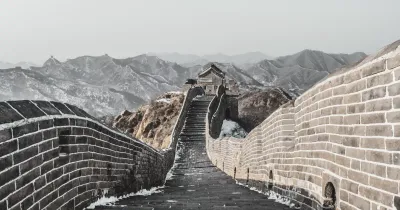
How we pluralise Chinese terms
Three jin or three jins? The answer turns out to depend on what kind of word it is, and the pattern is the same one English already applies to Japanese and Korean borrowings.
Translation updates, cultural insights, and other musings about wuxia and Chinese culture.
Three jin or three jins? The answer turns out to depend on what kind of word it is, and the pattern is the same one English already applies to Japanese and Korean borrowings.
Eight chapters of Xiao Yi's Gan Nineteenth Sister have been translated and are now in review. Here's where we are in the pipeline.
39 author biographies covering the full history of wuxia fiction — from the genre's pioneers to its contemporary masters.

A moonlit meeting on the Qiantang River — Zhang Cuishan's investigation leads him to an encounter that will change everything.
Zhang Cuishan's grief and fury — a short, sharp chapter that sets a tragedy in motion.
A young man leaves the monastery and begins a journey that will define a new martial tradition.
He Zudao's audacious challenge at Shaolin and a young monk's awakening — Chapter 2 brings fire to the monastery gates.
A young monk, a grieving girl, and a secret manual — the opening chapter of Jin Yong's epic sets the stage for everything that follows.
The character 青 (qīng) historically encompassed blue, green, and black in Chinese, creating translation challenges in wuxia literature where colour descriptions carry cultural and symbolic significance beyond simple chromatic designation.
Two paired swords with brotherly names — one auspicious, one ill-omened — set a tragedy in motion.