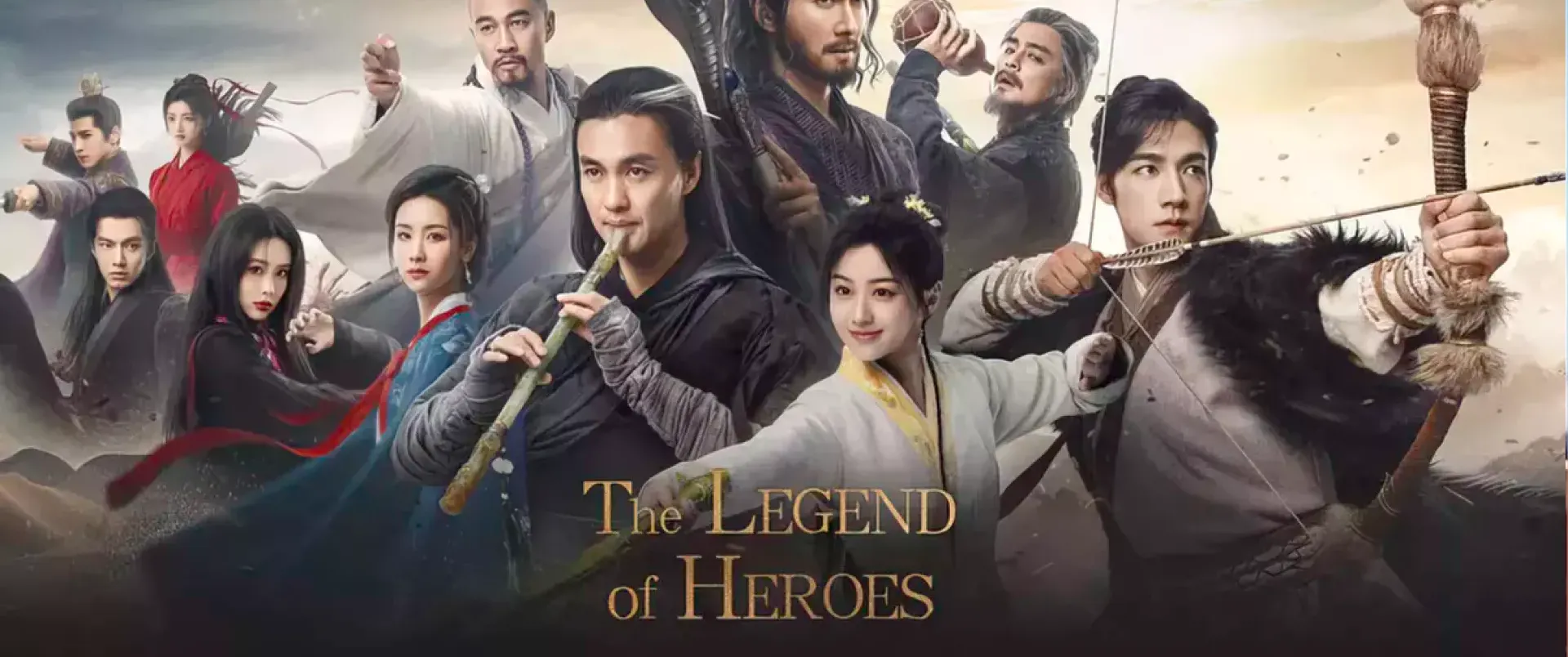
Wu Santong (simplified: 武三通, traditional: 武三通, pinyin: Wǔ Sāntōng, jyutping: mou5 saam1 tung1), better known as the Farmer among Great Master Yideng’s four disciples, was a former commander of the Dali palace guards. Along with the Fisherman, Woodcutter, and Scholar, he disguised himself as a rustic commoner to shield the abdicated emperor from political enemies.
Biography
Service to Great Master Yideng
Before Duan Zhixing became a monk, Wu Santong served as a cavalry officer who specialised in defending the agrarian heartlands around Erhai Lake. When the emperor retreated from court to pursue Buddhism, Wu adopted the persona of a humble farmer tending terraced fields at Cang Mountain. The disguise allowed him to monitor visitors, deliver orders to the Beggars’ Guild when needed, and channel Dali tax grain to Yideng’s charitable works.
Family life in Peach Blossom Valley
Wu married Madam Wu and had two sons, Wu Dunru and Wu Xiuwen. He taught them simplified One Yang Finger exercises mixed with hoe-and-fork drills, believing that honest farm labour was the best foundation for martial arts. During The Legend of the Condor Heroes he escorted Yideng to Peach Blossom Island, where the Farmer coordinated with Guo Jing and Huang Rong to rescue poisoned allies.
Obsession and madness
Years later, in The Return of the Condor Heroes, Wu Santong encountered Li Mochou. Captivated by her beauty, he wavered between his marital vows and his infatuation. Li Mochou manipulated his feelings, leading to clashes with fellow disciple Zhu Ziliu and to the destruction of the Wu family estate. Unable to choose between wife and obsession, Wu Santong’s mind fractured; he wandered the jianghu muttering incantations while his sons were raised by Guo Jing and Huang Rong.
Recovery and later years
During the Xiangyang campaigns, Guo Jing reunited Wu Santong with Great Master Yideng, who used Buddhist insight and the restorative power of the One Yang Finger to purge the emotional poison clouding his disciple’s mind. Regaining his sanity, Wu Santong dedicated his remaining years to protecting Wu Dunru and Wu Xiuwen, helping them reconcile with the Quanzhen disciples and continuing to support Xiangyang’s defenses against the Mongols.
Personality and traits
Wu Santong alternated between earthy humour and volcanic passion. His loyalty to Yideng was unquestioned, yet his impulsive heart left him vulnerable to infatuation. Even in madness he refused to harm innocents—a contrast to Li Mochou’s cruelty—and his final repentance inspired his sons to uphold the Dali code of honour.
Martial arts abilities
One Yang Finger
As Yideng’s disciple, Wu Santong mastered the restorative and offensive aspects of the One Yang Finger. He emphasised steady breathing and channelled chi through calloused fingers toughened by farm work, making his strikes heavier than those of his fellow disciples.
Farmer’s pitchfork and plow techniques
Wu adapted farming implements into weapons: the pitchfork served as a trident for crowd control, while the plow handle could pin opponents before a One Yang strike. This pragmatic approach allowed him to fight effectively even when masquerading as a simple field hand.
Relationships
- Great Master Yideng — Sovereign-turned-master whom Wu protected under the Farmer disguise.
- Madam Wu — Loyal spouse whose death at Li Mochou’s hands fuelled his breakdown.
- Wu Dunru & Wu Xiuwen — Sons who inherited his sense of justice; he later aided their training alongside Guo Jing and Huang Rong.
Legacy
Wu Santong’s arc bridges The Legend and Return of the Condor Heroes, illustrating how the older generation’s unresolved passions ripple into the next. His recovery under Yideng’s guidance reinforces the theme that compassion and discipline—not vengeance—restore harmony in the jianghu. icons:
- name: “male” title: “Gender: Male”
- name: “hand” title: “Beggars’ Guild member”
Wu Santong (simplified: 武三通, traditional: 武三通, pinyin: Wǔ Sāntōng, jyutping: mou5 saam1 tung1) was a martial artist and member of the Beggars’ Guild during the late Song Dynasty. As a loyal member of one of the most influential martial arts organisations in the jianghu, he represented the dedication and commitment that characterized many of the guild’s practitioners.
Wu Santong’s character served as a representative of the broader Beggars’ Guild organisation, demonstrating how individual members could contribute to the guild’s various activities and objectives. His involvement in the story’s events placed him at the intersection of various conflicts and power struggles that would shape the course of the narrative.
Biography
Early life and guild membership
Wu Santong’s early life and the circumstances that led to his joining the Beggars’ Guild reflected the various paths that individuals could take to become involved with martial arts organisations during this turbulent period. His decision to join the guild demonstrated his recognition of the organisation’s values and his desire to contribute to its various activities and objectives.
His acceptance into the guild indicated that he possessed the necessary martial arts abilities and character traits that the organisation valued in its members. This acceptance would provide him with access to training, resources, and a sense of belonging within the broader martial arts community.
Training and development
Wu Santong’s martial arts training within the Beggars’ Guild followed the organisation’s established system, which emphasized both technical skill and moral development. His training included various techniques and principles that would prepare him for the various challenges and conflicts that he would face as a guild member.
This training emphasized the importance of using martial arts abilities responsibly and in accordance with the guild’s values and principles. His development as a martial artist reflected the effectiveness of the guild’s approach to education and character formation.
Role within the guild
As a member of the Beggars’ Guild, Wu Santong participated in various activities and missions that advanced the organisation’s objectives. His position within the guild gave him access to resources and training opportunities while also requiring him to fulfill various organisational responsibilities.
The guild’s reputation as a formidable martial arts organisation during this period meant that Wu Santong’s association with the group carried both prestige and responsibility. His actions and behavior would reflect not only on his personal character but also on the broader reputation of the organisation within the jianghu.
Personality and traits
Loyalty to the guild
Wu Santong’s most defining characteristic was his loyalty to the Beggars’ Guild and its various objectives and principles. This loyalty influenced all of his actions and decisions throughout his involvement with the organisation.
This loyalty extended beyond simple membership to include active support for the guild’s various activities and initiatives. His willingness to risk his life and to make personal sacrifices for the guild’s cause demonstrated the depth of his commitment and the strength of his connection to the organisation.
Dedication to martial excellence
Wu Santong demonstrated a strong dedication to martial excellence through his continuous training and practice. His approach to martial arts emphasized not just the development of technical skills but also the cultivation of the mental and spiritual qualities necessary for true mastery of the art.
This dedication influenced his approach to various challenges and his interactions with other martial artists, leading him to seek continuous improvement in both his own abilities and his understanding of martial arts principles.
Practical approach to conflicts
Wu Santong’s approach to conflicts reflected his practical nature and his focus on achieving concrete results rather than pursuing abstract principles or moral considerations.
His practical orientation demonstrated the complex nature of martial arts politics, where individual practitioners often had to balance various competing interests and considerations in their decision-making.
Martial arts abilities
Beggars’ Guild foundation
Wu Santong’s martial arts foundation was built upon the comprehensive training system of the Beggars’ Guild. This tradition emphasized righteousness and compassion, values that would define his later actions and teaching methods. The guild’s techniques combined practical combat applications with philosophical principles.
His training included both internal and external martial arts, with particular emphasis on developing internal energy through meditation and breathing exercises. This foundation provided him with the strength and endurance necessary to engage in extended combat situations while maintaining his spiritual composure.
Combat applications
In practical combat situations, Wu Santong demonstrated the effectiveness of the Beggars’ Guild techniques through his ability to deliver powerful strikes while maintaining defensive awareness. His training emphasized the importance of timing and positioning, allowing him to maximize the impact of his attacks while minimizing exposure to counter-attacks.
The guild’s techniques’ reputation for effectiveness meant that Wu Santong’s opponents often had to approach encounters with him cautiously, aware of the potential consequences of being struck by his trained techniques.
Internal energy cultivation
Wu Santong’s qi cultivation followed the traditional methods of the Beggars’ Guild, emphasizing the development of qi through specialized breathing exercises and meridian circulation techniques. This cultivation provided him with the foundation necessary for both martial arts combat and the maintenance of his physical conditioning.
The guild’s emphasis on internal energy development meant that Wu Santong’s abilities extended beyond simple physical strength, incorporating sophisticated energy manipulation techniques that enhanced the effectiveness of his strikes and defensive maneuvers.
Relationships
Beggars’ Guild membership
Wu Santong’s primary relationship within the jianghu was his membership in the Beggars’ Guild. This affiliation provided him with training, resources, and a sense of belonging while also requiring him to fulfill various organisational responsibilities and obligations.
His relationship with the organisation reflected the complex dynamics that characterized martial arts factions during this period, where individual practitioners often had to balance personal interests with organisational loyalty and requirements.
Interactions with other martial artists
Wu Santong’s interactions with other martial artists revealed the various alliances and rivalries that defined the jianghu’s political landscape. His encounters with practitioners from other organisations demonstrated the complex nature of martial arts politics and the various factors that influenced relationships between different groups and individuals.
These interactions also revealed the various ways in which martial artists could become involved in broader conflicts and power struggles, whether through personal choice, organisational loyalty, or the manipulation of others.
Guild leadership
Wu Santong’s relationships with guild leadership reflected the hierarchical structure that characterized martial arts organisations during this period. His ability to work effectively within this structure while maintaining his own position and influence demonstrated his understanding of organisational politics and his diplomatic skills.
These relationships were often characterized by mutual respect and recognition of each individual’s unique abilities and contributions to the guild’s success.
Behind the scenes
Literary significance
Wu Santong’s role in the novel serves to illustrate the broader political and martial landscape in which the main characters operate. His presence helps to establish the scale and scope of the conflicts and challenges that face the protagonists, providing a backdrop against which their individual struggles and achievements can be understood.
His character also represents the various ways in which martial artists could become involved in broader conflicts and power struggles, whether through personal choice, organisational loyalty, or the manipulation of others.
Character development
Wu Santong’s character development throughout the story demonstrates the various challenges and opportunities that martial artists faced during this turbulent period. His experiences reflect the complex nature of martial arts politics and the various factors that influenced individual behavior and choices within the jianghu.
This development provides readers with insight into the broader social and political context of the story, helping to establish the realistic and complex world in which the protagonists operate.
See also
- The Legend of the Condor Heroes characters
- The Return of the Condor Heroes characters
- Duan Zhixing – His master
- Wu Sanniang – His wife
- Wu Dunru – His elder son
- Wu Xiuwen – His younger son
- Dali Kingdom – His homeland
- He Yuanjun – His unrequited love
External links
- Wu Santong (Chinese) on Chinese Wikipedia
- Wu Santong (Chinese) on Baidu Baike
- The Legend of the Condor Heroes on Wikipedia