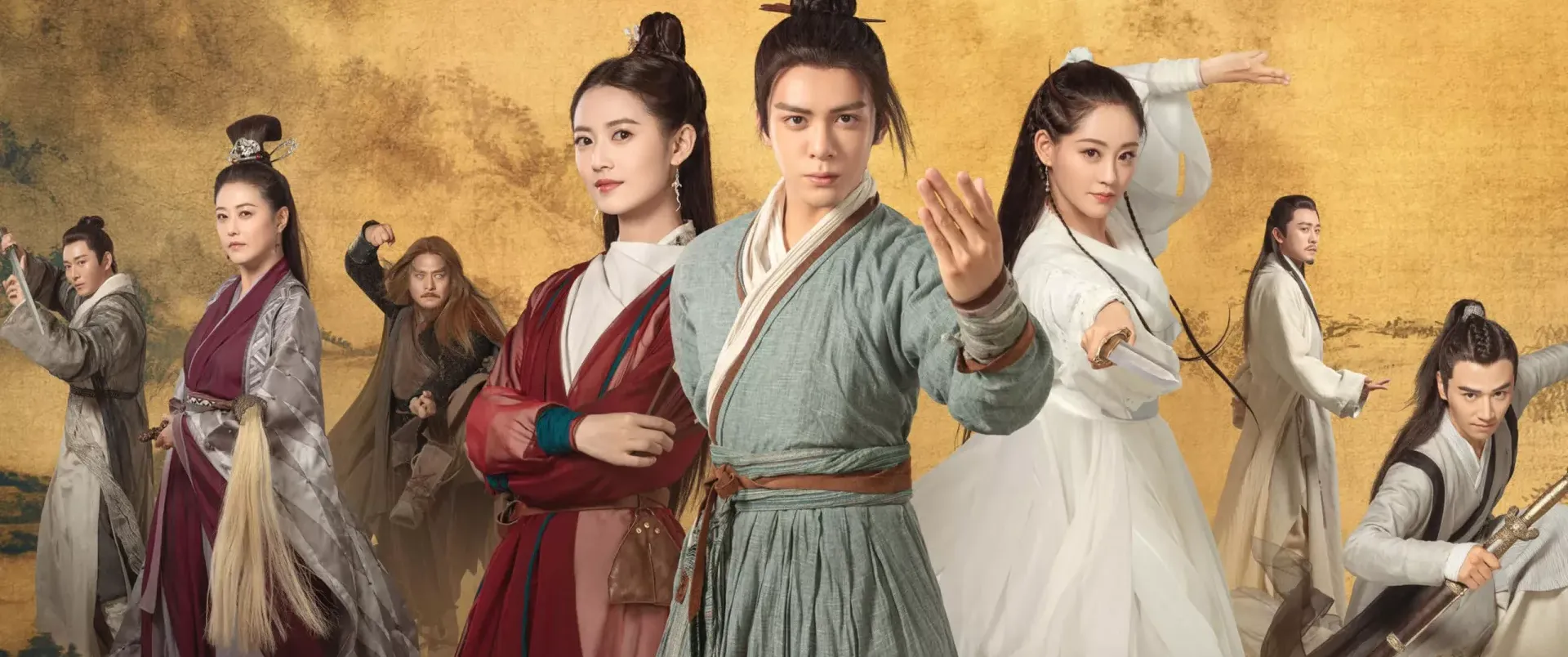
Wang Nangu (simplified: 王难姑, traditional: 王難姑, pinyin: Wáng Nàngū, jyutping: wong4 naan6 gu1), known as the Poison Immortal (毒仙), was a master of poisons and toxicology and the wife of Hu Qingniu, the Butterfly Valley Medical Immortal. Her competitive relationship with her husband created a unique and dangerous dynamic where she would poison people to test whether he could cure them. This competition ultimately led to both their deaths at the hands of Daiqisi, the Purple-Robed Dragon King (also known as Golden Flower Granny).
Biography
Early life and poison studies
Wang Nangu and Hu Qingniu were from the same school, but while Hu Qingniu specialised in medicine and became known as the “Medical Immortal” (医仙), Wang Nangu specialised in poisons and toxicology, becoming known as the “Poison Immortal” (毒仙). Her mastery of poison arts was exceptional, and she was capable of creating and using various poisons with great skill.
The competitive relationship with Hu Qingniu
Wang Nangu’s relationship with Hu Qingniu was characterised by both conflict and deep affection—a dangerous “playful sparring” that was difficult to describe. She became upset that the people she poisoned could be cured by her husband, so she became determined to develop poisons so advanced that even Hu Qingniu could not cure them.
However, Hu Qingniu’s medical skills proved superior to her poison skills. No matter how she poisoned people, he was always able to cure them. To avoid conflicts between them, Hu Qingniu initially refused to treat the people she had poisoned, claiming it was to “preserve marital harmony.”
Later, Wang Nangu deliberately hid her poisoning methods so that Hu Qingniu would not know that she was the one who had poisoned certain victims. When Hu Qingniu accidentally cured them without realising they were her victims, Wang Nangu became even more angry.
The rule of “See Death Without Saving”
In response to Wang Nangu’s anger, Hu Qingniu established a strict rule: he would only treat members of the Ming Order, knowing that Wang Nangu would not harm their fellow Order members. This rule earned Hu Qingniu the nickname “See Death Without Saving” (见死不救), but it also meant that Wang Nangu could no longer prove that her poison skills were superior to his medical skills.
The final test
Unable to prove her superiority through poisoning others, Wang Nangu decided to poison herself, using the Three Insects Three Grasses Poison (三虫三草剧毒), to test whether Hu Qingniu could save her. This act demonstrated her extreme competitiveness and her determination to prove that her poison skills could overcome his medical skills.
When Hu Qingniu saw that Wang Nangu had poisoned herself, he became frustrated and took the poison from her, swallowing it himself. Wang Nangu immediately regretted her actions and began crying, realising the danger she had put both of them in.
The two then faked their deaths, and when Daiqisi (Golden Flower Granny) arrived at Butterfly Valley seeking revenge against Hu Qingniu, she believed they were dead and left with Yin Li (Zhuer, the Spider).
Death
After Daiqisi left, Zhang Wuji discovered that the couple were still alive. Using methods that Hu Qingniu had previously taught him, Zhang Wuji saved both of them by giving them Ox Gallstone Blood Clot Pills (牛黄血竭丹) and Jade Dragon Storax Powder (玉龙苏合散), and using golden needles on their acupoints to dispel the poison.
After being saved, Wang Nangu and Hu Qingniu decided to leave Butterfly Valley by carriage. However, they encountered Daiqisi on the road, who had been defeated by Miejue and forced to leave Butterfly Valley. Daiqisi killed both Wang Nangu and Hu Qingniu in revenge for Hu Qingniu’s refusal to treat her husband Han Qianye. Zhang Wuji later found their bodies and buried them.
Personality & traits
Competitive and determined
Wang Nangu was extremely competitive and determined to prove that her poison skills were superior to her husband’s medical skills. This competitiveness drove much of her actions, leading her to develop increasingly sophisticated poisons and to test them on others, and ultimately on herself.
Passionate about poison arts
Wang Nangu was passionate about poison arts and took pride in her abilities. She dedicated herself to mastering toxicology and developing new poisons, demonstrating her commitment to her craft and her desire to excel in her field.
Complex relationship with Hu Qingniu
Despite their competition, Wang Nangu deeply loved her husband. Their relationship was characterised by both conflict and affection, creating a unique dynamic that was difficult to describe. Her actions, while seemingly extreme, were motivated by her desire to prove herself and to compete with her husband, rather than by malice or cruelty.
Regret and realisation
Wang Nangu demonstrated the ability to recognise when she had gone too far. When Hu Qingniu swallowed the poison alongside her, she immediately regretted her actions and began crying, showing that she understood the danger she had created and that she truly cared for her husband’s well-being.
Poison abilities
Master of poisons
Wang Nangu was a master of poisons and toxicology, capable of creating and using various poisons with great skill. Her expertise was so exceptional that she was known throughout the jianghu as the Poison Immortal, a title that reflected her mastery of poison arts.
Advanced poison techniques
Wang Nangu was able to create sophisticated poisons, including the Three Insects Three Grasses Poison, which was extremely potent and difficult to treat. She could also hide her poisoning methods so effectively that even Hu Qingniu, with his exceptional medical skills, could not always identify that she was the one who had poisoned certain victims.
Poison text
Wang Nangu wrote The Wang Nangu Poison Classic (王难姑毒经), a text containing her poison knowledge and techniques. This text represented her life’s work in poison arts and demonstrated her contributions to the field of toxicology.
Limitations and recognition
Despite her exceptional poison skills, Wang Nangu’s poisons could always be cured by Hu Qingniu, demonstrating that his medical skills were superior to her poison skills. This recognition, while difficult for her to accept, ultimately drove her to develop increasingly sophisticated poisons and to test them in increasingly dangerous ways.
Relationships
Hu Qingniu
Wang Nangu’s relationship with Hu Qingniu was one of the most complex and unusual in the novel. They were both from the same school, but their specialisations—medicine and poisons—created a natural competition between them. Wang Nangu’s desire to prove that her poison skills were superior to his medical skills drove much of their dynamic, creating conflicts and challenges that tested both their skills and their relationship.
Despite this competition, they deeply loved each other, and their relationship demonstrated both conflict and affection. Their final act—both swallowing the Three Insects Three Grasses Poison together—demonstrated their willingness to face danger together, showing the depth of their bond even in the face of their competition.
Zhang Wuji
Wang Nangu’s relationship with Zhang Wuji was indirect but significant. She was present during Zhang Wuji’s time at Butterfly Valley, and her actions—poisoning Ji Xiaofu and the fourteen injured people—created situations that allowed Zhang Wuji to demonstrate and develop his medical skills. After she and Hu Qingniu faked their deaths, Zhang Wuji was the one who saved them, using the medical knowledge he had learnt from Hu Qingniu.
Daiqisi
Wang Nangu’s relationship with Daiqisi was one of victim and killer. Daiqisi killed both Wang Nangu and Hu Qingniu in revenge for Hu Qingniu’s refusal to treat her husband Han Qianye. This act ended Wang Nangu’s life and her relationship with her husband.
Behind the scenes
Wang Nangu represents one of Jin Yong’s most unique supporting characters. Her relationship with Hu Qingniu is one of the most unusual in Jin Yong’s works, demonstrating how competition and conflict can coexist with deep affection and love. Their “playful sparring” through poison and medicine created a dynamic that was both dangerous and touching, showing the complexity of their relationship.
Her character explores themes of competitiveness, pride, and the desire to prove oneself. Her extreme actions, including poisoning herself, demonstrate how far she was willing to go to prove her abilities, even at great personal risk.
The character’s name “Nangu” (难姑) combines “nan” (难), meaning “difficult” or “hard,” and “gu” (姑), meaning “aunt” or “young woman.” This name reflects her difficult personality and her challenging relationship with her husband.
Wang Nangu’s story also serves as a cautionary tale about the dangers of excessive competitiveness and the importance of recognising when one has gone too far. Her regret after seeing Hu Qingniu swallow the poison demonstrates her capacity for self-reflection and her genuine care for her husband, even in the midst of their competition.
Portrayals
Wang Nangu has been portrayed in various adaptations of The Heavenly Sword and the Dragon Sabre:
The Heavenly Sword and the Dragon Sabre
- 1978 film — Zhang Huiyi
- 1984 series — Jiang Qingxia
- 1986 series — Bai Yin
- 1994 series (Golden Haired Lion King) — Yu Mulian
- 1994 series — Lang Zuyun
- 2003 series — Dong Xiaoyan
- 2009 series — Gao Baobao
- 2019 series — Zeng Li
See also
- Hu Qingniu – Her husband
- Zhang Wuji – The person who saved her and Hu Qingniu
- Daiqisi – The person who killed her
- Ming Order – The organisation she belonged to
- The Heavenly Sword and the Dragon Sabre characters