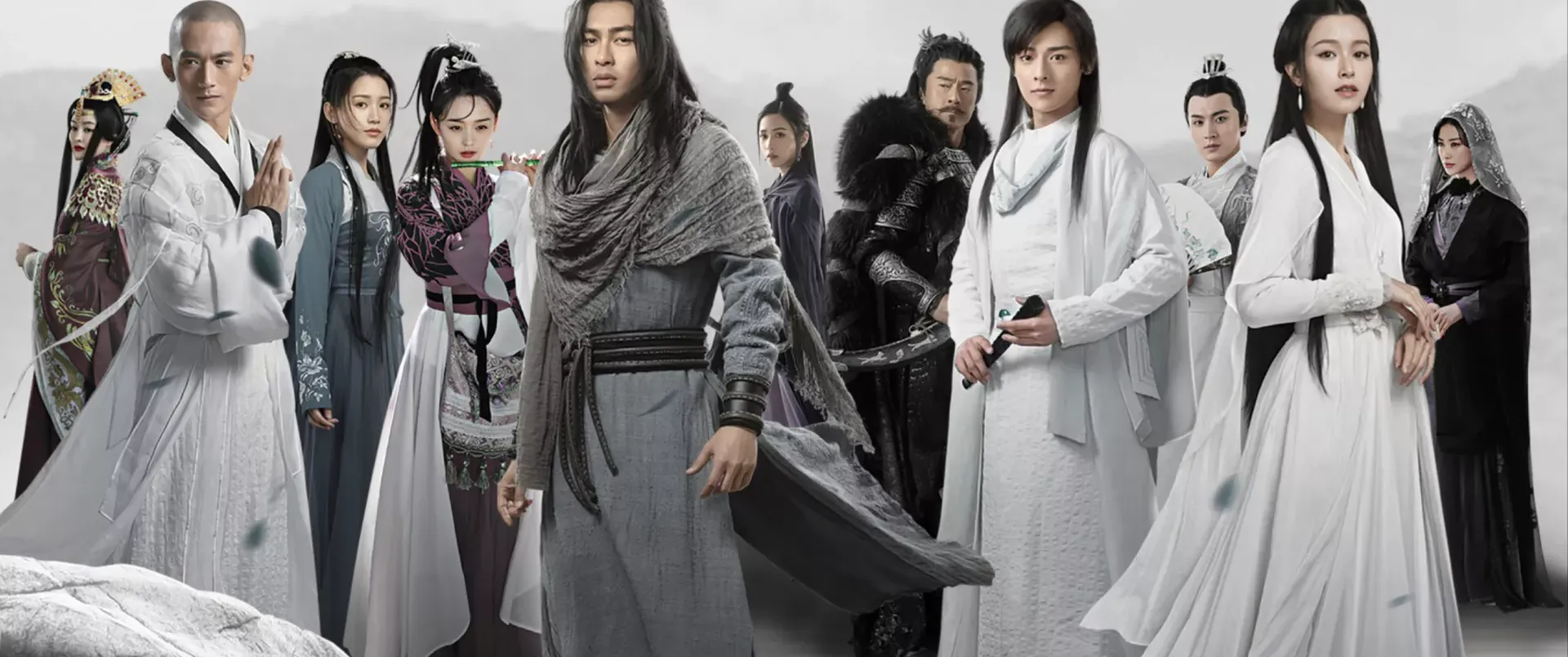
Sikong Xuan (simplified: 司空玄, traditional: 司空玄, pinyin: Sīkōng Xuán, jyutping: si1 hung1 jyun4) was the leader of the Shennong Guild, a subordinate organisation of the Lingjiu Palace that specialised in poison making and herb gathering. He was forced to accept the Mark of Life and Death from Tianshan Tonglao and ultimately committed suicide after failing to complete a mission assigned by the Lingjiu Palace.
Biography
Leadership of the Shennong Guild
Sikong Xuan served as the leader of the Shennong Guild, an organisation that operated primarily in Southwest China and specialised in gathering herbs and refining elixirs. The guild was nominally an independent martial arts organisation but was completely subservient to the Lingjiu Palace’s directives.
As guild leader, Sikong Xuan was responsible for overseeing the guild’s operations, including the gathering of rare medicinal herbs and the production of poisons. The guild was required to regularly pay tribute of rare medicinal herbs to Tianshan Tonglao, and members were long active in the southwest region gathering herbs and refining elixirs.
Control by the Mark of Life and Death
Sikong Xuan was forced to accept the Mark of Life and Death from Tianshan Tonglao to preserve the guild. This control method, used by the Lingjiu Palace to maintain dominance over subordinate organisations, placed him under the absolute authority of Tianshan Tonglao and made the guild a peripheral organisation under the Lingjiu Palace’s control.
The Mark of Life and Death was a method of control that caused extreme pain to those who failed to complete assigned tasks, creating a powerful incentive for obedience but also placing tremendous psychological and physical pressure on those who were controlled.
Conflict with the Wuliang Sword School
The conflict with the Wuliang Sword School began when Sikong Xuan sought the Tongtian Grass (通天草), a rare herb that could alleviate the pain of the Mark of Life and Death. This herb was both an important material for the guild’s operations and a key tribute item to the Lingjiu Palace.
Sikong Xuan had been ordered by the Lingjiu Palace to occupy Jianhu Palace (剑湖宫) and investigate the truth about the Wuliang Jade Wall (无量玉壁). When four Shennong Guild leaders came to Jianhu Palace requesting permission to gather herbs from the back mountain, which violated the school’s taboos, a fight broke out. Zuo Zimu and Rong Ziju of the Wuliang Sword School killed two of the guild members, creating lasting enmity.
Confrontation with Duan Yu and Zhong Ling
During the conflict with the Wuliang Sword School, Sikong Xuan captured Zhong Ling as a hostage and forced Duan Yu to consume the Seven-day Gut-breaking Powder (七日断肠散). This action directly advanced the subsequent Wanjie Valley plot development and demonstrated Sikong Xuan’s ruthless methods in pursuing his objectives.
The Shennong Guild’s expertise in poison techniques gave them a significant advantage over the Wuliang Sword School, which had no knowledge of poison arts. This imbalance ultimately led to the school’s defeat and their absorption into the Lingjiu Palace’s network.
Suicide
Sikong Xuan failed to complete the Lingjiu Palace’s assigned task of capturing Jianhu Palace. Fearing the pain of the Mark of Life and Death’s backlash, he chose to commit suicide by jumping off a cliff. His death highlighted the Lingjiu Palace’s control methods over subordinate organisations and demonstrated the psychological and physical toll of such subjugation.
Personality and traits
Ruthless and pragmatic
Sikong Xuan demonstrated a ruthless and pragmatic approach to achieving his objectives. He was willing to use hostages and poison to force compliance, as shown when he captured Zhong Ling and forced Duan Yu to consume poison. This approach reflected the guild’s specialisation in poison techniques and their unorthodox methods.
Fear of the Mark of Life and Death
Sikong Xuan’s ultimate suicide demonstrated the overwhelming fear that the Mark of Life and Death instilled in those who were controlled. Rather than face the excruciating pain of the mark’s backlash, he chose to end his own life, illustrating the psychological power of the Lingjiu Palace’s control methods.
Martial arts abilities
Poison techniques
As leader of the Shennong Guild, Sikong Xuan was skilled in poison-making techniques. The guild specialised in producing lethal poisons such as the Gut-breaking Powder (断肠散) and the Seven-day Gut-breaking Powder, which were used to intimidate and control opponents.
Herb gathering and pharmacology
Sikong Xuan oversaw the guild’s operations in gathering rare medicinal herbs and refining elixirs. The guild’s expertise in pharmacology, while focused on poisons, also included knowledge of medicinal herbs and their properties.
Relationships
Service to the Lingjiu Palace
Sikong Xuan’s primary relationship was his subordination to the Lingjiu Palace through the Mark of Life and Death. He was forced to accept this control to preserve the guild, and his entire organisation operated under the Lingjiu Palace’s directives.
Conflict with the Wuliang Sword School
Sikong Xuan’s conflict with the Wuliang Sword School, particularly with Zuo Zimu and Rong Ziju, created lasting enmity. The conflict arose from competing interests over the Tongtian Grass and the Lingjiu Palace’s orders to occupy Jianhu Palace.
Behind the scenes
Sikong Xuan serves as an example of how smaller martial arts organisations could be controlled by larger powers through fear and coercion. His character demonstrates how subordinate groups could be forced to serve the interests of more powerful organisations while maintaining a facade of independence.
His ultimate suicide illustrates the psychological and physical toll of such subjugation, showing how the fear of punishment could drive individuals to extreme actions. This reflects one of the novel’s themes about the corrupting influence of power and control in the martial arts world.
See also
- Shennong Guild — The organisation Sikong Xuan led
- Lingjiu Palace — The organisation that controlled the Shennong Guild
- Tianshan Tonglao — The master who controlled Sikong Xuan
- Mark of Life and Death — The control method used on Sikong Xuan
- Wuliang Sword School — The faction Sikong Xuan conflicted with
- Duan Yu — One of Sikong Xuan’s victims
- Zhong Ling — One of Sikong Xuan’s hostages
- Demi-Gods and Semi-Devils characters