
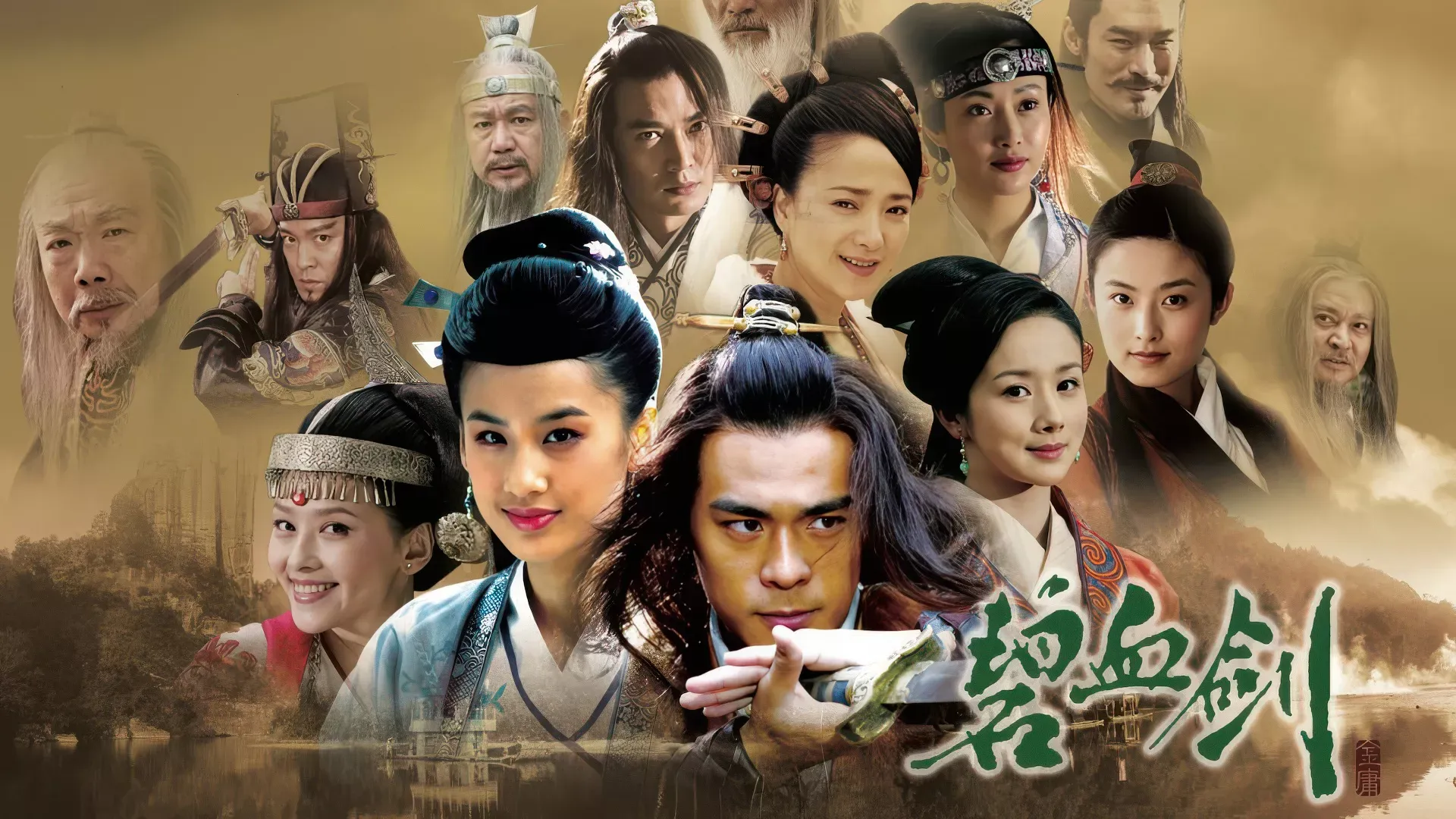
Min Zihua (simplified: 闵子华, traditional: 閔子華, pinyin: Mín Zǐhuá, jyutping: man5 zi2 waa4) was a member of the Xiandu School (仙都派) who sought revenge against Jiao Gongli (焦公礼), the leader of the Golden Dragon Gang (金龙帮), for the death of his brother Min Ziye (闵子叶) in Sword Stained with Royal Blood. After being manipulated by the Tai Bai San Ying (太白三英) into believing false accusations, Min Zihua eventually reconciled with Jiao Gongli when Yuan Chengzhi (袁承志) exposed the truth.
Biography
Early life and training
Min Zihua was the younger brother of Min Ziye, a martial artist from the Xiandu School who had served as the Escort Chief of the Youyou Escort Bureau (会友镖局 — Huìyǒu Biāojú) in Jinan, Shandong. After Min Ziye was killed by Jiao Gongli, Min Zihua dedicated himself to training and developing his martial arts skills, hoping to one day avenge his brother’s death.
The Min Ziye incident
Min Ziye had conspired with the leader of the Flying Tiger Stronghold (飞虎寨 — Fēihǔ Zhài) to rob a transport and kidnap the second daughter of the transport owner, Qiu Daotai (丘道台), who was known for her beauty. Min Ziye planned to commit rape and murder, disguising the crime as a robbery.
Jiao Gongli, who was then operating as a bandit leader on Shuanglong Ridge (双龙岗 — Shuānglóng Gǎng), learnt of this evil plot. Despite being a bandit himself, Jiao Gongli was outraged by Min Ziye’s plan and intervened, killing Min Ziye with a single sabre strike. Jiao Gongli also obtained a confession (伏辩 — fúbiàn) from the Flying Tiger Stronghold leader and a letter of thanks from Qiu Daotai, which served as proof of his righteous actions.
Huangmu Daoren (黄木道人), the leader of the Xiandu School, recognised that Min Ziye’s actions had been wrong and agreed to constrain his disciples from seeking revenge against Jiao Gongli. However, to protect the school’s reputation, Huangmu Daoren asked Jiao Gongli not to publicise the matter.
Seeking revenge
Years later, after completing his training, Min Zihua decided to seek revenge for his brother’s death. For over ten years, he had searched for his brother’s killer but had been unable to identify who was responsible. He was then approached by the Tai Bai San Ying (太白三英), who claimed to have information about his brother’s death and identified Jiao Gongli as the killer.
Unbeknownst to Min Zihua, the Tai Bai San Ying had secretly become traitors, working for the Manchus. They had stolen the confession and letter of thanks that Jiao Gongli had obtained as proof of his righteous actions, destroyed the evidence, and spread false rumours, turning Min Zihua against Jiao Gongli.
Gathering allies
Believing the false accusations, Min Zihua gathered a large group of martial artists to seek revenge in Nanjing, including:
- Wan Lifeng (万里风) the Wind Chasing Sword (追风剑 — Zhuīfēng Jiàn) from the Diancang School (点苍派)
- Shili Dashi (十力大师) from the Qingliang Temple (清凉寺) on Mount Wutai (五台山)
- Zheng Qiyun (郑起云) the Green Sea Long Whale (碧海长鲸 — Bìhǎi Chángjīng), leader of the Seventy-Two Islands Alliance (七十二岛总盟主)
- Zhang Xinyi (张心一) from the Kunlun School (昆仑派)
- Several monks from the Emei School (峨嵋派)
- Mei Jianhe (梅剑和) the Shadowless (没影子 — Méiyǐngzǐ) from the Huashan School, along with his disciples Liu Peisheng (刘培生) and Sun Zhongjun (孙仲君)
Min Zihua prepared for a confrontation with Jiao Gongli and the Golden Dragon Gang, setting up a secret meeting at his residence in Dagongfang (大功坊) in Nanjing, where he planned to coordinate the attack.
Yuan Chengzhi’s intervention
Yuan Chengzhi, who happened to be in Nanjing, heard of the conflict and decided to help Jiao Gongli. He retrieved the stolen confession and letter of thanks from the Tai Bai San Ying and attempted to present them to Min Zihua to expose the truth.
However, Mei Jianhe, acting rashly, tore up the evidence documents that Yuan Chengzhi had provided. Undeterred, Xia Qingqing (温青青) had memorised the contents of the documents and was able to recite them from memory, allowing Yuan Chengzhi to present the evidence to Min Zihua.
Confrontation and reconciliation
When Yuan Chengzhi presented the evidence, Min Zihua and his fellow Xiandu School disciple Dong Xuan (洞玄) initially refused to believe it and challenged Yuan Chengzhi to a fight. They used the Two Yi Sword Technique (两仪剑法 — Liǎngyí Jiànfǎ), coordinating their attacks in an attempt to defeat Yuan Chengzhi.
However, Yuan Chengzhi was far superior in martial arts, and he easily defeated both Min Zihua and Dong Xuan. Despite their defeat, Yuan Chengzhi showed restraint and did not harm them, instead using the opportunity to explain the truth and present the evidence.
With the help of Priest Musang (木桑道长), Yuan Chengzhi also captured the Tai Bai San Ying, who had attempted to escape. The truth was revealed, and Min Zihua realised that he had been deceived and that Jiao Gongli had acted righteously in killing his brother.
Reconciliation with Jiao Gongli
After learning the truth, Min Zihua and Jiao Gongli reconciled, ending their conflict. Min Zihua realised that his brother’s death had been justified, as Min Ziye had been planning to commit heinous crimes, and Jiao Gongli had acted to prevent these crimes and protect the innocent.
However, the Tai Bai San Ying escaped (or were rescued) and, seeking revenge for their exposure, stole Min Zihua’s assassination knife (戒杀刀 — jièshā dāo) and used it to murder Jiao Gongli, framing Min Zihua and the Xiandu School for the crime.
Yuan Chengzhi, with the help of Jiao Gongli’s daughter Jiao Waner (焦宛儿), eventually uncovered the truth, and Jiao Waner personally killed the Tai Bai San Ying to avenge her father’s death.
Personality and character
Min Zihua was portrayed as a righteous and honourable martial artist who was genuinely seeking justice for his brother’s death. However, he was also somewhat naive and trusting, as he was easily deceived by the Tai Bai San Ying’s false accusations and manipulated into gathering allies to attack Jiao Gongli.
His willingness to reconcile with Jiao Gongli after learning the truth demonstrated his integrity and his commitment to justice over personal vendettas. Rather than continuing to seek revenge after discovering that his brother had been in the wrong, Min Zihua accepted the truth and ended the conflict, showing that he valued righteousness over blind loyalty to family.
Martial arts
Two Yi Sword Technique
Min Zihua, along with his fellow disciple Dong Xuan, was skilled in the Two Yi Sword Technique (两仪剑法 — Liǎngyí Jiànfǎ), a sword technique that required two practitioners to coordinate their attacks. This technique was used by the Xiandu School and allowed two martial artists to work together to create a more powerful combination attack.
Min Zihua and Dong Xuan used this technique against Yuan Chengzhi, but Yuan Chengzhi’s superior martial arts skills allowed him to defeat them easily, demonstrating the technique’s limitations against truly skilled opponents.
Assassination knife
Min Zihua owned an assassination knife (戒杀刀 — jièshā dāo), which was a significant weapon that he carried. However, this knife was stolen by the Tai Bai San Ying, who used it to murder Jiao Gongli and frame Min Zihua and the Xiandu School for the crime.
Role in the novel
Representing the danger of manipulation
Min Zihua’s story represents the danger of being manipulated by others. His genuine desire for justice was exploited by the Tai Bai San Ying, who used false information to turn him against an innocent person. This demonstrates how even well-intentioned people can be deceived and used as tools by those with malicious intentions.
Demonstrating the importance of truth
Min Zihua’s reconciliation with Jiao Gongli after learning the truth demonstrates the importance of seeking the truth and being willing to change one’s position when presented with evidence. Rather than stubbornly clinging to his vendetta, Min Zihua was willing to accept the truth and end the conflict, showing that justice and righteousness should take precedence over personal vendettas.
Contributing to Jiao Gongli’s story
Min Zihua’s conflict with Jiao Gongli, and their eventual reconciliation, was an important part of Jiao Gongli’s story. It demonstrated Jiao Gongli’s righteousness and the complexity of justice in the jianghu, where good intentions could be twisted and innocent people could be falsely accused.
Relationships
Family
- Min Ziye (闵子叶) — Min Zihua’s older brother, who was killed by Jiao Gongli after planning to commit rape and murder. Min Zihua initially sought revenge for his death but eventually accepted that his brother’s death had been justified.
School
- Huangmu Daoren (黄木道人) — The leader of the Xiandu School, who had agreed to constrain his disciples from seeking revenge against Jiao Gongli after the Min Ziye incident
- Dong Xuan (洞玄) — Min Zihua’s fellow disciple, who joined him in seeking revenge and fought alongside him against Yuan Chengzhi
Enemies turned friends
- Jiao Gongli — The leader of the Golden Dragon Gang, whom Min Zihua initially sought to kill but eventually reconciled with after learning the truth
Allies
- Yuan Chengzhi — The protagonist who exposed the truth and helped Min Zihua and Jiao Gongli reconcile
Legacy
Min Zihua’s story serves as a reminder of the importance of seeking the truth and being cautious about accepting information from others. His experience demonstrates how even well-intentioned people can be manipulated and used as tools by those with malicious intentions, and how important it is to verify information before taking action.
His willingness to reconcile with Jiao Gongli after learning the truth also demonstrates the importance of justice and righteousness over personal vendettas. Rather than continuing to seek revenge after discovering that his brother had been in the wrong, Min Zihua accepted the truth and ended the conflict, showing that true honour lies in doing what is right, even when it conflicts with personal desires.
Min Zihua’s story also highlights the theme of justice and truth in the novel, demonstrating how complex situations can be and how important it is to seek the truth before passing judgment. His reconciliation with Jiao Gongli shows that conflicts can be resolved peacefully when the truth is revealed and both parties are willing to accept it.