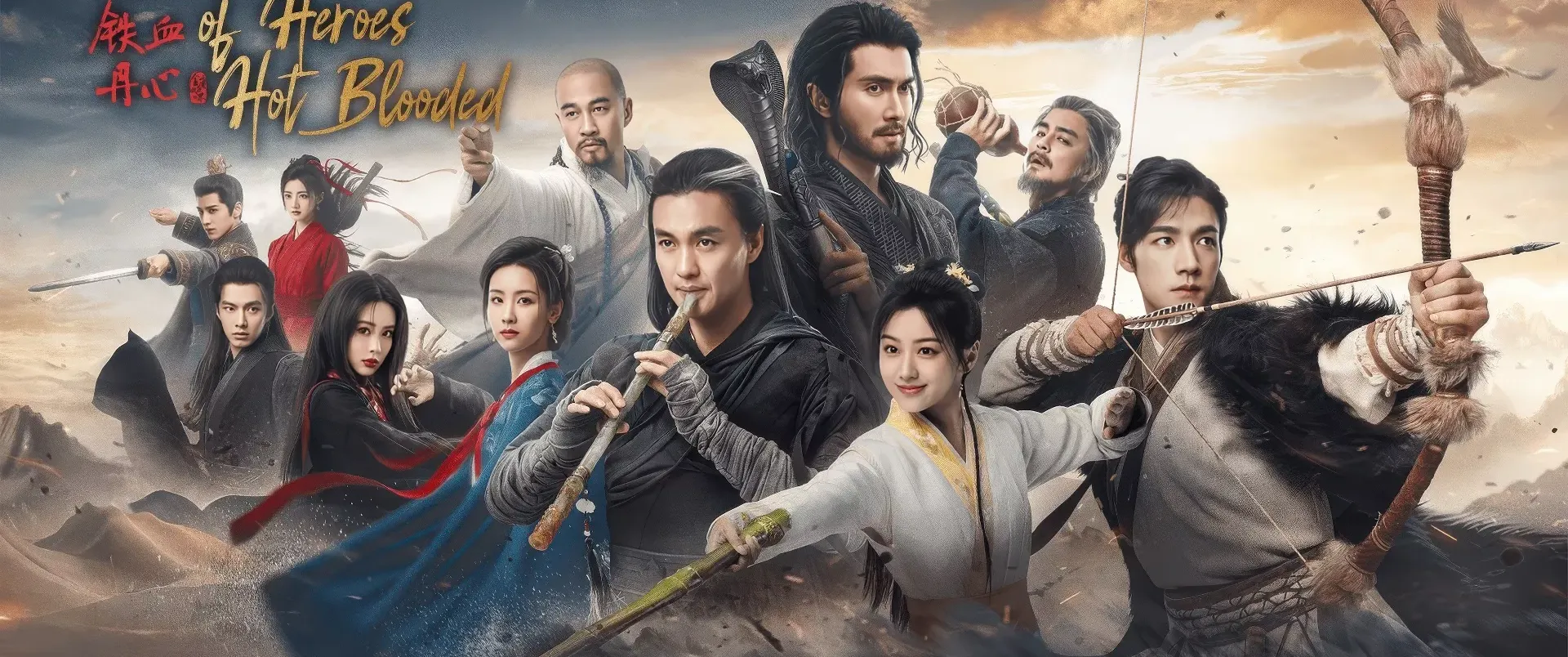
Jin Yong made extensive revisions to The Legend of the Condor Heroes since its initial serialisation in the Hong Kong newspaper Ming Pao.
While the first major revision was published as the Second Edition in 1979, the most substantial changes came in the Third Edition published in June 2002. These modifications range from fundamental plot elements to character motivations, significantly enhancing the novel’s historical accuracy and narrative consistency.
This analysis documents the comprehensive changes between the Second and Third Editions. Each section examines specific aspects of the revisions, from fundamental plot elements to minor textual adjustments.
Publication history
Original serialisation (First Edition):
- Published in Hong Kong newspaper Ming Pao from 1 January 1957 to 19 May 1959
- First comprehensive version of the story
- Established core narrative elements
Second Edition (December 1975):
- First major revision of newspaper serialisation
- Initial refinements to plot and characters
- Basic improvements to consistency
Third Edition (June 2002):
- Most substantial revision
- Significant plot modifications
- Enhanced historical accuracy
- Improved character development
- Addresses reader feedback
- Resolved logical inconsistencies
Character development
The Third Edition significantly enhances character development through deeper backstories, clearer motivations, and more complex emotional responses. These changes make characters’ actions more logical while adding psychological depth to their decisions.
Qu Lingfeng
One of the most substantial character revisions involves Qu Lingfeng, whose age and background undergo significant changes that ripple throughout the narrative.
Second Edition portrayal:
- Appeared to be only in his twenties when meeting Guo Xiaotian and Yang Tiexin
- Lived in Niu Clan Village for an unknown number of years
- Basic tavern keeper with mysterious background
Third Edition enhancements:
Age and background:
- Age changed to forty-odd years
- Recently arrived in Niu Clan Village—just over a year before meeting Guo Xiaotian and Yang Tiexin
- Wife’s death provided clear motivation for relocation
- Established timeline allows for more complex family history
Relationship with Shagu:
- Calls her “Guaibao” (a pet name or local term of endearment)
- At five or six years old, she appeared normal at the time
- Her presence early in the story becomes logically possible due to age change
- After Qu Lingfeng’s disappearance, Bao Xiruo sends her to maternal family care
Peach Blossom Island connections:
- Revealed as fifteen years older than Mei Chaofeng
- Former eldest senior brother among Huang Yaoshi’s disciples
- Had wife and daughter Shagu before joining Peach Blossom Island
- Expelled earlier for presuming to discipline Chen Xuanfeng in shifu’s name
- Strong literary talent—learnt most of Huang Yaoshi’s diverse skills
The Sevent Eccentrics of Jiangnan
The Third Edition makes the Sevent Eccentrics of Jiangnan younger and more consistently aged, addressing issues with their generational relationships.
Second Edition issues:
- Age disparities too large between sworn siblings
- Ke Zhen’e around forty when Yang Kang wasn’t born
- Nan Xiren around thirty years old
Third Edition adjustments:
- Ke Zhen’e: Changed from “around forty” to “around thirty”
- Nan Xiren: Changed from “around thirty” to “twenty-eight or twenty-nine”
- More logical age relationships for sworn siblings
- Addresses longevity concerns (Ke Zhen’e still alive when Yang Guo in his thirties)
Relationship with Mei Chaofeng:
- Feud timeline modified significantly
- Ke Zhen’e’s elder brother Ke Bixie died “one or two years ago” rather than during current events
- Death occurred when Sevent Eccentrics were in Shandong searching for Li Ping
- Ke Zhen’e never actually fought or seen Mei Chaofeng directly
- Knowledge of her martial practices explained through second-hand information
Huang Yaoshi’s character evolution
The Third Edition significantly softens Huang Yaoshi’s character, transforming him from a temperamental master into a more relatable figure.
Second Edition portrayal:
- Mercurial and difficult temperament
- Harsh treatment of disciples
- Mysterious family background
- Simple motivations
Third Edition development:
Family background:
- Descended from official family dating back to Emperor Taizu
- Grandfather killed for defending Yue Fei
- Family exiled to Yunnan
- Born in Lijiang with early political awareness
- Father expelled him for anti-court activities
Origin of “Eastern Heretic”:
- Performed many “heretical deeds” upon returning to Zhejiang
- Called “Heretical Hero” by common people
- Thoughts of overthrowing court and killing incompetent officials
- Represents anti-feudal stance
Disciples and relationships:
- Admits errors openly at Gathering Cloud Manor
- Takes Lu Chengfeng and Mei Chaofeng back into school
- Shows consideration for disciples’ feelings
- More merciful in punishment decisions
Qiu Chuji
The Third Edition enhances Qiu Chuji’s character with stronger martial arts, younger appearance, and improved social awareness.
Enhanced martial prowess:
- Fights Sevent Eccentrics of Jiangnan and breaks Duan Tiande’s right arm
- Better demonstrates Quanzhen Order’s reputation
- Shows why beggars consider Seven Disciples formidable opponents
Appearance modification:
- Changed from “youthful face and white hair” to “beard black as lacquer”
- Age adjustment for timeline consistency
- Only in fifties when reappearing with Guo Jing at nineteen
Cultural awareness:
- Speaks with Shandong accent when meeting Guo Xiaotian and Yang Tiexin
- Creates humorous “fellow villagers meet the real deal” moment
- All Seven Zis of Quanzhen were from Shandong
Wanyan Honglie
The Third Edition provides more depth to this antagonist, making him more sympathetic without excusing his actions.
Enhanced characterisation:
- Demonstrates genuine care for Yang Kang as adopted son
- Shows qualities of loyalty, wisdom, and courage in public service
- More complex emotional responses
- Believable feelings for Bao Xiruo explained in author’s note
Relationship development:
- Love for Bao Xiruo presented as normal human emotion
- Balances personal and political motivations
- Shows capacity for both kindness and ruthlessness
Plot mechanics and timeline
The Third Edition makes substantial revisions to improve logical consistency and historical accuracy while resolving reader questions about story mechanics.
Historical accuracy improvements
Emperor naming conventions:
- Changed from anachronistic temple names to contemporary era names
- “Emperor Ningzong” changed to “Emperor Qingyuan” for current ruler
- “Jin Zhangzong Wanyan Jing” changed to “Jin Mingchang Emperor Wanyan Jing”
- Reflects what characters would actually have called rulers at the time
Geographic corrections:
- Beijing consistently changed to “Daxing Prefecture” or “Zhongdu”
- Matches official Jin state names from 1154–1215
- Lin’an usage standardised for Southern Song capital
- Various circuit names updated for period accuracy
Military and political details:
- Enhanced descriptions of historical campaigns
- More accurate portrayal of Mongol military organisation
- Better integration of historical figures like Temüjin
The Nine Yin Manual
Major revisions address the manual’s problematic elements while maintaining its narrative importance.
Content modifications:
- Evil techniques like Nine Yin White Bone Claw not created by Huang Shang
- Huang Shang studied enemies’ martial arts to develop counter-methods
- Manual contains both practice and counter-methods for dangerous techniques
- Counter-methods require neili foundation from first volume
Physical storage:
- Human skin format abandoned for handwritten copies
- More reasonable preservation method
- Manual split between stolen copy and original
Philosophical enhancement:
- Mei Chaofeng’s repentance written on manual
- Zhu Xizhen’s poetry added
- Greater emotional depth to Huang Yaoshi’s motivations
Weapon and martial arts changes
Mei Chaofeng’s whip:
- Length reduced from four zhang to three zhang
- Material specified as pure steel plated with white copper or silver
- “White Python Whip” reference added
- More detailed technique descriptions
Dragon-Subduing Palm modifications:
- Added detailed origin story with Xiao Feng
- Clarified relationship to original Twenty-Eight Dragon-Subduing Palms
- Enhanced explanation of Xiao Feng and Xuzhu’s simplification
- Better integration with Demi-Gods and Semi-Devils
Martial arts philosophy
The Third Edition deepens the philosophical foundations underlying martial arts practices, making them more integrated with Chinese thought traditions.
Qi systems
Ma Yu’s teaching enhanced:
- More detailed explanation of Daoist internal cultivation
- Added terminology: “three flowers gathering at the crown,” “five qi returning to origin”
- Better integration of religious philosophy with martial practice
Zhou Botong’s age adjustment:
- Explicitly described as roughly same age as Hong Qigong and Ouyang Feng
- More logical power relationships among Five Greats
- Clearer generational positioning
Beggars’ Guild enhancements
Leadership transition:
- Detailed explanation of succession protocols
- Added historical context through Qiao Feng references
- Enhanced prestige through specific heroic examples
- Better demonstrated organisation’s martial reputation
Four Great Elders:
- Age changed from “elderly men” to “middle-aged beggars”
- Lu Youjiao terminology adjusted accordingly
- More realistic organisational structure
Cultural and social elements
Food culture expansion
The Third Edition significantly expands descriptions of cuisine, reflecting Jin Yong’s attention to cultural details.
Huang Rong’s culinary skills:
- Extensive new dishes added to her repertoire
- Regional specialties properly described
- “Suzhou-style Mongolian dishes” for cultural bridge-building
- Enhanced role of food in relationship development
Hong Qigong’s gastronomy:
- More detailed descriptions of his favourite dishes
- Added cultural significance of shared meals
- Food as diplomatic tool in various situations
Regional accuracy
Travel times and distances:
- Adjusted for realistic medieval transportation
- Seasonal changes properly aligned with geography
- Route descriptions enhanced for authenticity
Cultural sensitivity:
- Mongolian customs better integrated
- Han Chinese traditions respected
- Ethnic tensions portrayed with nuance
Narrative consistency
Timeline corrections
Character births and ages:
- Yang Kang’s birth timing adjusted from two months to one month younger than Guo Jing
- Xie Xun’s son’s age changed from one to three years old
- Marriage timing between Yang Tiexin and Bao Xiruo shortened
Event sequencing:
- Martial contest timing aligned with established dates
- Travel periods made more realistic
- Seasonal descriptions corrected
Logical improvements
Character motivations:
- Why Sevent Eccentrics of Jiangnan don’t take Guo Jing back to Jiangnan explained
- Li Ping’s reasons for staying in Mongolia clarified
- Strategic decisions given better foundations
Plot mechanics:
- Weapon origins made more believable
- Hidden message systems explained
- Combat outcomes justified through skill levels
Author’s commentary
Jin Yong includes extensive notes explaining major changes and their rationale throughout the Third Edition.
Historical research documentation:
- Sources for geographic and political details
- Cultural practices verification
- Period authenticity enhancement
Reader feedback responses:
- Addressing common questions about character ages
- Explaining timeline inconsistencies
- Resolving plot logic concerns
Cultural education:
- Explanations of anachronisms
- Historical context for various elements
- Philosophical foundations of martial arts
Impact of revisions
The Third Edition’s comprehensive changes create several significant improvements:
Enhanced historical authenticity:
- Better alignment with Song-Jin-Yuan period realities
- More accurate cultural representations
- Improved geographic precision
Stronger character development:
- More complex psychological motivations
- Better relationship dynamics
- Enhanced emotional depth
Improved narrative flow:
- Resolved timeline contradictions
- Enhanced logical consistency
- Better pacing and progression
Cultural richness:
- Deeper philosophical foundations
- Enhanced food culture representation
- Better integration of regional differences
These revisions transform The Legend of the Condor Heroes from an entertaining martial arts story into a sophisticated historical novel that maintains its adventure while gaining depth and authenticity. The changes demonstrate Jin Yong’s commitment to improving his work based on scholarly research and reader feedback, creating a more satisfying and believable narrative experience.