
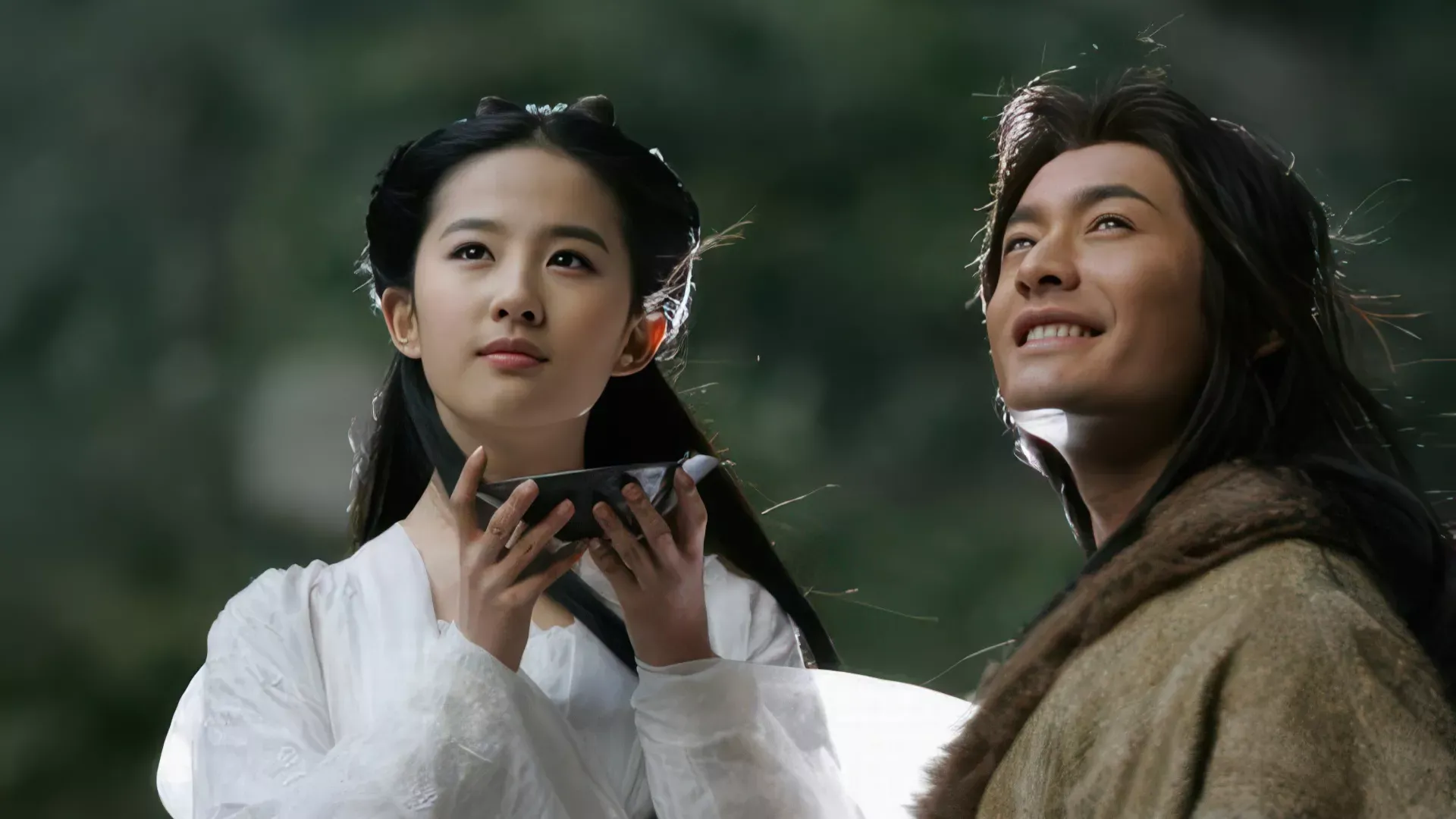
Chu Dongshan (simplified: 褚东山, traditional: 褚東山, pinyin: Chǔ Dōngshān, jyutping: cyu5 dung1 saan1) was the Fisherman among Great Master Yideng’s four disguised guardians. A former admiral of the Dali Kingdom, he relinquished office to follow his sovereign into ascetic life, hiding his identity beneath the humble appearance of a boatman on the shores of Cang Mountain.
Biography
Admiral turned guardian
Before Yideng took monastic vows, Chu Dongshan commanded the Dali navy and oversaw key waterways that protected the Duan royal line. When Duan Zhixing abdicated and adopted the Buddhist title of Great Master Yideng, Chu Dongshan resigned his commission and accompanied him into seclusion. He adopted the persona of the “Diancang Fisherman” (苍山渔隐), trading his admiral’s uniform for weathered hemp garments and a creaking fishing skiff.
Disguised life on Cang Mountain
Alongside Zhang Shaoshou, Wu Santong, and Zhu Ziliu, Chu Dongshan formed the quartet known to the jianghu as the Fisherman, Woodcutter, Farmer, and Scholar. Each disciple concealed his true identity behind a rustic trade, ensuring that Yideng could wander freely without alarming the jianghu. Chu Dongshan ferried travelers across Erhai Lake, gathered intelligence, and served as the first defensive line whenever hostile forces approached the master’s meditation sites.
Heroes’ Feast duel
During the Heroes’ Feast convened by Guo Jing and Huang Rong in The Return of the Condor Heroes, Chu Dongshan represented Yideng’s camp in the second round of matches. Wielding an iron oar, he fought the Tibetan strongman Daerba to a stalemate for more than a hundred exchanges. The duel only ended when Daerba shattered the oar with brute strength—Chu Dongshan conceded rather than prolong the battle empty-handed, proving the resilience of Yideng’s disciples despite the loss.
Personality and traits
The Fisherman embodied patience and quiet loyalty. Years spent piloting boats through dangerous currents cultivated an instinct for reading subtle shifts in wind and tide, a sensitivity he later applied to interpersonal conflicts. Although he rarely raised his voice, his presence calmed his fellow disciples and reassured villagers that Yideng’s compassion still reached the common folk.
Martial arts abilities
One Yang Finger
As a direct disciple of Yideng, Chu Dongshan learnt the One Yang Finger. He used the technique sparingly, reserving its restorative properties for stabilising allies wounded by poisons or vicious claws. His execution lacked the explosive flair of Zhu Ziliu, but his steady qi made him a reliable support fighter.
Iron Oar Technique
Chu Dongshan’s signature style revolved around an iron oar normally disguised as a fisherman’s tool. The technique emphasised wide sweeps, sudden thrusts, and the leverage gained from oar pivots. The heavy weapon allowed him to parry lances, deflect incoming arrows, and exploit the reach advantage against horsemen attempting to land on his skiff.
Relationships
- Great Master Yideng — Sovereign-turned-master whom he guarded with absolute loyalty.
- Fellow disciples — Zhang Shaoshou, Wu Santong, and Zhu Ziliu worked in tandem with him, each representing a different archetype to shield Yideng’s seclusion.
- Daerba — The Tibetan warrior whose duel with Chu Dongshan at the Heroes’ Feast highlighted the raw power of adversaries aligned with the Mongol court.
Behind the scenes
Chu Dongshan illustrates Jin Yong’s recurring motif of former officials renouncing worldly glory to serve a higher moral calling. The “Fisherman, Woodcutter, Farmer, Scholar” trope mirrors classical Chinese paintings where hermits embody Confucian virtues while living among the common people. His duel with Daerba also juxtaposes two kinds of strength: the fisherman’s refined control versus the monk’s unyielding force.