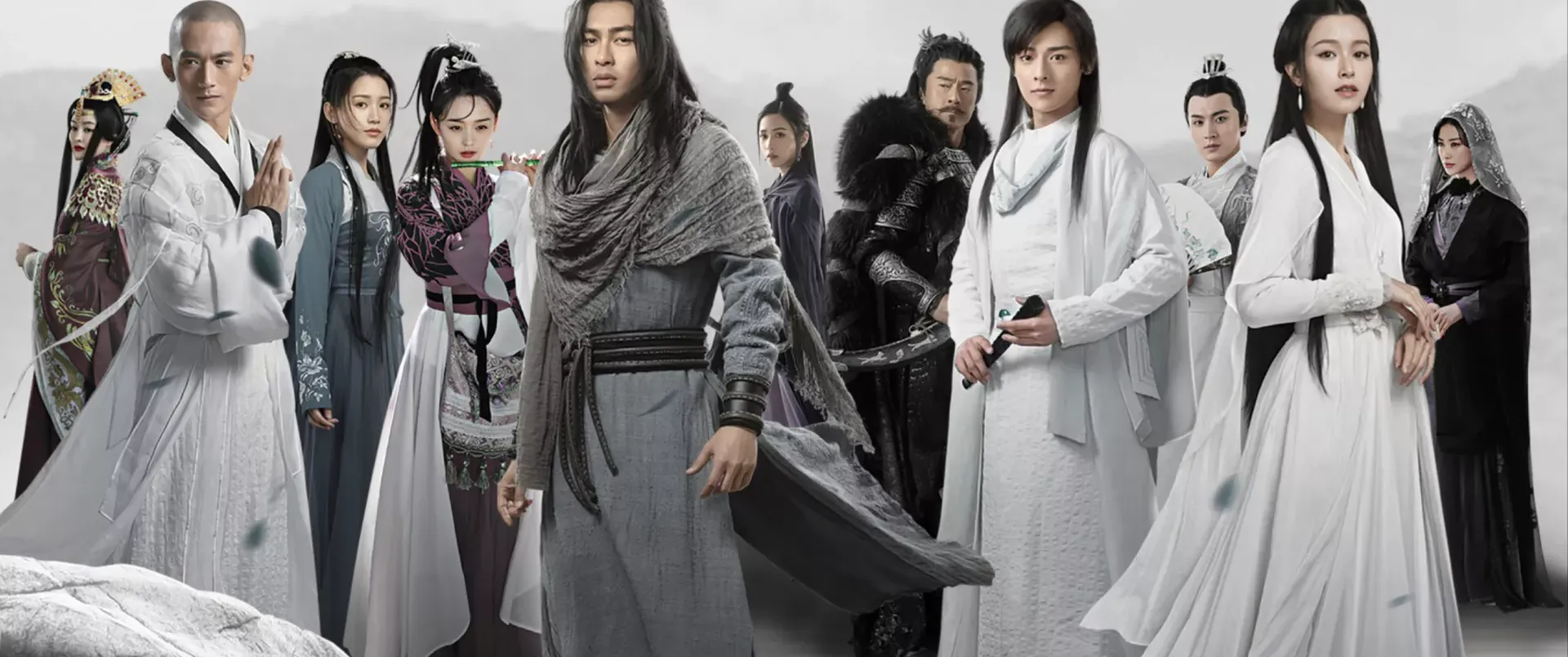
Chief Wu (simplified: 乌老大, traditional: 烏老大, pinyin: Wū Lǎodà, jyutping: wu1 lou5 daai6), also known as Wu Laoda, was a leader in the martial arts world who played a role in various conflicts and developments throughout the story. His character represents the complex dynamics of leadership and power in the jianghu.
Biography
Early life and background
Chief Wu’s early life is largely unknown, but he eventually rose to a position of leadership within the martial arts world. His background and training remain mysterious, though his position suggests he possessed both martial arts abilities and leadership skills.
His rise to leadership demonstrated how individuals could achieve positions of influence in the jianghu through various means, including martial prowess, political skill, and the ability to organize and lead others.
Role as leader of the 36 Caves and 72 Islands
Chief Wu (Wu Laoda) was one of the most prominent leaders among the 36 Caves and 72 Islands, a loose confederation of martial artists who operated in various remote locations throughout the jianghu. These groups were scattered across different regions, with some living in mountain caves and others on remote islands.
As a leader, Wu Laoda demonstrated exceptional organisational skills and the ability to coordinate between different groups that were geographically separated and often had little contact with each other. His leadership was crucial in bringing together these diverse factions for coordinated action.
The rebellion against Heavenly Mountain Child Granny
Chief Wu’s most significant role was as the primary organizer of the rebellion against the Heavenly Mountain Child Granny (天山童姥), who had been controlling and oppressing the 36 Caves and 72 Islands for decades. The rebellion represented a desperate attempt to break free from years of brutal oppression and control.
The plot involved gathering representatives from all the caves and islands at a secret meeting, where they planned to coordinate their attack on the Heavenly Mountain and overthrow their oppressor. Wu Laoda’s leadership was essential in maintaining secrecy and coordinating the complex logistics of such a large-scale operation.
Personality and traits
Leadership qualities
Chief Wu’s most defining characteristic was his leadership ability, which allowed him to achieve and maintain his position in the martial arts world. His capacity to organize and lead others demonstrated his understanding of human psychology and organisational dynamics.
This leadership ability was not limited to martial arts matters but extended to various political and social situations, showing that effective leadership in the jianghu required more than simple martial prowess.
Strategic thinking
Beyond his leadership abilities, Chief Wu demonstrated strategic thinking and the ability to plan and execute various operations. His participation in various conflicts showed his understanding of how to achieve objectives through coordinated action.
This strategic thinking was essential for maintaining his position and influence in the complex political landscape of the martial arts world, where simple martial ability was often not enough to achieve lasting success.
Caution and secrecy
Given the dangerous nature of his rebellion plot, Wu Laoda demonstrated extreme caution and attention to security. He was careful about who he trusted and went to great lengths to maintain secrecy about the rebellion plans, even when dealing with potential allies like Murong Fu.
Pragmatism and adaptability
Despite his strong leadership position, Wu Laoda showed pragmatism in dealing with various situations. He was willing to adapt his plans and strategies based on changing circumstances, and he demonstrated flexibility in how he approached different challenges.
Martial arts abilities
Combat skills
While Chief Wu’s exact martial arts techniques are not extensively detailed, his position as a leader among the 36 Caves and 72 Islands suggests he possessed considerable martial prowess. His ability to command respect from various martial artists indicates that his skills were sufficient to maintain his leadership position.
Leadership in battle
Chief Wu demonstrated excellent tactical leadership during combat situations. His ability to coordinate multiple fighters and adapt strategies based on battlefield conditions showed his understanding of both individual martial arts and group combat dynamics.
Defensive capabilities
During the rebellion planning, Wu Laoda showed awareness of the need for defensive measures and security. His understanding of the importance of maintaining secrecy and protecting the rebellion plans demonstrated strategic thinking that went beyond simple martial arts.
Relationships
The 36 Caves and 72 Islands
Chief Wu’s primary relationship was with the various leaders and members of the 36 Caves and 72 Islands. He maintained complex relationships with these diverse groups, balancing their different interests and needs while working toward common goals.
Murong Fu and the Gusu Murong Family
During the rebellion planning, Wu Laoda formed a temporary alliance with Murong Fu, recognizing the value of having such a powerful martial artist on their side. However, this alliance was marked by mutual suspicion and careful negotiation, as both sides were aware of the risks involved.
The Heavenly Mountain Child Granny
Wu Laoda’s relationship with the Heavenly Mountain Child Granny was one of fear, hatred, and desperate resistance. Years of oppression and control had created a deep desire for revenge and freedom, driving him to organize the rebellion despite the enormous risks involved.
Behind the scenes
The rebellion plot and its consequences
The rebellion against the Heavenly Mountain Child Granny was an incredibly complex operation that required coordinating hundreds of martial artists from different locations and backgrounds. Wu Laoda’s organisational skills were crucial in bringing together such a diverse group and maintaining the secrecy necessary for success. The rebellion planning involved a secret meeting where representatives from all the caves and islands gathered to coordinate their attack. This meeting was marked by extreme secrecy and security measures, as discovery would have meant certain death for all involved.
Coordinating such a large and diverse group presented enormous challenges. Different caves and islands had different capabilities, resources, and motivations, requiring careful negotiation and compromise. Wu Laoda’s ability to manage these differences was essential for the rebellion’s success.
Literary function
Literary function
Chief Wu serves multiple functions within Demi-Gods and Semi-Devils. He provides insight into the broader political landscape of the jianghu, demonstrates the complexity of large-scale martial organisations, and serves as a catalyst for various plot developments.
Character development
Throughout the story, Wu Laoda’s character demonstrates consistent leadership qualities while also showing the human side of a revolutionary leader. His fears, hopes, and determination make him a complex and sympathetic character despite his sometimes ruthless methods.
Impact on the story
The rebellion plot involving Chief Wu and the 36 Caves and 72 Islands serves as a major subplot that affects many characters and drives significant portions of the story. His actions and decisions have far-reaching consequences that extend well beyond his immediate circle.
Cultural significance and legacy
Chief Wu represents the archetype of the oppressed leader who organizes resistance against tyranny. His story demonstrates how even the most powerful oppressors can face organized resistance when their subjects are pushed too far. Wu Laoda’s character shows the complex nature of leadership in martial organisations. His role required balancing military strategy, political negotiation, personal relationships, and organisational management - skills that went far beyond simple martial prowess. The rebellion plot demonstrates the enormous risks and sacrifices that oppressed people are willing to make in pursuit of freedom. Wu Laoda and his allies were willing to risk everything, including their lives, to break free from years of brutal control.
Portrayals
See also
- Demi-Gods and Semi-Devils characters
- Qiao Feng - Another leader in the martial arts world
- Murong Fu - Another character with leadership ambitions
- Beggars’ Guild - An important martial arts organisation
External links
- Wu Laoda (Chinese) on Baidu Baike