Xiaoyaozi (simplified: 逍遥子, traditional: 逍遙子, pinyin: Xiāoyáozǐ, jyutping: siu1 jiu4 zi2) was the mysterious founder of the Xiaoyao Order, a legendary martial arts master whose true identity and background remain shrouded in mystery. His teachings emphasised freedom, individualism, and the pursuit of martial arts enlightenment through personal understanding rather than rigid discipline.
Biography
Early life and background
According to legend, Xiaoyaozi was a wandering scholar who discovered ancient martial arts secrets during his travels across China and beyond. His true identity, background, and origins remain completely unknown, adding to the enigmatic nature of the Xiaoyao Order he would later establish.
The name “Xiaoyao” (逍遥) means “carefree” or “unrestrained,” reflecting his philosophy of freedom from worldly constraints and the pursuit of martial arts enlightenment through individual expression. This name comes from the Daoist classic Zhuangzi, specifically the essay “Carefree Wandering” (逍遥游), reflecting the school’s philosophy of transcendent freedom.
Foundation of the Xiaoyao Order
Xiaoyaozi founded the Xiaoyao Order, one of the most enigmatic and powerful martial arts orders in the jianghu. Under his leadership, the order developed its most advanced martial arts techniques, including the Beiming Power, which allowed practitioners to absorb others’ neili, and various other supernatural abilities that would become the order’s signature techniques.
The order’s headquarters were located at Piaomiao Peak in the Tianshan mountains, with additional bases at Mount Wutai and the Langhuan Blessed Land in Dali’s Mount Wuliang.
Philosophy and teachings
Xiaoyaozi established the school’s core philosophy based on the Daoist principle of “riding on the righteousness of heaven and earth, controlling the six energies, to wander in the infinite” (乘天地之正,御六气之辩,以游于无穷).
His philosophy emphasised freedom and individual expression in martial arts, rejecting the rigid hierarchies and strict discipline common in other orders. He believed that true mastery came from understanding the essence of martial arts rather than memorising techniques, and that each practitioner should develop their own unique style.
This philosophy extended beyond mere physical techniques to encompass a complete way of life. Practitioners were encouraged to question conventional wisdom and develop their own understanding of martial arts principles, leading to innovative techniques and unique approaches to combat.
Three disciples
Xiaoyaozi took three disciples, each of whom would become legendary figures in their own right:
Tianshan Child Granny (天山童姥) was the eldest disciple, who would later establish Lingjiu Palace in the Tianshan mountains. She became one of the most feared figures in the jianghu, known for her mastery of the Mark of Life and Death and her ruthless control over numerous subordinate factions.
Wuyazi (无崖子) was the second disciple, who possessed the strongest martial arts among the three. He was chosen as Xiaoyaozi’s successor and given the “Seven Treasures Ring” (七宝指环), becoming the order’s second zhangmen.
Li Qiushui (李秋水) was the youngest disciple, who would eventually become the Imperial Concubine of the Western Xia Court. She maintained connections to the Xiaoyao Order while serving the Western Xia court, creating a complex web of political and martial alliances.
Succession and legacy
Xiaoyaozi’s decision to pass the leadership to Wuyazi due to his superior martial arts sparked tensions between Tianshan Child Granny and Li Qiushui. The situation deteriorated when both of them developed romantic feelings for Wuyazi, while Wuyazi secretly loved Li Qiushui’s younger sister. This complex web of unrequited love created irreparable divisions within the school that would shape the jianghu for decades.
Despite these conflicts, Xiaoyaozi’s teachings and the order he founded would have a profound impact on the jianghu, with his disciples establishing their own powerful factions and networks of influence.
Personality and traits
Enigmatic and mysterious
Xiaoyaozi’s most defining characteristic was his complete anonymity. His true identity, background, and origins remain unknown, making him one of the most mysterious figures in Jin Yong’s works. This enigmatic nature added to the legendary status of the Xiaoyao Order.
Philosophical and free-spirited
Xiaoyaozi embodied the philosophy of “xiaoyao” (carefree wandering), believing in freedom from worldly constraints and the pursuit of martial arts enlightenment through individual expression. His teachings rejected rigid hierarchies and encouraged each practitioner to develop their own unique style.
Comprehensive knowledge
The Xiaoyao Order’s disciples were expected to master not only martial arts but also medicine, divination, astrology, music, weiqi, calligraphy, painting, mechanical arts, trade, agriculture, drinking games, singing, riddles, the five elements, eight trigrams, strange gates, hidden armour, agricultural water conservancy, economics, and military strategy - essentially “knowing everything and mastering everything.” This comprehensive approach reflected Xiaoyaozi’s own diverse knowledge and interests.
Martial arts abilities
Beiming Power
Under Xiaoyaozi’s leadership, the order developed the Beiming Power, which allowed practitioners to absorb others’ neili. This technique represented one of the most advanced neili cultivation methods in the jianghu.
Lingbo Steps
The Lingbo Steps was another signature technique of the Xiaoyao Order, demonstrating the order’s emphasis on lightness, grace, and sophistication in martial arts.
Comprehensive techniques
Xiaoyaozi developed a wide range of martial arts techniques that emphasised elegance and refinement while possessing devastating power. The order’s techniques were characterised by their sophisticated nature and adaptability to individual practitioners.
Relationships
Three disciples
Xiaoyaozi’s three disciples - Tianshan Child Granny, Wuyazi, and Li Qiushui - represented his most significant relationships. Each disciple went on to establish their own legacy, though their internal conflicts and rivalries would ultimately weaken the order’s unity.
Wuyazi
Wuyazi was chosen as Xiaoyaozi’s successor due to his superior martial arts, receiving the “Seven Treasures Ring” as a symbol of leadership. This decision, while based on martial prowess, would create lasting tensions within the order.
Behind the scenes
Xiaoyaozi represents one of Jin Yong’s most enigmatic creations, embodying the mystery and legend that surrounds the origins of powerful martial arts traditions. His character serves as a foundation for exploring themes of freedom, individualism, and the transmission of knowledge through generations.
The ironic outcome of his philosophy - that emphasis on individual freedom led to internal conflicts and divisions - reflects Jin Yong’s exploration of how noble ideals can have unintended consequences. Xiaoyaozi’s legacy demonstrates both the power of individual expression and the challenges of maintaining unity when each practitioner interprets teachings differently.
His mysterious nature also serves a narrative function, allowing the focus to remain on his disciples and their complex relationships while maintaining the legendary status of the order’s founder.
Portrayals
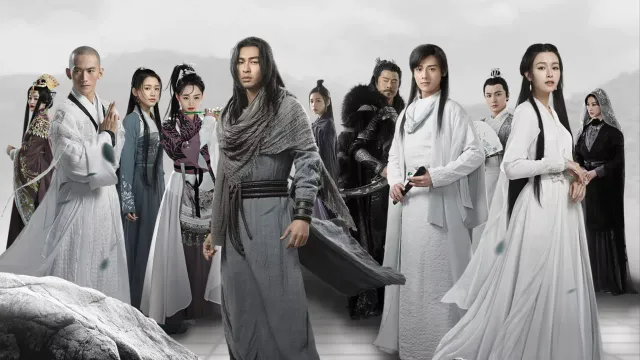
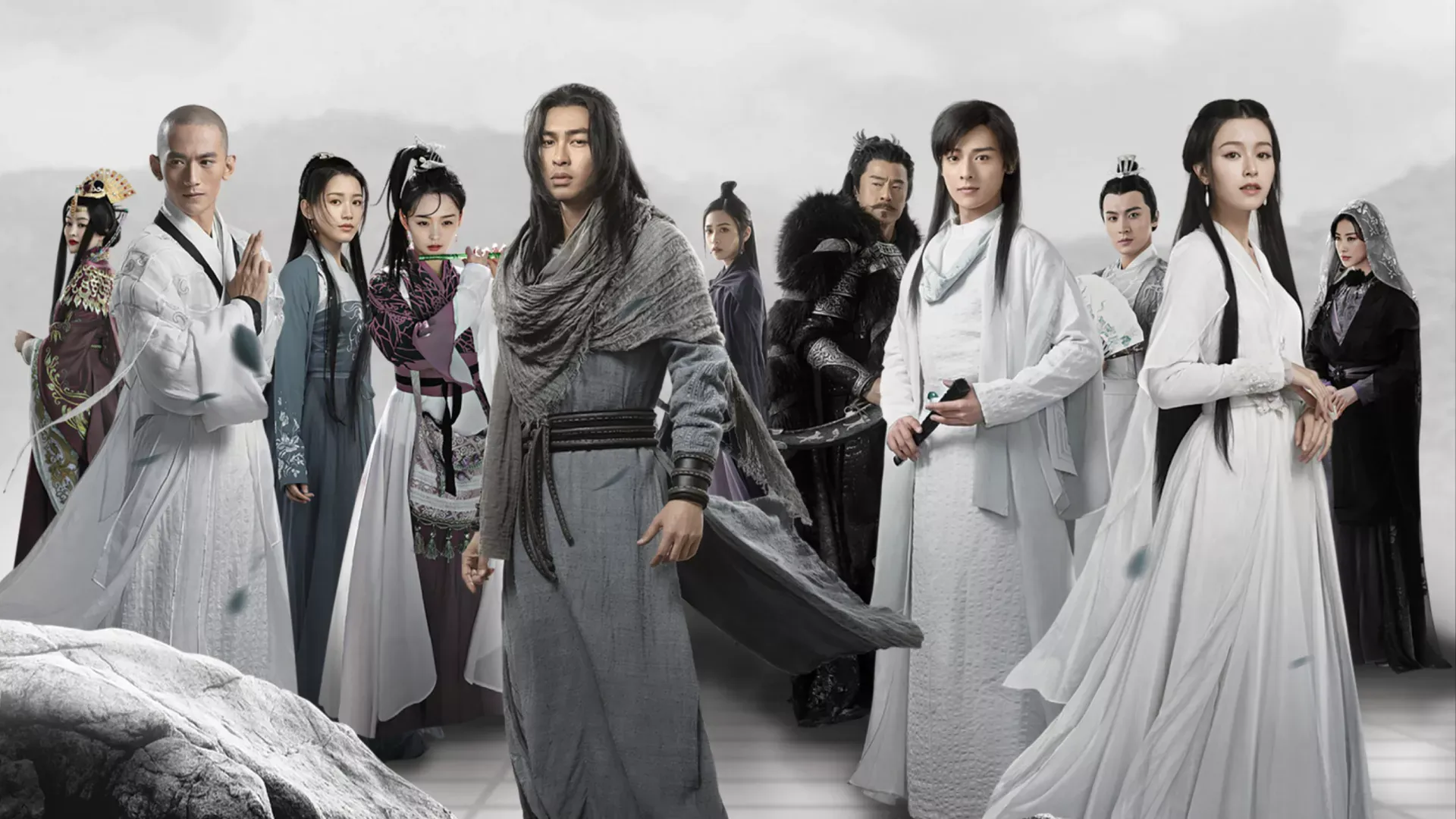
Xiaoyaozi has been portrayed in various adaptations of Demi-Gods and Semi-Devils, though his appearances are typically brief and enigmatic, maintaining his mysterious character.
See also
- Xiaoyao Order — The order Xiaoyaozi founded
- Tianshan Child Granny — Xiaoyaozi’s eldest disciple
- Wuyazi — Xiaoyaozi’s second disciple and successor
- Li Qiushui — Xiaoyaozi’s youngest disciple
- Beiming Power — One of the order’s signature techniques
- Lingbo Steps — Another signature technique
- Demi-Gods and Semi-Devils characters
- View complete list