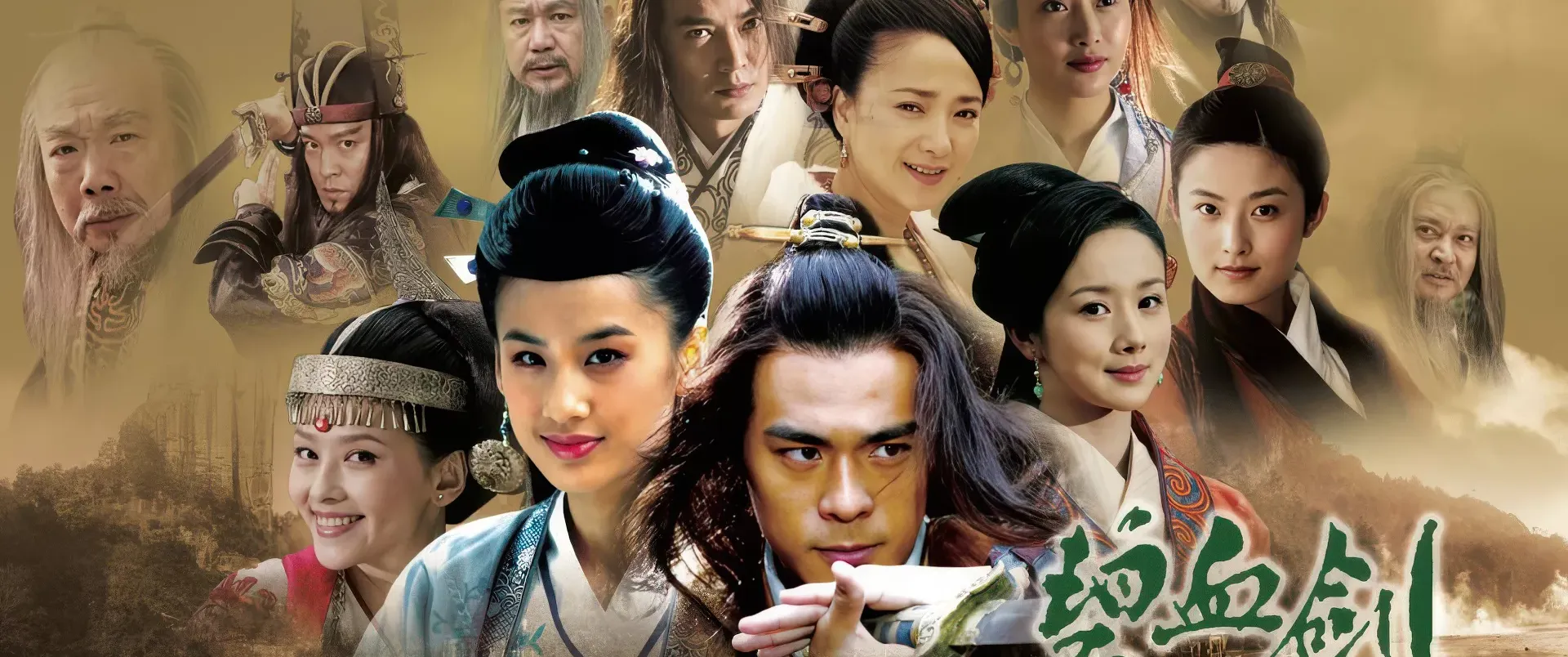
Meng Bofei (simplified: 孟伯飞, traditional: 孟伯飛, pinyin: Mèng Bófēi, jyutping: maang6 baak3 fei1), also known as Gai Mengchang (盖孟尝 — Gài Mèngcháng), was a senior martial artist known for his hospitality and excellent relationships in the jianghu in Sword Stained with Royal Blood. He lived in Baoding Prefecture (保定府 — Bǎodìng Fǔ) and was renowned throughout northern China for his character and martial arts skills. On his sixtieth birthday, he met Yuan Chengzhi (袁承志), the Golden Snake King (金蛇王) and leader of the seven-province martial arts alliance, and was so impressed that he eventually followed Yuan Chengzhi into exile to Brunei.
Biography
Reputation and character
Meng Bofei was known throughout northern China as “Gai Mengchang” (盖孟尝), a reference to Lord Mengchang (孟尝君 — Mèngcháng Jūn), a famous historical figure from the Warring States period known for his hospitality and ability to attract and maintain friendships with thousands of followers. This epithet reflected Meng Bofei’s own reputation for hospitality, generosity, and excellent relationships within the martial arts world.
Meng Bofei was described as someone who “loved friends” (最爱朋友 — Zuì’ài Péngyǒu) and had “extremely good relationships in the martial arts world” (武林中人缘极好 — Wǔlín Zhōng Rényuán Jí Hǎo). His hospitality and character earned him widespread respect, and it was said that anyone in northern China studying martial arts who mentioned “Gai Mengchang” would be respected and acknowledged.
Residence and family
Meng Bofei lived in Baoding Prefecture (保定府 — Bǎodìng Fǔ), where he maintained a residence that served as a gathering place for martial artists. He was married and had two sons: Meng Zheng (孟铮), his eldest son, and Meng Zhu (孟铸), his second son. His eldest son Meng Zheng was mentioned in the context of the alliance discussions, where he opposed the idea of rebellion, demonstrating that the Meng family had their own opinions and positions on political matters.
Martial arts and disciples
Meng Bofei was a skilled martial artist who had created his own martial arts techniques, including the Meng Family Divine Fist (孟家神拳 — Mèngjiā Shénquán) and the Happy Thirty Palms (快活三十掌 — Kuàihuó Sānshí Zhǎng). These techniques were described as “unpredictable and mysterious” (变幻莫测 — Biànhuàn Mòcè), demonstrating his martial arts prowess and creativity.
Meng Bofei had many disciples who studied under him, with his number of students being described as “too many to count” (数也数不清 — Shùyě Shù Bùqīng). This reflected his reputation and the widespread respect he commanded in the martial arts world. One of his notable disciples was Ding You (丁游), also known as “Ding Jia Shen” (丁甲神), who served as his first disciple.
The Poria and Shouwu Pills incident
An important incident occurred at Meng Bofei’s residence involving the Poria and Shouwu Pills (茯苓首乌丸 — Fúlíng Shǒuwū Wán), rare and valuable medicinal treasures. The Yong Sheng Escort Bureau (永胜镖局 — Yǒngshèng Biāojú) had hidden these pills inside a birthday peach (寿桃 — Shòutáo) intended as a gift for Meng Bofei, though the exact reason for this concealment is not fully detailed in the sources.
Hu Guinan (胡桂南), the Divine Thief, exposed this scheme, revealing the hidden pills. This led to a conflict involving Gui Xinshu (归辛树) and Gui Erniang (归二娘), who needed the pills to treat their son Gui Zhonglian’s (归钟) serious illness. The conflict created tension between Gui Xinshu’s family and the Meng family, though it was eventually resolved through Yuan Chengzhi’s diplomatic skills.
Meeting Yuan Chengzhi
On his sixtieth birthday, Meng Bofei met Yuan Chengzhi, who was then known as the Golden Snake King (金蛇王) and had been elected as the leader of the seven-province martial arts alliance (七省武林盟主 — Qī Shěng Wǔlín Méngzhǔ). Sha Tianguang (沙天广) had escorted Yuan Chengzhi to Baoding Prefecture to help resolve the misunderstanding with Meng Bofei.
During this encounter, Yuan Chengzhi demonstrated his diplomatic skills and martial arts abilities, and Meng Bofei was deeply impressed. The incident involving Gui Xinshu (归辛树) and the resolution of the conflict over the Poria and Shouwu Pills further demonstrated Yuan Chengzhi’s character and leadership abilities, leading Meng Bofei to develop great respect for him.
Following Yuan Chengzhi into exile
After becoming impressed by Yuan Chengzhi’s character and leadership, Meng Bofei made the significant decision to abandon his family property and lands (抛下家业田产 — Pāoxià Jiāyè Tiánchǎn) and follow Yuan Chengzhi into exile. Yuan Chengzhi had decided to leave China after becoming disillusioned with the corruption and brutality of Li Zicheng’s rebellion and the fall of the Ming dynasty.
Meng Bofei joined Yuan Chengzhi and his companions on their expedition to reclaim an island near Brunei (渤泥国 — Bóní Guó) that had been colonised by the Dutch. After successfully driving out the colonisers, Meng Bofei established a new life in exile with Yuan Chengzhi and the other companions, leaving behind his established position and property in northern China.
Personality and character
Meng Bofei was characterised by his hospitality, generosity, and excellent relationships within the martial arts world. His epithet “Gai Mengchang” reflected his reputation for being like the historical Lord Mengchang, known for his ability to attract and maintain friendships with many followers.
His decision to abandon his property and follow Yuan Chengzhi into exile demonstrated his commitment to supporting leaders he respected and his willingness to make significant sacrifices for causes he believed in. This decision also showed his trust in Yuan Chengzhi’s leadership and his recognition of Yuan Chengzhi’s character and abilities.
Meng Bofei’s reputation throughout northern China, where anyone studying martial arts who mentioned his name would be respected, demonstrated the high regard in which he was held. His many disciples and his role as a respected senior martial artist reflected his position as a significant figure in the jianghu.
Martial arts
Meng Family Divine Fist
Meng Bofei created the Meng Family Divine Fist (孟家神拳 — Mèngjiā Shénquán), a fist technique that bore his family name. This technique, along with his other creations, demonstrated his martial arts prowess and his ability to develop his own unique fighting style.
Happy Thirty Palms
Meng Bofei also created the Happy Thirty Palms (快活三十掌 — Kuàihuó Sānshí Zhǎng), a palm technique consisting of thirty forms. The name “Happy Thirty Palms” suggested a technique that was both effective and enjoyable to practice, reflecting Meng Bofei’s personality and approach to martial arts.
Both techniques were described as “unpredictable and mysterious” (变幻莫测 — Biànhuàn Mòcè), indicating that they were sophisticated and difficult to counter, demonstrating Meng Bofei’s skill as a martial arts innovator.
Relationships
Family
- Meng Zheng (孟铮) — Meng Bofei’s eldest son, who opposed the idea of rebellion during alliance discussions, demonstrating that the Meng family had their own opinions on political matters
- Meng Zhu (孟铸) — Meng Bofei’s second son
Disciples
- Ding You (丁游) — Also known as “Ding Jia Shen” (丁甲神), Meng Bofei’s first disciple, who represented the many students who studied under Meng Bofei
Allies
- Yuan Chengzhi — The Golden Snake King and leader of the seven-province martial arts alliance, whom Meng Bofei met on his sixtieth birthday and eventually followed into exile
- Sha Tianguang — An ally of Yuan Chengzhi who escorted him to Baoding Prefecture to help resolve the misunderstanding with Meng Bofei
Legacy
Meng Bofei’s legacy is one of hospitality, respect, and the willingness to support leaders one believes in. His reputation as “Gai Mengchang” throughout northern China demonstrated the importance of character and relationships in the jianghu, showing that martial arts prowess alone was not sufficient to earn widespread respect—character and hospitality were equally important.
His decision to abandon his property and follow Yuan Chengzhi into exile demonstrated the profound influence that a true leader could have on those who met him. This decision also reflected the novel’s theme of seeking a better life away from corruption and chaos, as Meng Bofei chose to leave behind his established position to support a cause and a leader he believed in.
Meng Bofei’s story also highlights the theme of sacrifice and commitment in the novel. His willingness to give up his property, lands, and established position in northern China to follow Yuan Chengzhi showed that true commitment to a cause or leader could require significant personal sacrifices, but that such sacrifices could be worthwhile when made for the right reasons.
Behind the scenes
Representing respected senior martial artists
Meng Bofei represented the respected senior martial artists who operated outside the major schools but still commanded significant influence and respect in the jianghu. His reputation throughout northern China and his many disciples demonstrated the importance of character and relationships in building one’s position in the martial arts world.
Demonstrating Yuan Chengzhi’s influence
Meng Bofei’s decision to follow Yuan Chengzhi into exile demonstrated the profound influence that Yuan Chengzhi had on those who met him. Despite having established property, lands, and a respected position in northern China, Meng Bofei was willing to abandon everything to follow a leader he respected, showing the power of character and leadership to inspire loyalty.
Contributing to the theme of exile
Meng Bofei’s journey into exile with Yuan Chengzhi contributed to the novel’s theme of disillusionment and the search for a better life away from the corruption and chaos of mainland China. His decision to leave behind his established position reflected the novel’s exploration of the choices faced by righteous people during times of turmoil.