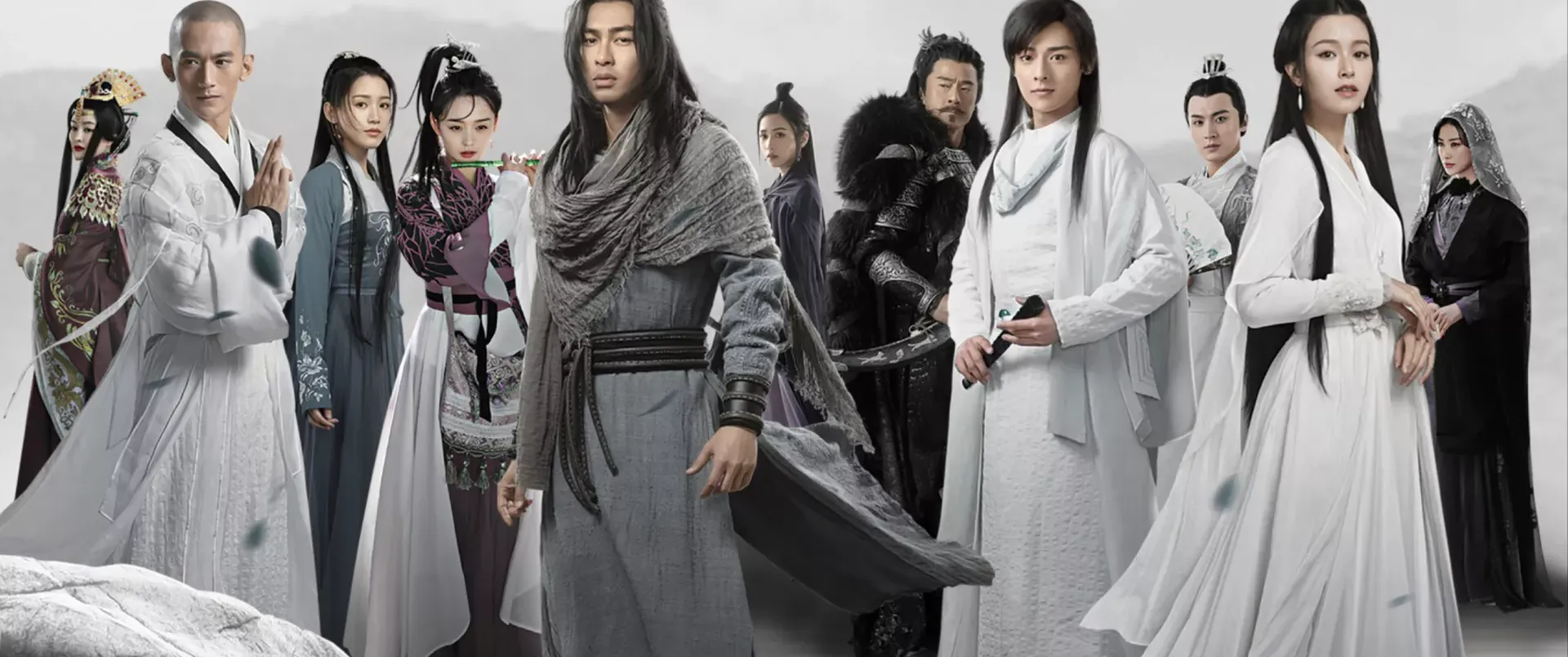
The Mark of Life and Death (simplified: 生死符, traditional: 生死符, pinyin: Shēngsǐ Fú, jyutping: saang1 sei2 fu4), also translated as the Life and Death Talisman, is the foremost hidden weapon technique in the jianghu, a signature technique of the Xiaoyao Order wielded by the Child Elder of Tianshan to maintain absolute control over her subordinates at Lingjiu Palace.
Unlike conventional hidden weapons that kill or wound, the Mark of Life and Death subjects its victims to cyclical torment—alternating between excruciating itching and piercing pain—that leaves them “seeking life not possible, seeking death not possible” (求生不得,求死不能). This unique characteristic makes it the ultimate tool for enforcing obedience, as victims remain alive but completely subjugated to whoever controls the remedy.
The technique represents the pinnacle of hidden weapon artistry, requiring profound mastery of neili manipulation to create and implant. Its mere mention strikes terror into the hearts of the Thirty-Six Cave Masters and Seventy-Two Island Masters who serve Lingjiu Palace, all of whom have experienced its agonising effects firsthand.
Overview
Mechanism of torment
The Mark of Life and Death operates by implanting a small disc of qi-infused ice into the victim’s body. Once embedded, the foreign energy disrupts the victim’s meridians and causes symptoms that intensify over time.
Symptom progression:
- Initial phase: Mild itching at the implantation site
- Escalation: Itching deepens progressively, eventually feeling as though it originates from the internal organs
- Peak severity: Sensation described as “ten thousand ants gnawing” (万蚁咬啮), combining unbearable itching with sharp, stabbing pain
- Cyclical pattern: Symptoms intensify daily for approximately 81 days, then gradually recede, only to return and repeat the cycle indefinitely
The technique’s name reflects its power over life and death—not through killing, but through making existence so unbearable that victims would prefer death, whilst simultaneously denying them that release. Those afflicted cannot simply endure the torment and wait for it to end, as the cycle repeats endlessly without external intervention.
Suppression and control
The only temporary relief from the Mark’s effects comes from the Itch-Suppressing Pill (镇痒丸), an antidote that must be taken at regular intervals. The Child Elder of Tianshan controlled access to this remedy, forcing all those marked to return periodically to Lingjiu Palace for their medicine—or face the consequences of withdrawal.
This dependency mechanism made the Mark of Life and Death the perfect instrument for maintaining political control. No matter how powerful or resentful the Cave Masters and Island Masters became, they dared not rebel so long as they remained marked. Their only hope lay in obtaining the antidote or finding someone capable of removing the Mark entirely.
The psychological impact often exceeded the physical suffering. Victims lived in constant awareness that their torment could resume at any moment, that their continued wellbeing depended entirely on the goodwill of whoever controlled the remedy. This knowledge transformed proud martial artists into obedient servants.
Creation and implantation
Forging the Mark
Creating a Mark of Life and Death requires exceptional neili cultivation and precise control over qi transformation. The process involves reversing the natural flow of neili to convert yang (positive) energy into yin (negative), generating cold so intense it freezes liquid instantly.
Creation process:
- Place water, wine, or another liquid in the palm
- Reverse the flow of neili through the meridians
- Transform the naturally warm yang qi into cold yin qi
- Channel this transformed energy into the palm until the liquid freezes
- Shape the resulting ice into a thin disc
The temperature achieved through this method far exceeds natural cold—the practitioner’s palm generates freezing power several times colder than ordinary ice. This supernatural cold infuses the frozen disc with the practitioner’s qi, creating a projectile that carries neili into the victim’s body upon impact.
The difficulty lies not merely in generating sufficient cold, but in controlling the precise balance of energies. Each Mark must be calibrated with specific proportions of yin and yang, solid and empty, which determines its eventual effects and, critically, the method required for its removal.
Implantation technique
The Mark is launched using Northern Darkness True Qi, the foundational neili cultivation of the Xiaoyao Order. Upon striking the target, the frozen disc embeds beneath the skin and gradually merges with the victim’s meridian system.
Implantation characteristics:
- Speed: The Mark travels faster than conventional projectiles
- Penetration: Pierces clothing and skin without obvious external wounds
- Integration: The qi-infused ice slowly dissolves into the victim’s energy channels
- Invisibility: Once embedded, the Mark leaves no external trace
The absence of visible wounds makes the Mark particularly insidious. Victims may not immediately realise they have been marked until symptoms begin, and even then, the source of their suffering may not be apparent. This delayed onset provides opportunities for the practitioner to depart before the victim understands what has happened.
Variations in formulation
The Child Elder created each Mark with slightly different properties, varying the proportions of yin and yang energy and the placement of solid versus empty characteristics. This customisation served two purposes: it allowed her to calibrate the severity of symptoms for different victims, and it ensured that no single removal method could work for all Marks.
Variable properties:
- Yin-yang ratio: Determines the character of pain versus itching
- Solid-empty balance: Affects the depth and location of symptoms
- Energy signature: Links each Mark to its creator for identification
- Placement location: Influences which meridians are most affected
This intentional variation made the Child Elder indispensable—even if someone learnt the general removal technique, they still needed her guidance to identify each Mark’s specific properties before attempting extraction.
Removal and countermeasures
The Heavenly Mountain Six Yang Palms
The only reliable method for removing a Mark of Life and Death requires mastery of the Heavenly Mountain Six Yang Palms (天山六阳掌), another Xiaoyao Order technique closely related to the Mark’s creation. The Six Yang Palms and the Mark were designed as complementary arts—one creates the condition, the other resolves it.
Removal requirements:
- Complete mastery of the Heavenly Mountain Six Yang Palms
- Access to the Lingjiu Palace medical texts
- Ability to diagnose the specific properties of each Mark
- Sufficient neili to neutralise the embedded qi
The removal process involves using the Six Yang Palms to generate energy patterns that precisely counter the Mark’s configuration. Too much yang energy causes the Mark to burrow deeper; too little fails to neutralise it. The practitioner must match the exact yin-yang-solid-empty ratio of each individual Mark.
The Lingjiu Palace medical texts contain detailed records of how different Marks were created, enabling practitioners to identify each one’s properties and calculate the appropriate countermeasure. Without these texts, removal becomes virtually impossible except through dangerous trial and error.
Why other methods fail
Many skilled martial artists have attempted to remove Marks through conventional neili healing or medical treatments, but these approaches uniformly fail.
Reasons for failure:
- Energy mismatch: Ordinary healing energy cannot neutralise the transformed yin qi
- Integration depth: The Mark merges with meridians rather than remaining as a foreign object
- Adaptive resistance: The embedded qi responds to removal attempts by dispersing deeper into the body
- Insufficient precision: Without knowing the Mark’s specific properties, countermeasures cannot be calibrated correctly
Even powerful neili masters like the Cave Masters and Island Masters found themselves helpless against the Mark despite their considerable cultivation. The technique specifically targeted weaknesses in conventional martial arts training that emphasised yang energy development whilst neglecting yin transformation.
Herbal supplements
Whilst true removal requires the Six Yang Palms, certain rare herbs can provide partial relief from symptoms. The Tongtian Grass (通天草), a medicinal herb with exceptional properties, can slightly reduce the severity of pain and itching during flare-ups. However, such remedies address only symptoms, not the underlying condition—they cannot prevent the cycle from continuing.
History
Instrument of Lingjiu Palace dominance
The Child Elder of Tianshan used the Mark of Life and Death to maintain absolute control over the Thirty-Six Cave Masters and Seventy-Two Island Masters, a coalition of powerful martial artists who nominally served Lingjiu Palace. Without the Mark, these proud and capable fighters would never have submitted to the rule of an elderly woman who appeared as a six-year-old child.
The relationship between Lingjiu Palace and its subordinates was entirely coercive. The Cave Masters and Island Masters resented their servitude deeply, attending required tributes and obeying commands only because defiance meant enduring the Mark’s full effects without relief. They feared the Child Elder as one would fear a demon, whilst secretly hoping for any opportunity to escape their bondage.
This resentment would eventually boil over into open rebellion when the Cave Masters and Island Masters learnt that the Child Elder had entered a vulnerable state during her thirty-year rejuvenation cycle.
The rebellion at Misty Peak
When the Child Elder began her cyclical rejuvenation process, temporarily losing her martial abilities and appearing as a helpless child, the Thirty-Six Cave Masters and Seventy-Two Island Masters saw their chance for freedom. Led by Wu Laoda (乌老大), they rose in revolt, storming Misty Peak to capture the Child Elder and force her to remove their Marks.
The rebellion nearly succeeded—the conspirators captured what they believed was the Child Elder, not realising her true identity due to her child-like appearance. They demanded the removal of their Marks as the price for her release, threatening torture and death if she refused.
However, their plans were disrupted by the arrival of Xuzhu, a young Shaolin monk who had wandered into the situation without understanding its context. Xuzhu rescued the Child Elder—initially believing her to be an ordinary child in danger—and became entangled in the complex politics of Lingjiu Palace.
Xuzhu’s inheritance
The Child Elder, impressed by Xuzhu’s selfless assistance and recognising him as the inheritor of her junior martial brother Wuyazi’s position as Xiaoyao Order leader, taught him the techniques necessary to create and remove Marks of Life and Death. This knowledge transfer served multiple purposes: it ensured the art would not be lost, it provided Xuzhu with tools to control the rebellious subordinates, and it gave the Child Elder revenge on those who had betrayed her.
Xuzhu’s use of the Mark:
- Learnt both creation and removal techniques from the Child Elder
- Used Marks to subdue Ding Chunqiu during the battle at Shaoshi Mountain
- Inherited authority over the previously marked Cave Masters and Island Masters
- Eventually removed Marks from those who submitted to his leadership
Xuzhu’s approach to the Mark differed significantly from the Child Elder’s. Where she used it as an instrument of terror and control, Xuzhu employed it reluctantly and primarily for defensive purposes. His Buddhist training made him uncomfortable with causing suffering, even to enemies.
Defeat of Ding Chunqiu
At the great battle at Shaoshi Mountain, Xuzhu faced Ding Chunqiu, the “Old Freak of Xingxiu” and one of the most dangerous villains in the jianghu. Despite Ding Chunqiu’s formidable poison-based martial arts, Xuzhu was able to implant a Mark of Life and Death into him, effectively neutralising the threat.
The irony was profound—Ding Chunqiu had been a senior disciple of the Xiaoyao Order before betraying his master Wuyazi, and now found himself controlled by the very techniques his former school had developed. His capture demonstrated that even the most powerful martial artists could be reduced to helplessness by the Mark.
Behind the scenes
The Mark of Life and Death represents Jin Yong’s exploration of power dynamics beyond simple combat superiority. In a world where martial arts strength typically determines hierarchy, the Mark demonstrates that control over others’ suffering can prove more effective than the ability to kill them.
Themes of power and subjugation
The technique serves as a metaphor for how authoritarian systems maintain control—not primarily through violence, but through the threat of consequences and the creation of dependency. The Cave Masters and Island Masters are not powerless; many could defeat the Child Elder in direct combat. Yet they remain obedient because defiance carries unbearable costs.
This dynamic appears throughout history in various forms: debt bondage, addiction, information leverage, and other mechanisms that bind people to those who control what they need. Jin Yong uses a fantastical martial arts technique to illuminate real patterns of human domination.
Contrast with conventional weapons
Most hidden weapons in wuxia fiction operate simply: they strike, and the target is wounded or killed. The Mark of Life and Death subverts this expectation entirely. It cannot kill, but it may be more terrible than death. Its victims would sometimes prefer a clean assassination to the endless torture of being marked.
This inversion challenges readers’ assumptions about what constitutes the “ultimate” weapon. In a genre where characters frequently seek the most powerful sword or deadliest poison, Jin Yong presents a technique whose power lies precisely in its restraint—it controls rather than destroys, creating ongoing leverage rather than eliminating opposition.
Buddhist themes
Through Xuzhu’s reluctant inheritance of the Mark, Jin Yong explores Buddhist concepts of compassion and the use of force. Xuzhu’s discomfort with causing suffering, even to deserving enemies, reflects genuine Buddhist ethical concerns. Yet he ultimately uses the technique when necessary, raising questions about when compassion permits forceful action.
The Child Elder’s fate—dying reconciled with her lifelong rival Li Qiushui after learning the truth about their mutual beloved—also carries Buddhist resonance. Her control over others through suffering brought her no happiness, and only in releasing her attachments did she find peace.
See also
- Jin Yong martial arts
- Demi-Gods and Semi-Devils martial arts
- Xiaoyao Order
- Child Elder of Tianshan
- Xuzhu
- Lingjiu Palace
- Heavenly Mountain Six Yang Palms
- Heavenly Mountain Plum-Breaking Hand
External links
- Mark of Life and Death (Chinese) on Baidu Baike
- Mark of Life and Death (Chinese) on Chinese Wikipedia