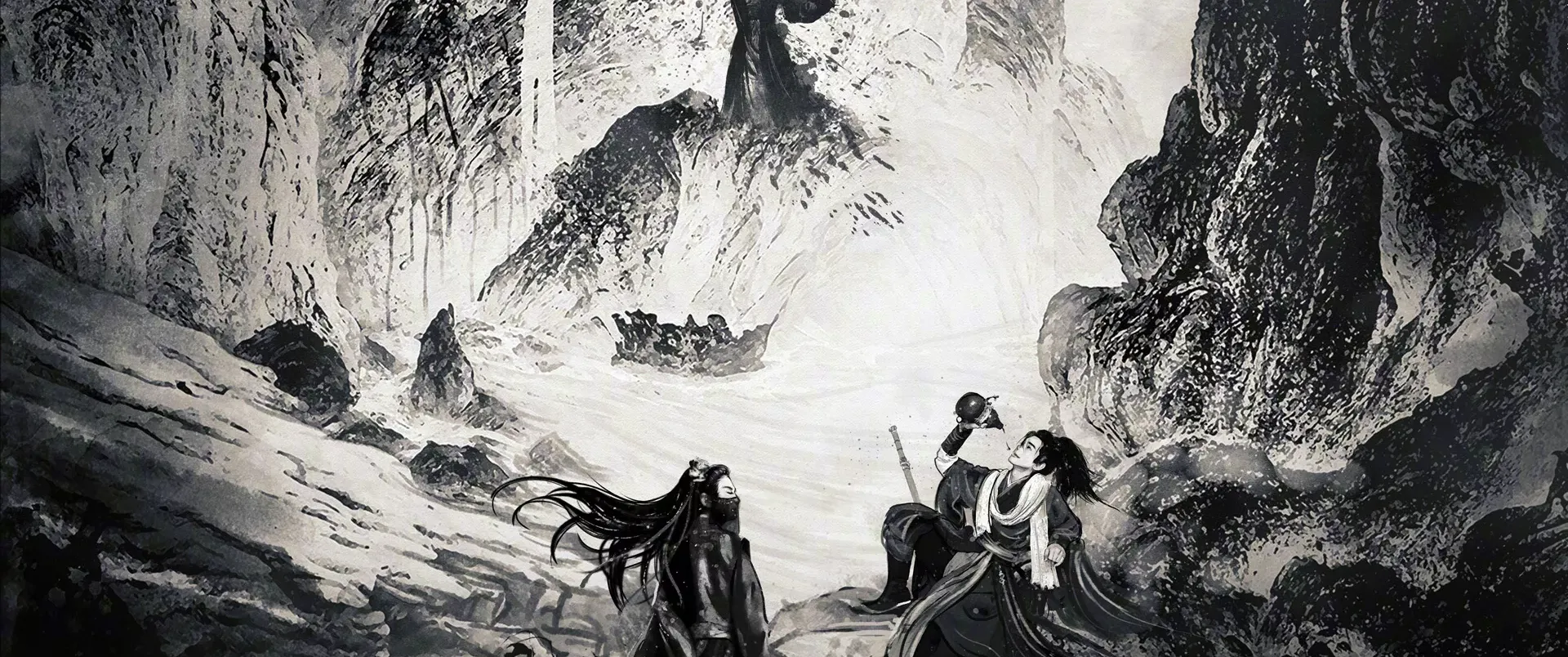
Baixiong (simplified: 白熊, traditional: 白熊, pinyin: Báixióng, jyutping: baak6 hung4), known as “White Bear of the Northern Desert” (漠北白熊), was one of the Twin Bears of the Northern Desert and a member of the Old Ancestors of the Yellow River.
Biography
Baixiong was one of the Twin Bears of the Northern Desert, along with Heixiong (Black Bear). The two were known for their partnership and their association with the Northern Desert region. They were part of the Old Ancestors of the Yellow River, a loose association of martial artists.
The Twin Bears were known for fighting together, and their epithets reflected their partnership and their connection to the Northern Desert. They participated in various activities alongside other members of the Old Ancestors of the Yellow River.
Personality & traits
As a minor character, Baixiong’s personality is not deeply explored. He was presumably a loyal partner to Heixiong, and the two worked together as a team. Their partnership was a notable aspect of their characters.
Martial arts abilities
Baixiong was a skilled martial artist, and he and Heixiong were known for fighting together as a team. Their techniques likely emphasised coordination and partnership, making them more effective when fighting together than individually.
Relationships
- Heixiong: His partner, the other half of the Twin Bears of the Northern Desert.
- Lao Touzi and Zu Qianqiu: His fellow Old Ancestors of the Yellow River.
Behind the scenes
Baixiong’s character, along with Heixiong, helps to demonstrate the variety of martial artists in the jianghu, including those from different regions like the Northern Desert. Their partnership shows the importance of teamwork in martial arts, and their presence contributes to the diverse community of the Old Ancestors of the Yellow River.
See also
- Laughing in the Wind characters
- Heixiong – Baixiong’s partner
- Old Ancestors of the Yellow River – Baixiong’s association
External links
- Baixiong (Chinese) on Baidu Baike (Note: The Baidu Baike entry may refer to other individuals. The content used for the article is based on the novel’s context.)